Messi and the Argentine guard: defending champions earn another shot at the World Cup
Argentina's 2-1 win over England in the semi-final sends the defending champions back to a World Cup final, with Lionel Messi framing the run as a meritocratic case rather than a favour.
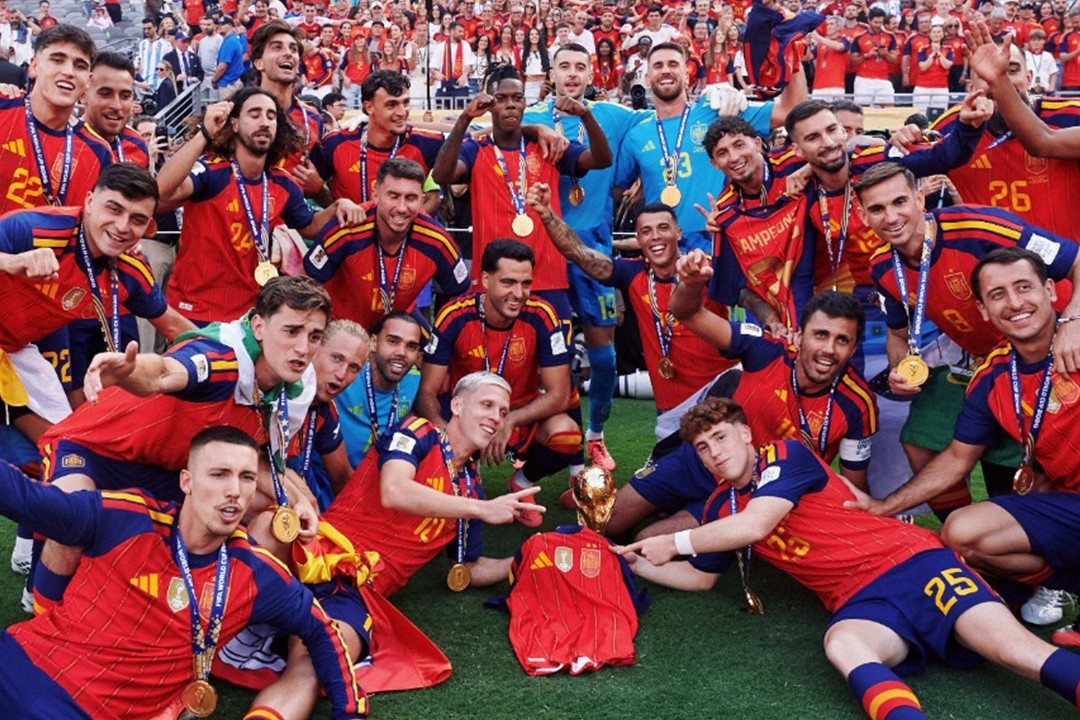
Argentina beat England 2-1 in the World Cup semi-final on 16 July 2026, sending the defending champions into another final and putting Lionel Messi back within ninety minutes of a second consecutive title. Standard Kenya's match-day wire, reposting Messi, framed the result in the captain's own words: "NO ONE GIVES US ANYTHING FOR FREE!", the line captured at full-time as Argentina sealed the win in the semi-final.
The score, not the slogan, is the headline. A second consecutive World Cup final appearance for an ageing Argentina side would have looked fanciful when the squad flew out of Buenos Aires. Instead, Scaloni's group has spent the tournament re-shaping itself around a younger core while leaning on a 38-year-old captain who continues to decide matches at the highest level. The implicit argument in Messi's post-match framing is meritocratic: results, not narrative, have bought Argentina their place in the final.
How Argentina got here
The semi-final win extended a run that has looked increasingly comfortable as the tournament progressed. Argentina's group-stage form was not vintage: the side conceded, laboured in patches, and asked questions of a manager who chose continuity over revolution. The defence that travelled to the United States, Canada and Mexico is not the back line that won in Qatar, and the midfield has tilted younger. What the squad kept, and what carried it through the knockout rounds, is the spine: a captain who still controls tempo, a No. 9 capable of dragging a game by the scruff, and a goalkeeper who has produced saves at altitude and in the heat. England, for their part, arrived with the familiar mix of Premier League individual quality and a lingering inability to translate it against a deep, experienced South American block. The 2-1 margin flattered the shape of the game more than its underlying balance.
The counter-narrative: form, fixture, and the hand of history
There is a less flattering read of the same ninety minutes, and it deserves space. Argentina are the defending champions and entered the tournament seeded accordingly; their path through the bracket benefited from the absence of several European heavyweights in the quarter-final they did not have to play. England, meanwhile, were dealing with the cumulative cost of an extra-time win in the previous round and with the wider physical toll of a tournament staged across three host countries in midsummer heat. The 2-1 scoreline does not, on its own, settle the question of whether this Argentina side is genuinely a cut above the European elite or whether the draw, the fixture list, and the calendar have done some of the work. Standard Kenya's framing, leaning on Messi's "no one gives us anything for free" line, leans one way on that question. A neutral observer could lean the other without distorting the facts on the page.
What the result means for the final
The numbers that matter now are simple. Argentina have ninety minutes to retain a title they have held since December 2022. The opponent on the other side of the bracket will arrive either rested or battle-hardened, and that distinction will shape the opening twenty minutes more than any tactical adjustment. For Messi personally, the match resolves a question that has hung over the second half of his international career: whether the Qatar triumph was a closing chapter or the start of a second act. A second consecutive World Cup, at this stage of a career that began at the 2006 tournament in Germany, would settle that question in his favour and would recalibrate the all-time rankings debate that has consumed the global game for the better part of two decades.
For Argentina the country, the run has already done something the domestic political cycle could not: it has produced a fortnight of near-total public alignment around a national team that includes players based at clubs from Riyadh to Miami to Manchester. That alignment is fragile, as it always is in Buenos Aires when the ball stops rolling, but it is real for now, and the final will draw an audience that treats the match as a referendum on more than football.
Stakes and what to watch
The structural stakes sit in two places. The first is the record book: a successful title defence would put this Argentina side in a category with very few peers in the modern era, and would give Messi a personal ledger that no current player can match on the biggest stage. The second is the transfer market: a strong showing in the final will lift the valuation of the younger Argentine players who have used the tournament as a shop window, and it will shape the bidding war that will open when the European transfer window reopens.
The honest caveat: the thread context for this piece is a single post-match wire, and it does not specify the venue, the goalscorers, or the minute-by-minute shape of the game. Readers looking for the granular detail of how the goals were scored, or for the identity of the England goal, will need to wait for the longer match report from a wire service. What can be said with confidence is the result, the date, and the captain's framing of what it means.
Desk note: Monexus leads on the result and on the captain's own framing of it, then surfaces the counter-read that draws and fixture luck shape knockout football. The piece stays inside what the source wire supports and flags where it does not.
Wire provenance
This editorial synthesis draws on the following public wire/social posts:
- https://t.me/StandardKenya