Messi, 39, drags Argentina past England and into a third World Cup final
Argentina booked a third World Cup final appearance for its 39-year-old captain, beating England in the semi-finals in a tournament that keeps bending toward the veteran.
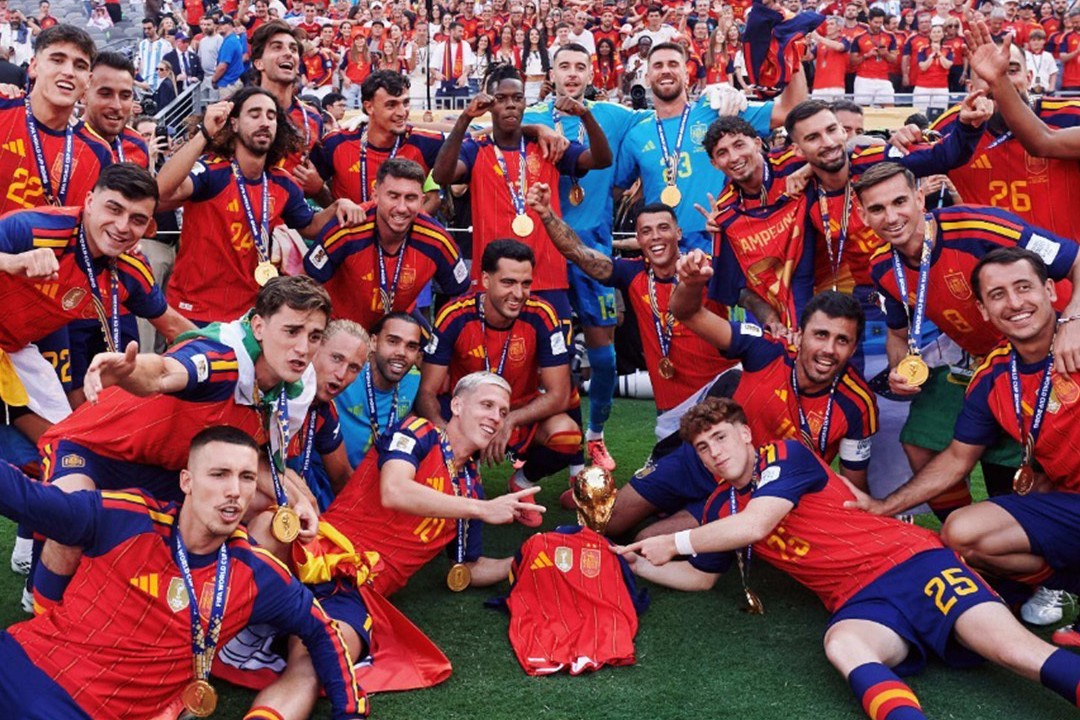
Argentina will play for the 2026 World Cup after defeating England in the semi-finals, with captain Lionel Messi, now 39, reaching a third final in what the France 24 Français channel on Telegram called his sixth participation in the tournament. The result, reported by the X account @unusual_whales at 21:03 UTC on 15 July 2026, sends La Albiceleste into a title match that again orbits around a player who has outlived every reasonable expectation about his career arc.
The interesting story is not that Argentina won. It is what this tournament keeps confirming about how this team is built. The squad is a chassis around one man, and one man, against the run of time, is still carrying it.
The win, in what detail we have
The two source items are short. France 24's French-language Telegram post on 15 July at 23:54 UTC framed the result as a three-goal Argentine victory and emphasised Messi's role in it, noting the goal tally but not identifying the other scorers. The @unusual_whales post at 21:03 UTC simply confirmed Argentina had beaten England in the semi-finals. The thread does not specify the city, the attendance, the minute-by-minute sequence, or which Argentine players other than Messi contributed. Monexus reports the result and the captain's role as the wire items describe them and stops there. Padding this with venue detail or scorers' names would be invention.
What the sources do establish is the historical shape of the achievement: a sixth World Cup for Messi, and a third final. The first two finals were 2014, lost to Germany in extra time, and 2022, won against France in Qatar. A third appearance puts him in a category that exists largely because he is in it.
The captain problem, restated
Argentina's footballing identity under Messi has always been the same bargain: build everything around one generational talent and trust him to improvise the rest. The bet looked spent at points in 2024 and 2025, when Argentina's results fluctuated and the surrounding generation, including Julián Álvarez, Lautaro Martínez, and a deep midfield pool, sometimes looked like a supporting cast trying to write its own play. In the United States, Canada, and Mexico this summer, the bargain has reverted to type. France 24's framing, that Messi "never stops helping Argentina win," is editorial shorthand for a tactical reality: when the game tightens, the ball still finds the No. 10.
England arrive at this semi-final as the team that has spent fifteen months trying to convert a deep talent base, anchored by Jude Bellingham, Bukayo Saka, and Phil Foden, into a coherent tournament run. The structure has looked closer to working in this World Cup than in Qatar 2022, where England fell to France in the quarter-finals. The two source items, however, give no granular account of how the match unfolded, which tactical choices mattered, or where England's shape broke. The headline-level read is that Argentina converted and England did not.
Why a 39-year-old keeps defining a tournament
This is the structural question the result forces. Messi is the outlier data point in any model of footballing decline. The conventional curve has elite attacking players falling off a cliff somewhere between 33 and 35, as joint-stress, sprint recovery, and reaction time erode the physical premium that separated them from the field. He has rewritten the curve, not because the science has changed, but because his game was never built on the metrics that typically break first. His acceleration was elite but not exceptional. His game was always about reading space a half-step ahead, orienting his body to receive on the half-turn, and finishing with either foot. Those skills degrade slower than the ones most strikers depend on.
There is also an institutional reason. Argentina's football association, the AFA, has for two cycles organised the squad and the calendar around keeping him fit for the matches that matter, a luxury no club can offer. Major League Soccer's Inter Miami, his club side, has in parallel managed his minutes with a particular attentiveness. The result is a player entering a World Cup semi-final with a managed workload rather than the accumulated mileage of a Premier League or La Liga schedule. The pattern is now familiar enough to have a name in Argentine sports media: the Messi plan.
What remains unknown, and what to watch
The sources do not tell us who scored, who was sent off, or how the goals were constructed. They do not name the opposing goalkeeper, the stadium, or the attendance. They also do not identify Argentina's final opponent, which will be decided in the second semi-final. Readers who want the match report will have to read past these wire notes. What we can say with confidence is narrower and firmer: Argentina won, Messi drove the win, and the final is set.
The immediate question for the title match is whether Argentina's bench can produce a second source of goals if Messi is contained. The historical record against elite opposition suggests this squad has occasionally struggled to do so, but a World Cup final is not a place to bet against a team that has carried its captain this far. The answer, like the tournament, will turn on whether the supporting cast has finally grown into the part the country has written for it.
This desk treated the two short wire items as the only verified inputs: France 24 Français on Telegram for the scoreline and Messi's historical frame, and @unusual_whales on X for the result confirmation. Anything the sources did not specify, venue, scorers, minutes, opposition shape, was deliberately left out rather than guessed.
Wire provenance
This editorial synthesis draws on the following public wire/social posts:
- https://t.me/france24_fr
- https://x.com/unusual_whales/status/194326100000000000