Three Antiquities, Two Continents, One Pattern: Manhattan DA Returns Stolen Pieces to Mexico
Alvin Bragg's office has now repatriated antiquities to Mexico six times, most recently handing back a Nayarit sculpture seized from the Met and an Aztec stone once held by a convicted trafficker.
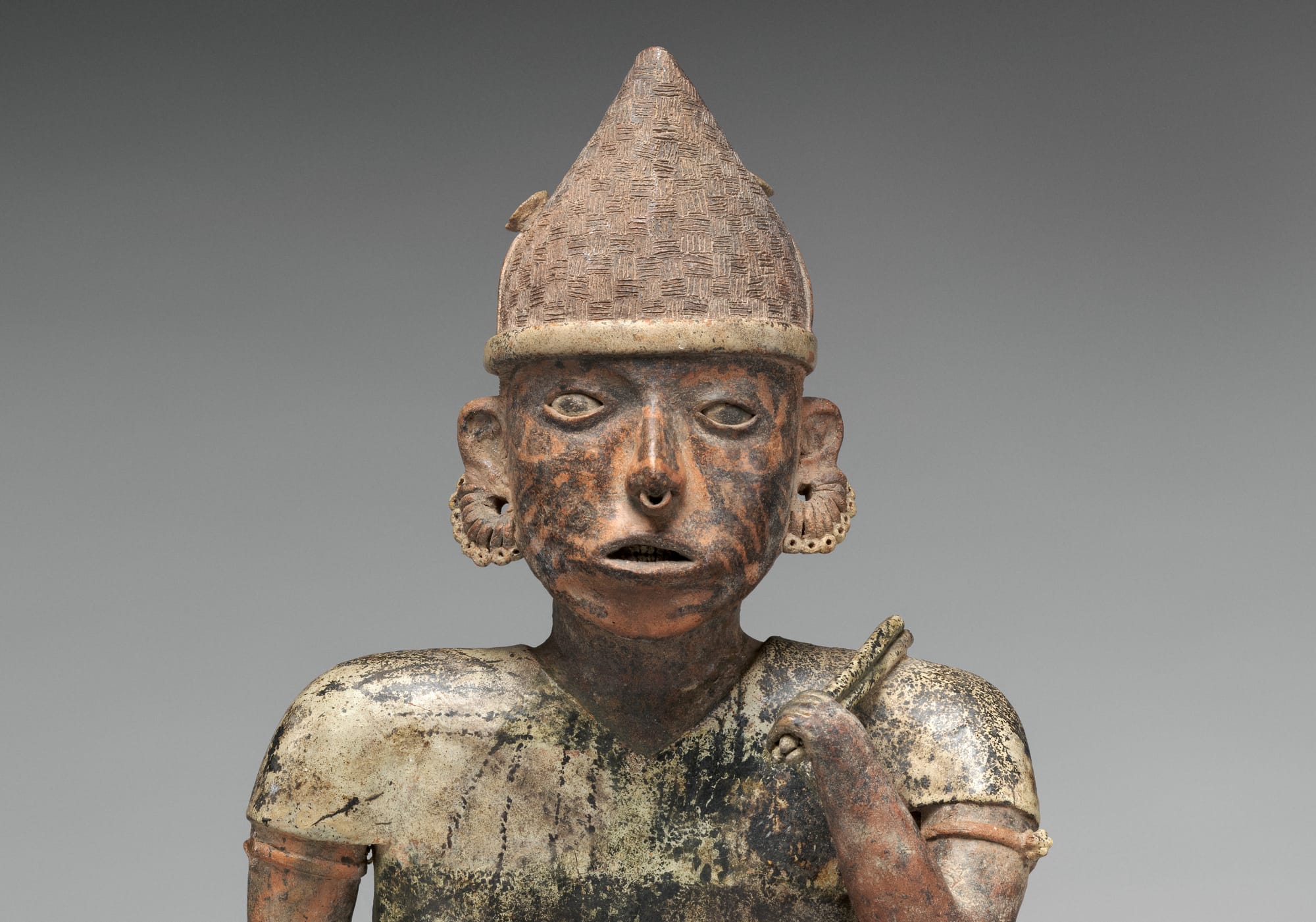
On 16 July 2026, the Manhattan District Attorney's office handed three antiquities back to Mexico: a Nayarit-style ceramic figure seized from the Metropolitan Museum of Art, an Aztec stone object once in the possession of a convicted trafficker, and a third piece not yet identified in public filings. The transfer, the office's sixth repatriation to Mexico, is the kind of ceremony that rarely makes front pages; this one deserves a second look.
The bigger story is not the count of objects. It is the architecture of the investigation that put them on a table in midtown Manhattan in the first place. Antiquities trafficking has long relied on a chain that begins in a looted site, passes through one or more intermediaries who launder provenance, and ends in the donation case of a Western museum or the catalogue of a high-end gallery. Seams in that chain are where prosecutors now work. When Manhattan District Attorney Alvin Bragg's office moves pieces out of the Met and back to Mexico City, it is tightening those seams, and the institutions on the receiving end of the takedowns are some of the most visible names in the art world.
What the DA actually got back
The Manhattan DA's Antiquities Trafficking Unit has spent the better part of a decade cultivating cooperating witnesses, working with Homeland Security Investigations, and using New York's expansive criminal possession statutes to seize objects that travelled into the country under suspect chains of title. The 16 July transfer is the sixth repatriation to Mexico from that pipeline, according to reporting from both Hyperallergic and ARTNEWS, which independently confirmed the count on 16 July.
The two named objects carry distinct evidentiary stories. The Nayarit figure was physically inside the Met, removed after investigators determined its acquisition trail could not be reconciled with Mexican export law or with the museum's own stated provenance standards. The Aztec stone had previously passed through a trafficker now convicted in a US court, which removes the plausible-deniability defence that often protects objects that have merely been "on the market for decades." That second provenance is the harder kind for the trade to argue against: it ties the object directly to a criminal enterprise, not merely to a paperwork failure.
The Met declined to be cast as a passive victim of fraud. The museum has been a willing participant in the post-repatriation conversation, accelerating provenance review of other pre-Columbian holdings and quietly ceding several pieces over the past two years. That posture, more accommodative than the institution's historical default, has kept the Met out of the kind of courtroom fight that consumed, for example, the Princeton University case over Benin Bronzes.
The trafficking economy underneath
Manhattan is the largest art market on earth and the most consequential single node in the global antiquities trade. That status is a function of capital, of buyers with the appetite and the tax structures to absorb six- and seven-figure objects, and of a legal environment that, until the late 2010s, treated possession as a near-absolute defence. The shift is recent. The Manhattan DA's office, in concert with federal agencies, has spent the past decade turning criminal possession statutes originally aimed at receiving stolen property into a tool for reaching objects whose first theft was decades in the past.
Mexico has been one of the principal beneficiaries of that shift, not because Mexican authorities have a louder voice in Manhattan than Italian or Greek authorities, but because the country's pre-Columbian patrimony was stripped at industrial scale through the mid-twentieth century, and because investigators have built working relationships with Mexico's National Institute of Anthropology and History (INAH) and the Foreign Ministry that can absorb returned material with the paperwork to receive it. A repatriation is only as useful as the receiving institution is ready. Mexico has, on the evidence of six completed transfers, been ready.
What the trade does next
The trade's response has been to professionalise. Auction houses have strengthened their research departments, their due-diligence databases, and their stated standards for pre-1970 material. The Art Dealers Association of America and the major auction houses have raised the bar on provenance documentation. None of that is altruism. It is response to risk pricing. When the Met, with the resources and legal apparatus of a major New York museum, cannot keep a piece that arrives through a tainted chain, mid-tier collectors and smaller dealers learn quickly that the cost of uncertain provenance has risen.
That pricing signal is uneven. The pieces most exposed are those whose first removal from source countries predates modern cultural-property law and whose documentation was always thin. Many of those pieces have already been absorbed into permanent collections where they are, in practical terms, beyond reach. The current wave of returns targets the residue: pieces still in circulation, still in the catalogue, still moveable.
The geopolitical frame
Repatriation is sometimes read as a cultural exchange story and sometimes as a sovereignty story. The 16 July transfer is closer to the second reading. The objects leaving Manhattan are not on long-term loan; they are transfers of title, permanently, to Mexican state custody. Each successful return strengthens the negotiating position of the source country's claimants in the next round, and it erodes the market's confidence in the kind of provenance-by-default that made twentieth-century collecting possible.
The shift also redraws the line between museum and market. A museum that has returned three pieces in a decade becomes a less comfortable home for pieces from the same provenance regime. The market, in turn, reprices. The mechanism is unglamorous, and the ceremonies are short. But the cumulative effect of six completed transfers to Mexico, several more to Italy and Greece, and an active pipeline of additional cases is that the centre of gravity for ancient material has moved, slightly but measurably, away from private cabinets in the West and back toward national collections in the countries of origin.
What remains uncertain is the pace. Manhattan prosecutors operate on case cycles measured in years; traffickers operate on cycles measured in months. The traffic has not stopped. It has been rerouted, with more risk pricing built into every transaction and a higher probability that the object you buy today is the object the DA seizes tomorrow.
This article was filed by Monexus News. The desk has covered antiquities restitution as a question of legal infrastructure, not of cultural sentiment; the public filings from the Manhattan DA's office, not press releases, are the working source base.