Malawians queue for repatriation as South Africa's anti-migrant mood hardens
Hundreds of Malawian nationals lined up outside their embassy in Johannesburg on Tuesday as the forced return of migrants from South Africa accelerated, the most visible front of a longer regional drift.
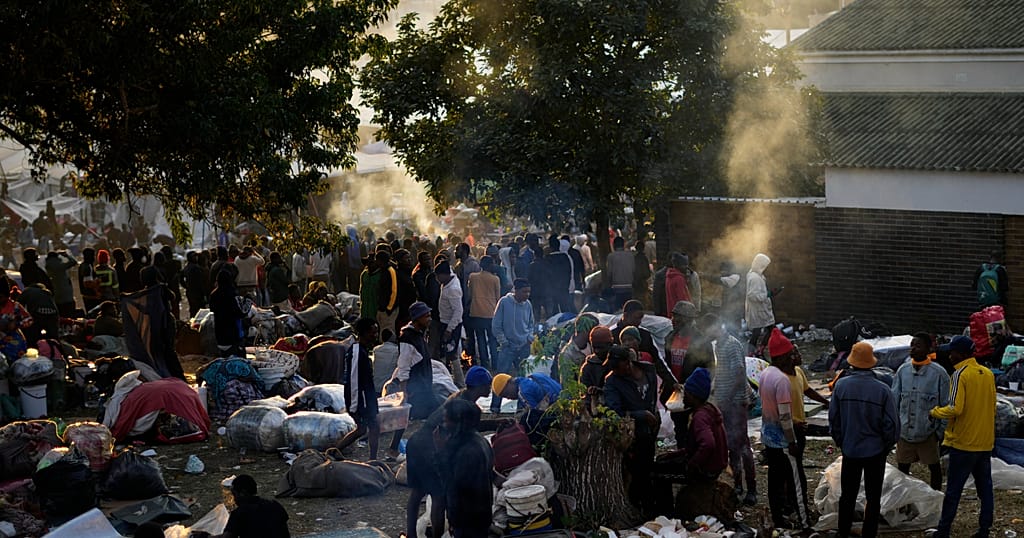
At a car park on the edge of Sandton on Tuesday afternoon, Malawians clutching travel documents and bin-liner bags of belongings queued down the kerb outside their country's consulate in Johannesburg. The line moved slowly. Inside the consulate compound, officials were processing paperwork for what Lilongwe has acknowledged is the largest assisted-repatriation operation it has mounted in South Africa in years.
The Africa News wire reported on 15 July 2026 that hundreds of Malawian nationals gathered outside the embassy as the forced return of migrants continued, with the queue spilling into surrounding streets. The scenes are the visible end of a quieter, longer process: a surge of anti-immigrant mobilisation in South Africa that has narrowed the space for foreign nationals to live and work, and that is now reshaping how neighbouring states plan for the return of their citizens.
The picture on the ground
The queue outside the Malawian mission in Johannesburg is not, on its own, evidence of a new crisis. Diplomatic missions in South Africa's commercial capital routinely process assistance requests from nationals in distress, and Malawi's High Commission has handled steady flows of returnees for decades. What is different, according to the Africa News dispatch, is the scale and the speed: the gathering on 15 July was large enough to draw regional media attention, and embassy staff were working through a backlog rather than a handful of individual cases.
The dispatches do not specify an exact figure for those waiting. They do describe a setting that South African readers will recognise: foreign nationals congregating at a consulate because, in their own assessment, the conditions for remaining in the country have become untenable. The triggering context is a fresh round of anti-immigrant protest, the latest iteration of a recurring pattern in post-apartheid South Africa in which economic anxiety, political opportunism and the politics of service delivery fuse around the figure of the migrant.
The framing contest
South African officials have, in past cycles of similar unrest, drawn a careful line between criminality and migration: a position that acknowledges a real spike in vigilante violence while rejecting the broader stigmatisation of foreign nationals. Opposition and civic movements have used the episodes to press harder political claims, including the explicit repatriation of foreign workers. Across the border, governments in Lilongwe, Harare and Maputo have alternated between quiet diplomacy and public demands for the protection of their citizens.
There is a more uncomfortable reading sitting alongside both. South Africa's unemployment rate, formally above thirty per cent, is the deepest structural fault line beneath every xenophobic flare-up the country has experienced since at least 2008. Foreign workers are an easy target because they are visible, because they often operate in the informal economy, and because the political cost of defending them is concentrated while the political benefit of attacking them is diffuse. That structural pressure does not justify the violence. It does explain why the pressure returns.
A counterpoint worth naming: large numbers of migrants in South Africa are not in competition with South African workers at all, but in sectors, cross-border trade, domestic work, niche retail, that local labour markets do not fill. Migrants also remit substantial sums home, sustain regional supply chains and, in many cases, hold documentation that has never been regularised precisely because South Africa's immigration system has struggled to process them. None of that erases the legitimate grievance about public services under strain. It does complicate the easier political stories.
Why Malawi, why now
Malawi sits at the receiving end of a pattern that is regional, not bilateral. Zimbabwean, Mozambican, Zambian and Congolese nationals have all faced similar pressures in successive South African flare-ups, and the diplomatic choreography around them has followed a familiar arc. What is notable about the present episode is the speed at which repatriation logistics have moved into the foreground, ahead of any formal accord.
Lilongwe's calculus is straightforward. Withdrawing citizens from an active flashpoint is cheaper than burying them. A chartered flight or a cross-border convoy also allows the government to demonstrate to a domestic audience that it is acting on behalf of its people abroad, a duty that is part diplomatic routine and part political theatre. South African authorities, for their part, have an interest in orderly returns: they remove the immediate vulnerability of their guests, soften the visual politics of the embassy queues, and shift the burden of reintegration onto the sending state.
The structural frame is the uneven integration of southern Africa's labour market. The Southern African Development Community's protocol on free movement has been on the books for years but implemented unevenly. South Africa, the regional economic anchor, has not ratified the protocol in a form that gives its smaller neighbours confidence. Until it does, every downturn in the South African economy produces a pressure wave that smaller states must absorb through embassies, charter flights and reintegration grants.
What to watch
Three indicators will tell whether the current episode is a flash or the start of a harder phase. First, the rate at which the Johannesburg queue drains: a steady clearance suggests orderly repatriation; a stalled line suggests more people are being processed than the system can comfortably absorb. Second, the line taken by the South African presidency in the coming days. Quiet policing and consular coordination are the historical default; a more confrontational posture would suggest that anti-immigrant mobilisation has been politically absorbed rather than contained.
Third, the regional response. If SADC moves from statements to operational support, coordinated transport, shared reintegration funding, a visible monitoring presence, the present episode will be read as a serious crisis that the bloc has chosen to manage collectively. If member states retreat to bilateral arrangements, the structural condition that produced the queue will still be sitting there, waiting for the next downturn.
The uncertainties are real. The reporting cited here does not put a number on those gathered in Johannesburg, does not identify a specific South African municipality as the trigger for the latest protest wave, and does not record any casualties or arrests. The size of the queue is itself the story, but the wire dispatch does not let a reader tell a queue of three hundred from a queue of a thousand. Lilongwe's diplomatic statements and Pretoria's official line will fill in the figures; for now, the photograph is the most reliable evidence the region has.
For Malawi, the immediate task is humanitarian: get citizens home, account for those who cannot or will not leave, and prepare a reintegration package that is more than a press release. For South Africa, the harder task is structural: to decide whether its immigration regime, its policing posture and its public discourse can absorb the next downturn without once again producing a queue outside a foreign embassy. The history of the past two decades suggests the answer is uncertain. The queue outside the Malawian consulate suggests the answer is being tested again, this week, in Sandton.
This article draws on a single Africa News wire dispatch filed on 15 July 2026. Additional reporting from Pretoria, Lilongwe and Harare will be folded in as it becomes available.