MacIntyre's opening salvo sets the tone at Royal Birkdale as the 2026 Open begins
Robert MacIntyre's first-hole birdie at Royal Birkdale gave the 2026 Open Championship its opening signature moment, as broadcast guides and tee-time schedules converged on Thursday morning coverage of the year's final men's major.
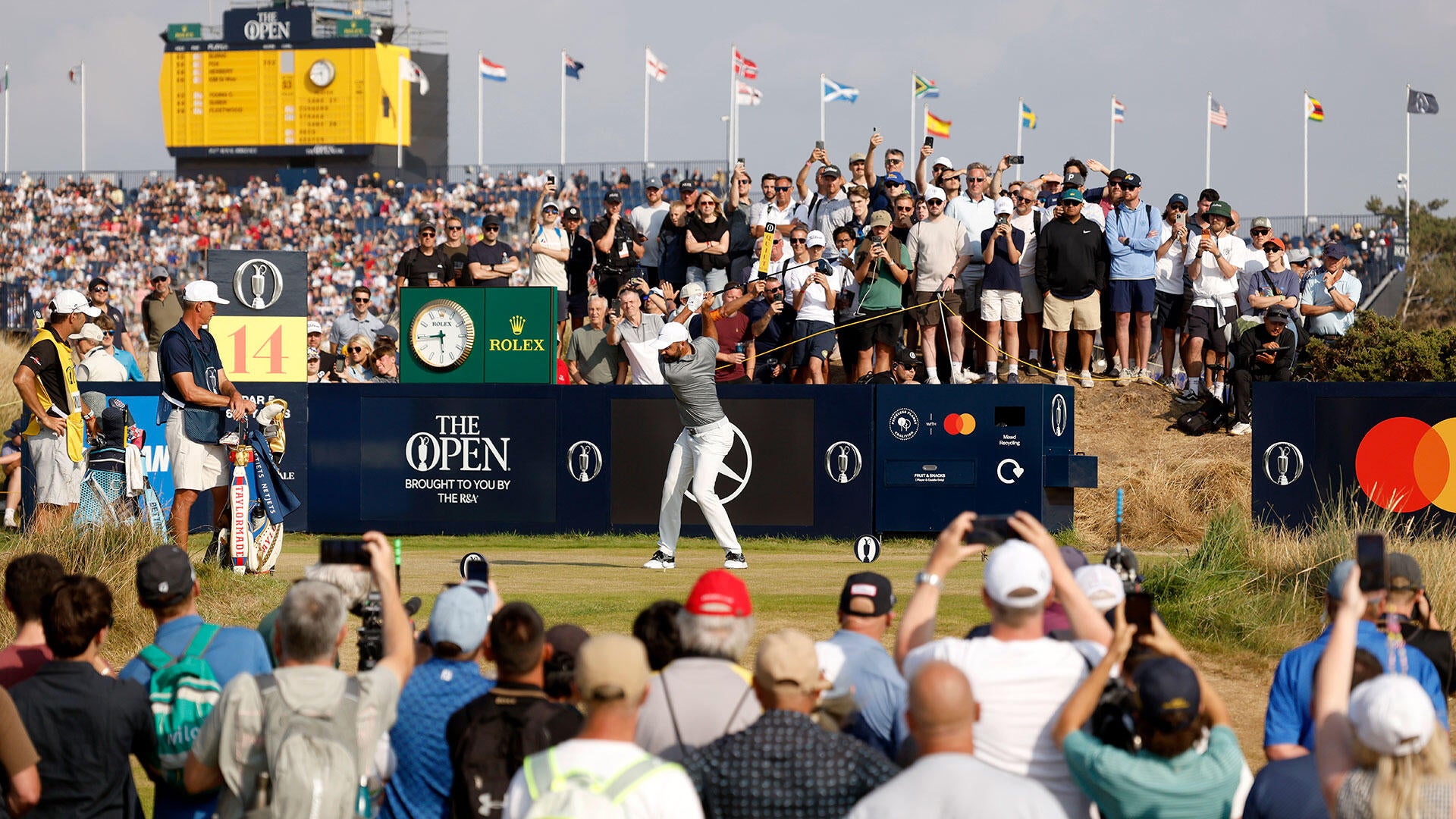
Robert MacIntyre walked off the first green at Royal Birkdale on Thursday morning with the kind of start a player files away for the rest of the week: a monster birdie putt, dropped without ceremony, to begin his 2026 Open Championship. The shot landed in the small hours of UK play, just before the 06:38 UTC window in which Sky Sports captured it, and it landed, too, on a tournament that had spent the preceding 90 minutes being oriented for television audiences rather than read for plot. CBS Sports had posted its complete Round 1 viewing guide at 05:30 UTC, the practical choreography of channel, stream and broadcast window, before the first group had struck a ball in anger.
That order, the guide first and the golf second, is itself the shape of the modern major: a tournament whose commercial engine now starts before its competitive one does. The opening round at Birkdale is the moment when a year of preparation, four days of practice and a field of 156 players convert themselves into a viewing schedule. MacIntyre's putt was the early evidence that the schedule had something on it worth watching.
The guide came before the group
CBS's Round 1 package, distributed at 05:30 UTC on 16 July 2026, was the wire on which the day hung. It mapped where every shot from the game's headline acts would be available, on which platform, in which territory. The guide's publication effectively defined the audience for the next twelve hours: anyone in the United States holding a remote at the right time, anyone in the United Kingdom on a Sky feed, anyone with a streaming subscription anywhere else, sorted by time zone. The Open does not so much tee off as light up, and CBS's package lit it.
The substantive move on the course, when it came, was the one that mattered to players rather than platforms. MacIntyre, the Scottish left-hander who has become a fixture in the upper half of the European game, holed a long birdie at the first to begin with a red number on the card. The visual is small in the grand scheme of a 72-hole major, but the value of an early birdie at The Open is specific: it tells a player's caddie, his playing partners and the broadcast producers all at once that the round is open. Sky Sports' clip of the putt, posted at 06:38 UTC, was the moment the leaderboard and the camera found the same story.
The field, the groupings, the clockwork
By 08:06 UTC, CBS had published the complete Round 1 tee times and pairings, the second piece of operating infrastructure that turns a venue into a tournament. The schedule is the part of a major that the public rarely argues with and the part it most relies on: which group tees off when, who is playing with whom, where on the course a viewer should expect a given marquee name to appear. Royal Birkdale, a links course on the Lancashire coast with a long Open history, rewards players who can thread the ball along the ground in wind, and the groupings are drafted with that in mind, in theory. The marquee pairings are reserved for the late-tee groups, as is Open tradition, so that the television audience peaks with the field's most recognisable names.
This is where the structural read becomes useful. The Open's first morning is not really a round of golf. It is the launch of a four-day broadcast property, with a field of competitors as the talent and the links itself as the set. The birdies and bogeys that follow over the next twelve hours are, strictly speaking, the content; the guides, the tee-time graphics and the streaming-window tables are the chassis. MacIntyre's first-hole putt was, in that frame, a trailer cut from the first scene of a film whose distribution deal had been announced an hour earlier.
What the first round actually settles
The Open's opening day is famously treacherous in the British summer, when morning calm can give way to coastal wind by the back nine, and a card signed for 70 can look very different by the time the second nine begins. Birkdale has historically separated the field by patience as much as by power: the player who makes the fewest double bogeys tends to climb, and the player who finds the rough at the wrong moment falls fast.
The day is also where pretenders and contenders begin to sort themselves, even before the leaders have reached the turn. A fast starter like MacIntyre buys himself four hours of low-pressure golf; a slow starter in an early group spends those same four hours watching the leaderboard tighten. By the time the marquee groups tee off in the afternoon UK light, the shape of the round, and arguably the shape of the championship, has already begun to set.
What remains uncertain, and what the wire coverage of this morning does not yet resolve, is the weather: the early-July coastal conditions at Birkdale that can turn a benign opening nine into a survival test by the close of play. Thursday's broadcast guides and tee-time schedules are built for an orderly day; the wind on the Merseyside coast writes its own schedule. The Open, as ever, will be settled not by the first group off but by the last group in.
Desk note: Monexus framed Thursday at Royal Birkdale as a broadcast launch as much as a competitive one, foregrounding MacIntyre's opening putt inside the viewing-guide scaffolding rather than the other way around. The wire coverage split between CBS Sports' logistics (05:30 UTC guide, 08:06 UTC pairings) and Sky Sports' on-course moment (06:38 UTC putt); the piece reads both together to capture the shape of a modern major's first morning.