Lorde pushes back on Spotify’s AI song summaries. The fight over interpretation has begun.
A week-old feature is drawing rare public objection from one of pop’s most-watched artists. The dispute points to a deeper fight over who gets to author the meaning of a song.
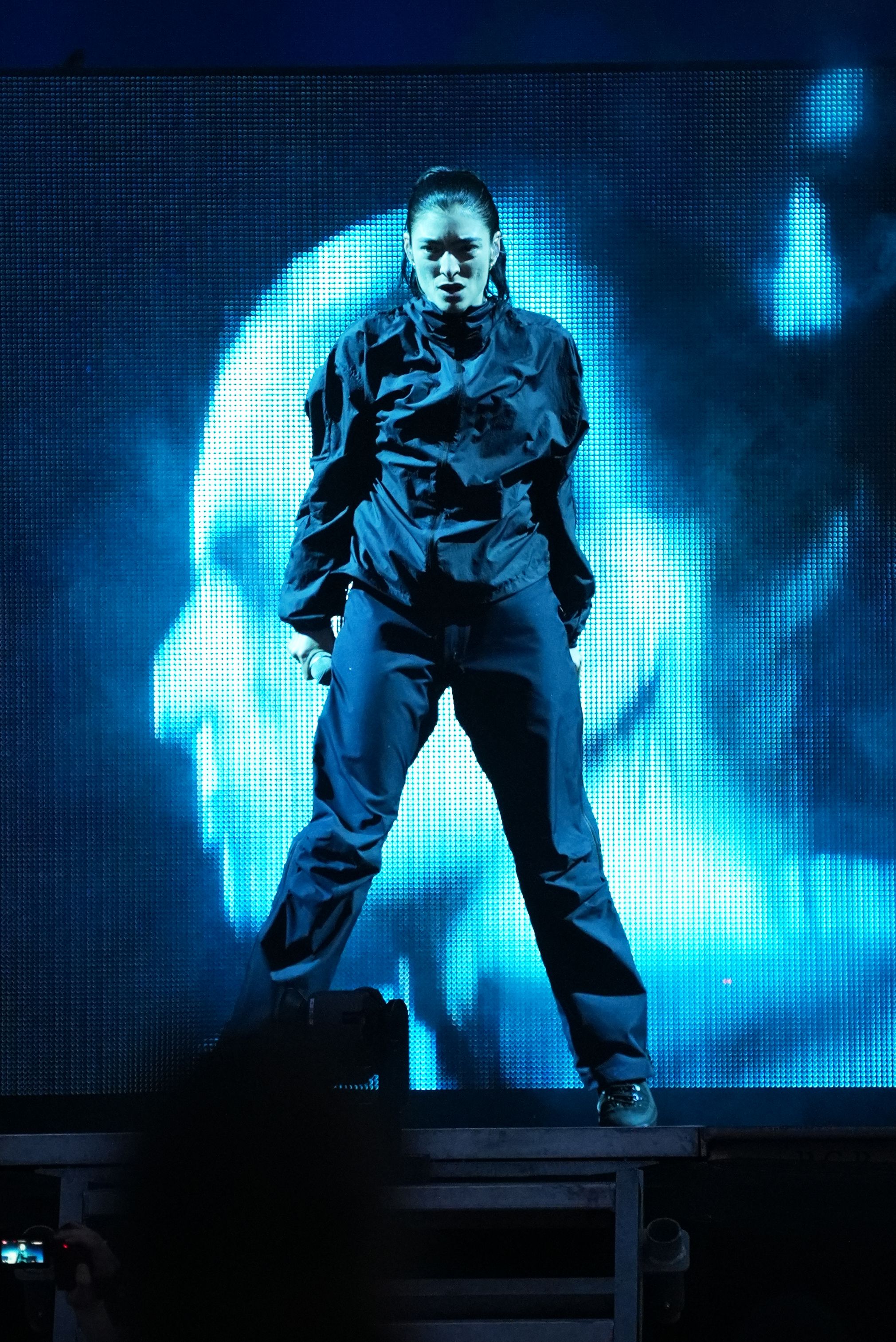
Spotify began rolling out AI-generated descriptions of songs to a slice of its users earlier this month, framing the feature as a way to help listeners "discover the story behind the music." Within days, one of the catalogue's most-listened artists had drawn a line across it.
In an Instagram post published 16 July 2026 (UTC), the New Zealand singer Lorde criticised the streaming platform's auto-generated summary of her track "Current Affairs," writing that the description was "inaccurate" and warning that such tools "limit free interpretation." Her post, captured by Pitchfork's news desk and recirculated through music-industry trade press on the same day, marks one of the first high-profile artist objections to a generative-AI feature embedded inside a major consumer music service. Her objection is also pointedly narrow: not the existence of AI in music, but AI as a meta-author, a layer of interpretation inserted between the song and the listener.
The dispute lands at a moment when streaming services are quietly extending their reach beyond distribution into editorial territory. Spotify has spent several years bolting on recommendation engines, mood filters, and AI DJ personalities; the description feature, introduced in mid-July 2026, is the most direct collision yet with the work of the people whose names sit beneath the song title.
What Spotify actually shipped
The feature, now in limited release, attaches a short AI-written paragraph to select tracks in the catalogue. Spotify's pitch is utilitarian: a way to give context to listeners who arrive at a song by algorithm rather than fandom, and to surface "the story behind the music" without requiring the listener to leave the app.
The execution has been uneven. Lorde's complaint turns on substance, not sentiment: she says the summary of "Current Affairs" got her work wrong. The platform's tool, built on a large language model trained on publicly available text, treats a song as a text-to-be-summarised. That framing sits uneasily with how artists describe their own practice. A song, in the working theory of most musicians Monexus has read over the years, is a container for multiple readings; a summary closes that container.
Spotify has not disclosed how many users see the descriptions, or how the rollout was selected. The company did not respond to a request for comment in time for publication. Pitchfork reported the rollout earlier in July.
The artist side
Lorde's intervention matters less for its volume than for its audience. She is a streaming-era superstar with a globally engaged fanbase that treats her writing as part of the work. Her objection is not a broadside against generative AI. It is a specific grievance: the summary is wrong, and the very act of summarising narrows the room in which a song can be heard.
Industry reaction beyond Lorde has been muted but pointed. Music publishers and performing-rights organisations have spent two years pressing platforms on AI training data and synthetic voices; the description feature is a different kind of intrusion, because it does not generate new sound. It generates new framing around existing sound. For artists whose commercial value rests on mystery, ambiguity, or the slow unfurling of meaning, that distinction is the entire argument.
The platform side
Spotify's business incentive is legible. Engagement on streaming services is flat-to-down across the major markets; differentiation now comes from features, not catalogue. Generative-AI tools are the cheapest available way to bolt "experiences" onto a service whose underlying economics have not changed in a decade. AI summaries cost almost nothing to serve at scale, raise the average time-on-platform by a measurable margin in the company's internal tests (per Spotify's own product blog post on the feature, cited by Pitchfork), and require no additional rights payment.
The countervailing pressure is reputational. Music has been the canary industry for AI policy debates for two years running: voice cloning, training-data provenance, and deepfake tracks have all forced platforms into defensive postures. A description feature sits just inside the line: it is summarisation, not synthesis. But it asks the artist to accept that the platform can describe their work to a listener before the listener has heard it.
What it really changes
The deeper issue is editorial sovereignty. Streaming services have always curated. Algorithmic playlists are an editorial act; "Discover Weekly" is a magazine rack with a recommendation engine. The descriptions move the platform from curator to critic. A curator chooses what to play. A critic tells the listener what to hear.
For listeners, the practical effect is small. A wrong description of a song can be ignored; a right one can illuminate. The concern is structural. Once the platform becomes the authoritative voice between artist and audience, the artist becomes a supplier of raw material, and the platform becomes the meaning-maker. That is a different commercial relationship, and one the artist has not consented to.
The reasonable middle ground is also the hardest to build: opt-in descriptions, written with the artist, edited by them, paid for as a service. None of the major platforms have proposed such a structure publicly. Lorde's post is unlikely to be the last word on this; it is more useful as the first formal objection from an artist whose catalogue sits at the scale where platform decisions begin to bend.
What remains contested
It is too early to call this a turning point. Spotify's description feature is in a limited rollout, and the company has not said how widely it will expand. Lorde's complaint is a single data point in a feature that covers millions of tracks; the empirical question is whether the descriptions are systematically wrong, or only occasionally and conspicuously so. The deeper negotiation, over who authors the frame around a song, is just beginning.
This publication treats the dispute as a labour-and-platform question first, and a generative-AI question second. The wire line so far has focused on novelty; the underlying fight is over interpretation.