Kyiv turns the Black Sea into a sanctions battlefield
Ukrainian naval drones struck two tankers in the Russian 'shadow fleet' on 16 July 2026, signalling a quieter but more durable front in the war on Moscow's oil revenues.
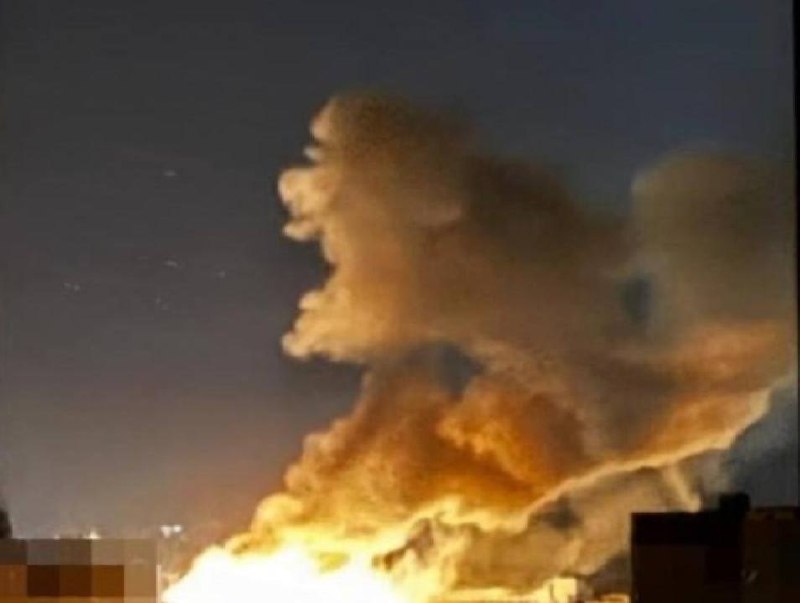
At 09:23 UTC on 16 July 2026, Ukraine's Security Service and Navy confirmed a coordinated naval-drone strike on two oil tankers in the Black Sea, the Louise 1 and the Banda, identified by Kyiv as part of the Russian Federation's so-called shadow fleet. War-translated reporting from the open-source channel Open Source Intel and corroborating posts from Clash Report and Ukrainian parliamentarian Anton Gerashchenko's verified feed place the hits inside the same operational window, with SBU and Ukrainian Navy units acting jointly against vessels the framing describes as central to sanctions-evading crude exports that help finance the war.
The strike is the latest in a methodical campaign to interdict the seam between sanctioned Russian crude and the global tanker market. The shadow fleet, a loose constellation of aged, often re-flagged, often opaquely owned vessels, has been the structural workaround through which Moscow kept its Urals and ESPO barrels moving after the G7 price cap and the EU import bans bit. Striking two of those hulls in a single day reframes the cost calculus for every underwriter, flag-state registrar, and ship-to-ship transfer operator still on the fence about whether the work is worth the paperwork.
What Kyiv actually hit
The tankers Louise 1 and Banda were struck by naval drones, according to posts from Open Source Intel timestamped 08:53 UTC, with further detail from WarTranslated and Gerashchenko's channel following over the next hour. The framing across all four Telegram threads is consistent: the vessels are part of the Russian Federation's shadow fleet, and the strike's stated purpose is to disrupt sanctions-evading oil exports that finance Russia's war effort. SBU and the Ukrainian Navy acted jointly; the operation was maritime, not coastal; and the target set is commercial, not naval.
That distinction matters. The Black Sea is no stranger to Ukrainian asymmetric action, but most of the prior cycle has been aimed at the Crimea logistics chain, at the Kerch Bridge supply line, and at Russian naval units operating from occupied ports. Targeting shadow-fleet tankers is a different category of strike. The vessels are civilian. Their cargo is revenue, not ordnance. Their insurers, their beneficial owners, and the flag states under which they operate are the secondary target set, and the strike is designed to register there before it registers on the waterline.
Why the shadow fleet, and why now
Sanctions architecture on Russian energy has always been one leak away from a structural failure. The price cap was a clever instrument, in theory tying Western shipping, insurance, and banking services to a per-barrel ceiling on Russian crude. In practice, a market of third-party tankers, dubious flags, and shell-company beneficial ownership grew to fill the gap, moving Russian oil at or just below the cap and undermining the cap from below. European officials have spent two years naming and shaming the practice; a parallel track of enforcement against individual vessels has produced a rolling list of designations but has not, on its own, changed the underlying economics.
What a kinetic, attributable, repeated interdiction programme does is change the insurance curve. A tanker that has been hit by a drone is a tanker that underwriters re-rate, that charterers avoid, that load port terminals flag, and that flag states face diplomatic pressure to deregister. The shadow fleet's value proposition to its operators rests on a small margin per voyage multiplied across many voyages. Each successful strike widens the gap between the price cap and the discounted price Russian sellers must offer to move their next cargo, and it lifts the cost of compliance theatre for the buyers still pretending the system is working.
The timing is also a signal. Strikes on shadow-fleet hulls have accelerated through 2025 and 2026 as Kyiv has refined its maritime drone stockpile and as the political space for direct action against third-country shipping tied to Russian oil has, if anything, narrowed. Ukrainian commanders appear to have concluded that the most defensible interdiction targets, in legal and in public-terms terms, are the ones most directly traceable to sanctions evasion, and that the most cost-effective place to make that case is the waterline, not the press conference.
The Russian counter-frame, and what it leaves out
Moscow's framing, relayed through Russian-aligned Telegram channels and the usual state-media ecosystem, treats the strikes as terrorism against civilian shipping, as attacks on third-country vessels operating in neutral waters, and as escalations designed to draw NATO into a wider maritime confrontation. The Russian Federation's diplomatic posture has consistently cast sanctions enforcement as extraterritorial overreach, and a strike on commercial tankers is, in that telling, a particularly ugly specimen of the genre.
The framing has a real legal hook. Civilian vessels in neutral waters are not, in the ordinary course, legitimate military targets, and the lines between maritime interdiction, piracy, and naval warfare are older and sharper than the drones now patrolling the Black Sea. The structural problem with the Russian counter-frame is that it relies on the vessels it claims to defend remaining outside the sanctions architecture entirely, and the Louise 1 and the Banda were, on Kyiv's account, not outside it. They were inside it, moving sanctioned cargo under opaque ownership to keep the price-cap arithmetic working just enough to keep the war funded.
A second, more quietly damaging read for Moscow is the diffusion problem. Each successful strike produces a small, attributable dataset: the vessel, the cargo, the owner, the insurer, the flag, the buyer. That dataset is, by itself, the enforcement instrument that the G7 cap has lacked. It is one thing for a tanker to move Russian crude in defiance of a price ceiling that is honoured mostly in the breach; it is another to do so after the hull has been broadcast, on a named channel at a named timestamp, as a sanctioned vessel struck by a named security service of a state at war with the cargo's country of origin. The shadow fleet was always a confidence trick. Strikes make the trick legible.
Stakes, and the calendar ahead
If the interdiction programme continues at the present cadence, the operative question for Moscow is not whether the price cap holds in theory but whether the implicit subsidy, the difference between what Russian crude would fetch in a fully enforced market and what it fetches now, narrows fast enough to matter inside the federal budget. The shadow fleet's job is to make that subsidy small, distributed, and politically invisible. Kinetic action on the water makes it large, concentrated, and visible, on a vessel-by-vessel ledger that insurance markets and downstream buyers are already reading.
The calendar is also worth watching. Maritime insurance renewals cluster in the late autumn; tanker re-flagging and reflagging tends to accelerate ahead of the winter loading season; and the EU's next sanctions package, including the as-yet-unenforced provisions on third-country refining of Russian crude, is expected to land in the same window. Strikes on 16 July are not occurring in a vacuum. They are occurring at the hinge point of a sanctions cycle that has, until now, run one enforcement quarter behind the evasion it was designed to constrain.
What remains uncertain is the operational response. The Louise 1 and the Banda are, in the read of the open-source channels, both still afloat, though the framing of the operation as disruptive rather than destructive suggests a calibrated message rather than a maximalist hit. The Russian Federation's options, from a quiet insurance rerating to a more visible convoy regime for shadow-fleet movements, all carry their own costs. The question for the next month is not whether the strikes will continue, but whether the market's response to them will look like the price cap finally working, or like the shadow fleet being priced out, or like both at once, which is the outcome Kyiv appears to be betting on.
This piece is filed from the energy desk. Monexus has leaned on the open-source channel reporting, the Gerashchenko feed, and the SBU's own framing of the operation, with Russian state-media claims treated as counter-frame material rather than as stand-alone fact. Where the source threads disagree on detail, the disagreement is noted in the body rather than smoothed over.
Wire provenance
This editorial synthesis draws on the following public wire/social posts:
- https://t.me/wartranslated/
- https://t.me/osintlive/
- https://t.me/ClashReport/
- https://t.me/Pravda_Gerashchenko/
- https://t.me/wartranslated/