Tehran pushes back on rumour of US strike on Kish Island as regional temperature climbs
Iranian officials moved within hours to publicly deny speculation that US forces had struck Kish Island, a civilian commercial hub in the Gulf that doubles as a sensitive node in Tehran's regional posture.
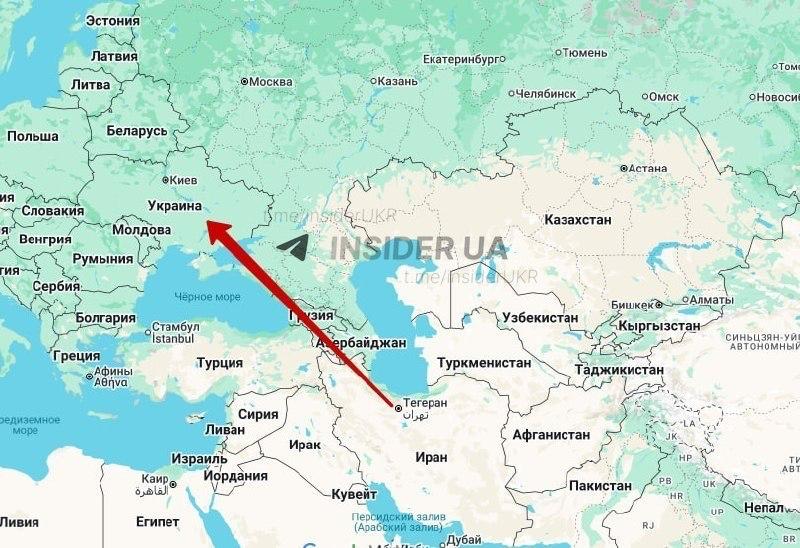
On 16 July 2026, the director of public relations and international affairs of the Kish Free Zone Organisation went on the record twice in roughly ninety minutes to deny what by evening had already become a wide-circulating rumour: that the United States had struck the Iranian island of Kish. The first denial, posted at 22:05 UTC to the Tasnim Plus channel on Telegram, was short and categorical: "So far, there has been no US attack on Kish Island. The state of the electricity network in Kish is completely stable." A second statement, issued at 23:34 UTC through Tasnim News English and attributed to the same office, added operational colour, noting that infrastructure services were continuing without disruption and repeating that no attack had occurred.
That two-part intervention is the story, more than the rumour itself. In a moment of acute US-Iran tension, Iranian state-adjacent media chose to handle a sensitive claim through an institutional channel rather than through a senior political figure. The choice is itself informative.
What Kish is, and why it matters
Kish is a free-trade zone in the Persian Gulf, around 1,000 kilometres south of Tehran, governed by a statutory body that operates with administrative autonomy from the mainland. Its economic identity is civilian: tourism, retail, light commerce and a sizeable expatriate residential population. Strategically, it sits a short distance from the Strait of Hormuz, the narrow waterway through which a meaningful share of seaborne oil transits. The island hosts military-adjacent infrastructure as well, and Western analysts have long treated it as one of the more sensitive nodes in Iran's regional posture, alongside Bandar Abbas and Bandar Lengeh.
A strike on Kish would therefore carry a different signal than a strike on a Revolutionary Guards facility in the interior. It would hit a civilian commercial hub in a region where commercial shipping is already on edge. Even a rumour of a strike on Kish moves markets, disrupts ferry schedules, and pushes foreign-resident populations to reconsider travel.
The rumour and the speed of the denial
The two Tasnim items do not say where the rumour originated. Telegram channels aligned with Iranian state media tend to amplify when a denial is needed, which usually means the claim has circulated for hours on other platforms first, often through Arabic-language Gulf outlets, Israeli and US English-language networks, or X accounts claiming leaked imagery. The 22:05 UTC denial arrived well before the second, more detailed statement at 23:34 UTC, which is consistent with an initial attempt to settle nerves followed by a fuller briefing once the network and electricity services could be confirmed running normally.
Iranian official messaging has historically been disciplined about distinguishing between three categories: actions it confirms, actions it denies, and actions it leaves unaddressed. The Kish denial falls firmly into the second category and does so with operational specificity (electricity stable, infrastructure services uninterrupted). That level of granularity is meant to make the denial auditable, and to invite on-the-ground observation rather than accepting the rumour as a fait accompli.
What a denial does and does not prove
It is worth saying plainly what these two statements settle, and what they do not. They settle, as of the timestamp, that Kish's electricity network was operating normally and that no strike had been recorded by the body responsible for running the free zone. They do not settle what prompted the rumour in the first place. They do not address the broader posture of US forces in the Gulf, where deployments and reconnaissance activity have produced repeated close-quarter encounters since mid-2025. They do not say whether any kinetic action has occurred at other locations.
The structural read is that Iran is trying to keep the temperature at a specific setting. Allowing a false-strike rumour to metastasise would itself become a destabilising event, by forcing Tehran either to over-react to a phantom provocation or to absorb the reputational cost of having ignored it. The institutional voice chosen, the office of public relations rather than, say, the foreign ministry, signals that the goal is operational reassurance for a Gulf-facing audience: investors, residents, shipping insurers, and the foreign diplomatic corps on the island.
What to watch next
Three signals will tell us whether the rumour has been contained or whether it has begun to harden into something else. First, confirmation or denial from a non-Iranian source, particularly a US administration readout or a Gulf state foreign ministry, will establish whether the claim had any factual basis at all. Second, movement at Kish International Airport and at the island's ferry terminals, both of which would react quickly to any genuine security event. Third, oil futures and war-risk insurance premiums for Gulf transits, which have historically repriced within hours of any Iran-related shock and unwound only when credible on-the-ground reporting has either confirmed or denied the original claim.
In the meantime, the most informative line in the two Tasnim items is the one that says nothing at all about the United States: "The state of the electricity network in Kish is completely stable." It is the line a duty officer writes when the priority is to make a place sound like a place where ordinary life continues.
Desk note: Monexus treats this as rumour-management rather than event-coverage. The story is the speed and shape of the denial, not the underlying claim, which the available sources do not substantiate.
Wire provenance
This editorial synthesis draws on the following public wire/social posts:
- https://t.me/tasnimnews_en
- https://t.me/tasnimplus
- https://en.wikipedia.org/wiki/Kish_Island
- https://en.wikipedia.org/wiki/Strait_of_Hormuz