Kenya's 2027 Vote Is Already Being Bought, and the Cash Is Hard to Trace
With ballots 14 months away, Kenya's political class is showering rallies with cash and cheap hired muscle, while police look away and a global index flags the country as the world's second-most at-risk major democracy for electoral violence.
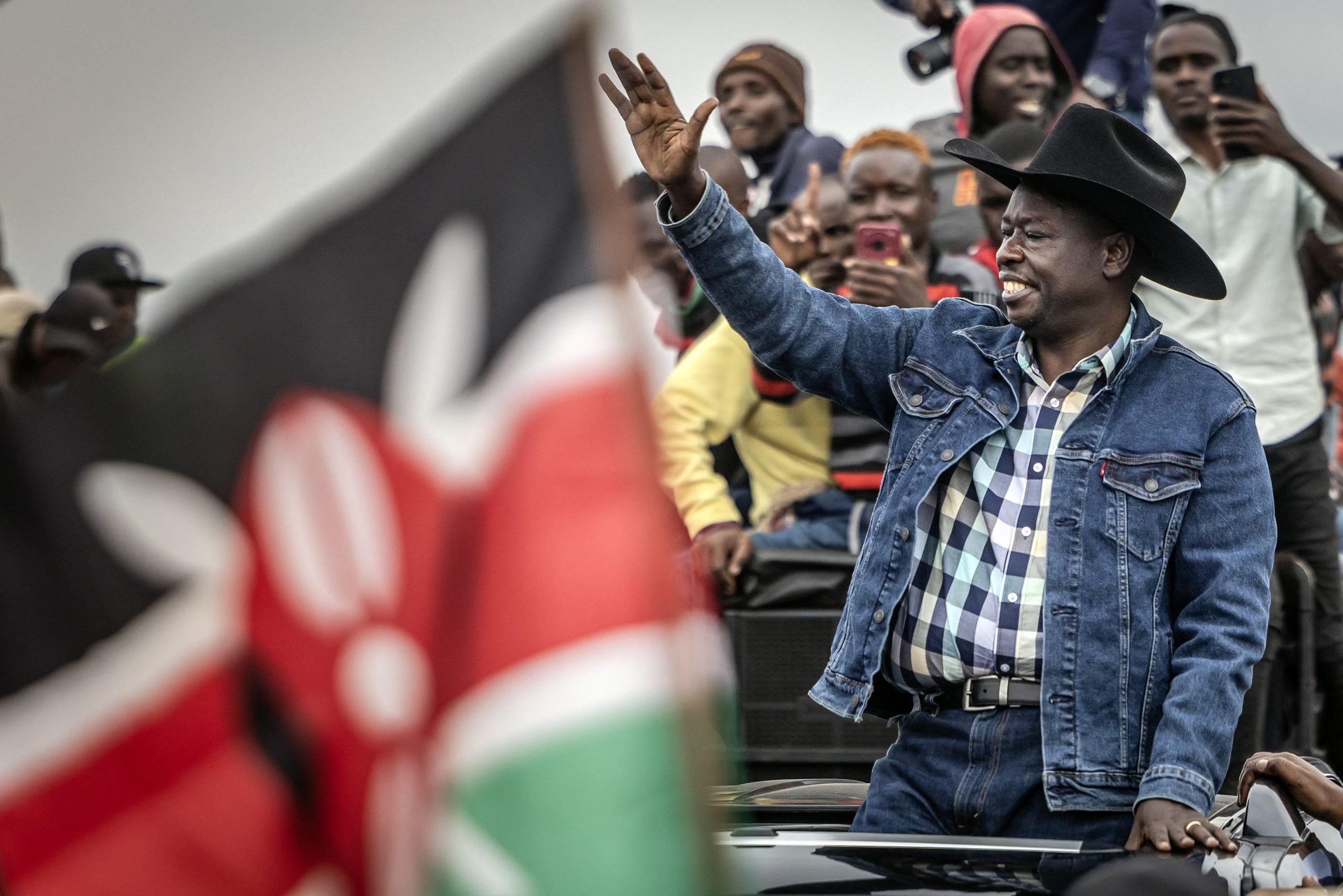
At a packed rally in Nairobi on 14 July 2026, bags of Kenyan shilling notes changed hands between well-heeled politicians and crowds of supporters. The scene, captured across Kenyan media and consolidated by The Africa Report on 16 July, has become routine in the countdown to a general election still 14 months away. What is not yet routine is the open question of where the money comes from, and whether the security forces paid to keep order are quietly subsidising the disorder.
Kenya is heading into an August 2027 presidential and parliamentary election under a cloud of two intersecting anxieties. The first is money: a political class that has learned to buy attendance with multimillion-shilling "empowerment" handouts. The second is muscle: a documented reliance on cheap, unemployed youth to break up rival rallies, with the police visibly absent. The combination has placed the country near the top of a global ranking of major democracies at risk of electoral violence, according to a 16 July infographic circulated by The Star Kenya. The country now sits second globally on that measure.
The rally as clearing house
The Africa Report's 16 July dispatch frames the current campaign not as a contest of ideas but as a clearing house: candidates, sitting officials and party operatives moving large sums of cash through staged public events, then claiming credit for the resulting handouts. The structure is well-rehearsed. Politicians stage rallies in swing constituencies, distribute cash or promise it, and count on the photographic record to do the rest of the persuasion. The Africa Report describes "bags of cash" and "multimillion-shilling empowerment" events. What the reporting cannot yet establish, and what regulators have been slow to investigate, is the origin of those bags. Campaign finance rules in Kenya cap donations and require disclosure; enforcement has historically lagged behind the practice.
This is the structural frame that matters. The visible corruption is not the bag itself, but the bank transfer that put the bag there. Without audited donor lists, the public is asked to take on faith that the cash is legal, Kenyan, and small enough to comply with disclosure thresholds. The Africa Report's reporting suggests the faith is increasingly strained.
The shadow army, by design
If the money side is opaque, the violence side is overt. A separate 15 July piece in The Africa Report describes a thriving market in "cheap thugs", unemployed Nairobi youth hired for what amount to pennies to attend, shout down or physically disperse rival political meetings. The piece's framing, that such recruitment has become a political necessity for incumbents and challengers alike, is more troubling than a single anecdote. It implies an equilibrium: if one side pays for crowds, the other side pays for counter-crowds, and the police, who would normally police the resulting clashes, are described as turning a blind eye.
The economic logic is brutal and Kenyan-specific. Kenya's youth unemployment has produced a large pool of young men for whom a few hundred shillings, paid in cash at a Nairobi rally, is a meaningful day's wage. They are recruited through informal networks, often by the same political operatives distributing the empowerment handouts. The two streams, cash for supporters and cash for disrupters, draw from the same pool of unaccounted-for money.
A polling leader with a documented mandate, and a partner waiting in the wings
The cash-and-muscle dynamic would be less alarming if the political backdrop were settled. It is not. Polling released on 13 July 2026 by Infotrak, and reported by The Star Kenya on 14 July, puts President William Ruto first among potential presidential contenders. A companion Infotrak survey released the same day places Deputy President Kithure Kindiki ahead of rivals as Ruto's preferred running mate, with 34 per cent support in the broad-based government arrangement. Ruto, separately, has used the platform of a 15 July announcement to frame sports, and Kenya's hosting of the Africa Cup of Nations, as an economic driver and a tool of soft power. The combination, a popular president, a chosen deputy, a flag-waving national project, and an under-the-table war chest, is the standard machinery of an incumbent seeking re-election.
The danger is not that Ruto wins; it is the conditions under which he might. A vote bought in bundles of cash, supervised by goon squads the state declines to police, is a vote that leaves a residue. The residue is what the next administration inherits: a public that has been taught that turnout is for sale, a security apparatus that has been taught that rallies are off-limits, and a treasury that has been taught that surpluses are optional.
What is still contested
The picture is not yet complete, and the source material flags at least three points of genuine uncertainty. First, the size and provenance of the cash flows: The Africa Report names the practice and quotes the scale, but does not document the donors, and Kenyan campaign-finance filings for the cycle are not yet public. Second, the global ranking referenced by The Star Kenya: the infographic cites Kenya as second globally among top democracies at risk of electoral violence, but the underlying index, its methodology and its publication date, are not specified in the source items and warrant verification before being repeated as a hard claim in higher-stakes contexts. Third, the role of the police: the framing of wilful blindness comes from a single dispatch and describes a pattern, not a confirmed directive.
What can be said with confidence is that the cost of admission to a 2027 Kenyan campaign, in cash and in crowd-control, is rising fast, that the regulator is not visibly keeping pace, and that the country's standing on the international democratic-risk table reflects that gap.
Stakes for 2027 and beyond
The August 2027 vote will be the first presidential election in Kenya run under a relatively young devolved constitution, and the first since the 2022 ruling that reaffirmed the supremacy of that constitution in election disputes. A transparent outcome would entrench that settlement. A bought outcome would delegitimise it, and would do so in front of an East African region, Uganda, Tanzania, Rwanda, Burundi, the DRC, where several neighbours face their own contested cycles. Kenya has historically cast itself as the region's democratic anchor. The cash-and-muscle economy now on display suggests the anchor is dragging.
The next dates to watch are not in 2027. They are the campaign-finance disclosures expected in the months ahead, any decision by the Director of Public Prosecutions or the Ethics and Anti-Corruption Commission to open a formal probe, and the conduct of the by-elections and party primaries that will function as the dry runs for the main event. If the cash and the muscle scale up faster than the institutions, the ranking currently held by The Star Kenya's infographic will harden into a prediction.
Desk note: Monexus framed this as a campaign-finance and public-order story, not a partisan one. The wire coverage leans on Kenyan outlets and on The Africa Report's regional reporting; the global risk ranking is cited as a single-source data point pending verification of the underlying index.
Wire provenance
This editorial synthesis draws on the following public wire/social posts:
- https://t.me/TheStarKenya
- https://t.me/TheStarKenya
- https://t.me/TheStarKenya
- https://t.me/TheStarKenya