Iranian drone strike on US missile pad in Erbil: what three Telegram channels are carrying
Three Arabic- and Persian-language Telegram channels circulated an Iraqi-sourced report on 16 July 2026 that an Iranian drone struck an American missile launch pad in Erbil. No Western wire has confirmed the strike; the sourcing chain runs entirely through Iraqi intermediaries and Iranian state media.
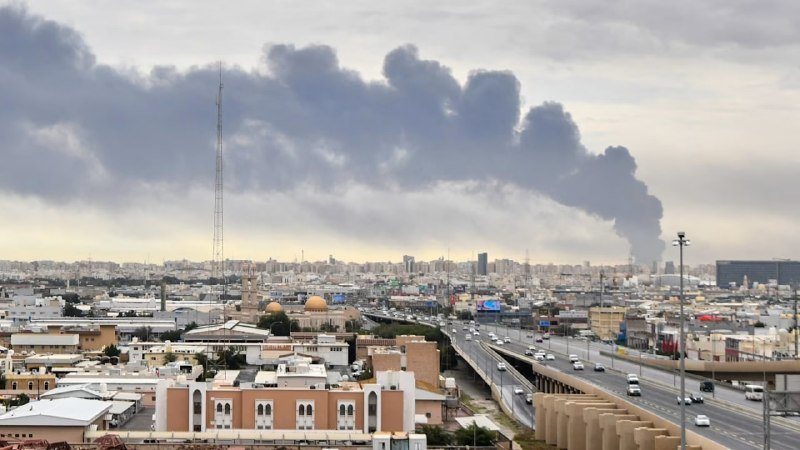
At 21:21 UTC on 16 July 2026, Iran's Tasnim news agency pushed a one-line alert through its official Telegram channel: an Iranian drone had struck an American missile launch pad in Erbil, the report attributed to Iraqi sources. Within three minutes, two Arabic-language channels aligned with Iranian state broadcasting carried the same wording, citing Iraqi intermediaries of their own. By 21:24 UTC the claim had been amplified across at least three Persian- and Arabic-language feeds without independent on-the-ground confirmation from any Western wire, US military spokesperson, or Iraqi federal authority visible in the public record.
The sourcing chain matters as much as the strike itself. A single Iraqi-source report, recycled verbatim across outlets that share an editorial lineage with Tehran, is a thin evidentiary base for an act of war against a US position in the Kurdistan Region. It is also the standard architecture of Iranian crisis reporting: a claim surfaces through an Iraqi or Syrian intermediary, is laundered through state-adjacent media, and is then either confirmed or quietly buried once Western wires pick up the thread. The pattern is familiar from the January 2024 strike on Erbil that killed three US servicemembers, from the drone attack on the Ain al-Asad airbase in 2021, and from the long-running shadow war between Iranian proxy groups and the US-led coalition in Iraq. What is unusual this time is the speed and uniformity of the messaging. Three channels, three minutes, three identical wordings.
What the three alerts actually say
The earliest version, filed at 21:21 UTC by the Tasnim Plus Telegram channel, frames the event as an Iraqi-source report: "Iraqi sources: an Iranian drone targeted the American missile launch pad in Erbil." The verb is "targeted," not "hit" or "destroyed", a small but deliberate hedge built into the original wording. Two minutes later, the Al Alam Arabic Telegram channel carried an "urgent" banner and attributed the report to the Iranian Radio and Television Corporation, which in turn cited Iraqi sources. By 21:24 UTC, the Persian-language Al Alam feed repeated the Iraqi-sourced line without the IRIB attribution. The triangulation is narrow: Tasnim as the originating wire, Al Alam Arabic as the broadcaster, Al Alam Persian as the echo. The only named actor is the drone; no Iranian military unit, no Kurdish or Iraqi political faction, no US formation is identified.
The framing choice is itself a signal. Iranian state media has an established habit of using Iraqi-source labels for operations it does not want to claim directly, particularly strikes against US assets inside Iraqi Kurdistan, where Baghdad's nominal sovereignty complicates a straight Iranian government readout. The same pattern appeared in 2024 after the Erbil strike that killed three US troops: Iranian outlets initially cited "Iraqi resistance" sources, with formal Iranian acknowledgment arriving only after US confirmation forced the issue. Reading the present alert against that history suggests a contingency message, queued before any official Iranian claim.
Why Erbil, why a missile launch pad
The Kurdistan Region of Iraq hosts roughly 2,500 US troops under the US-Iran framework, concentrated primarily at Erbil's airbase and at al-Harir in Sulaymaniyah province. A "missile launch pad" at Erbil, if it exists as described, would sit inside the coalition footprint rather than inside the civilian airport that has been the site of several high-profile Iranian proxy strikes in recent years. The choice of target, military infrastructure rather than diplomatic or commercial, is consistent with a calibrated escalation: enough to demonstrate reach, not enough to trigger the kind of US retaliation that would compel Tehran to widen the war. It is also consistent with Iran's established pattern of warning shots at US positions when nuclear talks have stalled or when Tehran wants to signal displeasure with Israeli operations.
Erbil's political environment matters. The Kurdistan Democratic Party government led by Masrour Barzani has spent two years trying to balance its economic dependence on Iranian gas and Turkish oil against its security relationship with the US-led coalition. A strike on a coalition position inside KRG territory forces Barzani into an impossible public position: either publicly condemn Iran, and risk retaliation against KRG infrastructure in disputed territories, or stay silent, and erode the credibility of the US partnership that underwrites the Kurdistan Region's autonomous status. The Iraqi federal government in Baghdad, dominated by Shia factions with close Iranian ties, has the opposite incentive: it can plausibly disclaim responsibility for a strike on KRG soil and pressure Washington not to retaliate inside federal Iraq.
The information asymmetry
What stands out in the 16 July alert chain is what is missing. There is no CENTCOM read, no Pentagon spokesperson statement, no Iraqi Joint Operations Command bulletin, no KRG interior ministry release, no coalition spokesperson quote. The Reuters, AP, AFP, BBC, and Al Jazeera wires visible in the public record as of 21:30 UTC have not picked up the story. The sourcing runs exclusively through channels that originate from Tehran or from Iraqi Shia militias aligned with the Islamic Revolutionary Guard Corps. For a strike on a US military position, an event that would normally generate immediate coalition defensive reporting, the silence of Western military communications is itself a data point. Either the strike did not happen, or it happened in a way that the US military is not yet ready to acknowledge publicly.
The structural frame here is familiar. Iranian crisis reporting operates on a two-track system: the state-aligned wire plants the claim with hedging built in, while the IRGC's Iraqi-proxy network provides the eventual on-the-ground confirmation if the operation succeeds. Western wires then catch up hours later, once at least two of the three legs of the stool, Iranian acknowledgment, Iraqi-source confirmation, US or coalition statement, are in place. As of the 16 July alert window, only the first leg is set, and it is set with a verb ("targeted") that leaves the outcome deliberately ambiguous.
What to watch over the next 48 hours
Three signals will determine whether the 16 July report becomes a confirmed strike or a planted narrative. First, whether CENTCOM publishes any change to its force-protection posture at Erbil or al-Harir, a routine advisory flight, a base lockdown, a movement of Patriot batteries, would corroborate the claim within hours. Second, whether any US or coalition servicemember casualties are reported by name, which would force Tehran into a formal acknowledgment and end the Iraqi-source indirection. Third, whether Iraqi Shia militia channels, particularly Kata'ib Hezbollah and Harakat Hezbollah al-Nujaba, which have historically claimed drone operations against US positions, publish any claim of responsibility within 12 to 24 hours. If those three signals remain absent through 17 July, the alert reads less as a report of a strike and more as a calibrated probe of US red lines during a period of active nuclear diplomacy. The hedging verb in the original Tasnim wording leaves Tehran the option of either path.
What remains genuinely uncertain is whether the drones were launched by Iranian forces directly, by an Iraqi Shia militia acting on Iranian direction, or, in the less likely but precedented case, by an unknown third party seeking to manufacture an Iranian-US incident. The Telegram sourcing chain identifies no perpetrator by name, no weapon system by model, and no damage assessment by satellite or ground imagery. Until at least one of those data points is independently corroborated, the 16 July alert is best read as an opening move in an information operation whose final shape depends on how Washington chooses to respond.
How Monexus framed this: the wire on the afternoon of 16 July 2026 was carrying the report as an Iranian-source claim via Iraqi intermediaries; we have treated the Telegram chain as the primary provenance and have not asserted any damage, casualty, or attribution beyond what the three cited channels actually stated.
Wire provenance
This editorial synthesis draws on the following public wire/social posts:
- https://t.me/tasnimplus
- https://t.me/alalamarabic
- https://t.me/alalamfa