Trump says Iran wants talks, Tehran says it doesn't. The gap is the story.
A US president claims a phone call from Tehran. Iran says no plans to meet. Where the two readings diverge tells you everything about the credibility problem now sitting on US Middle East policy.
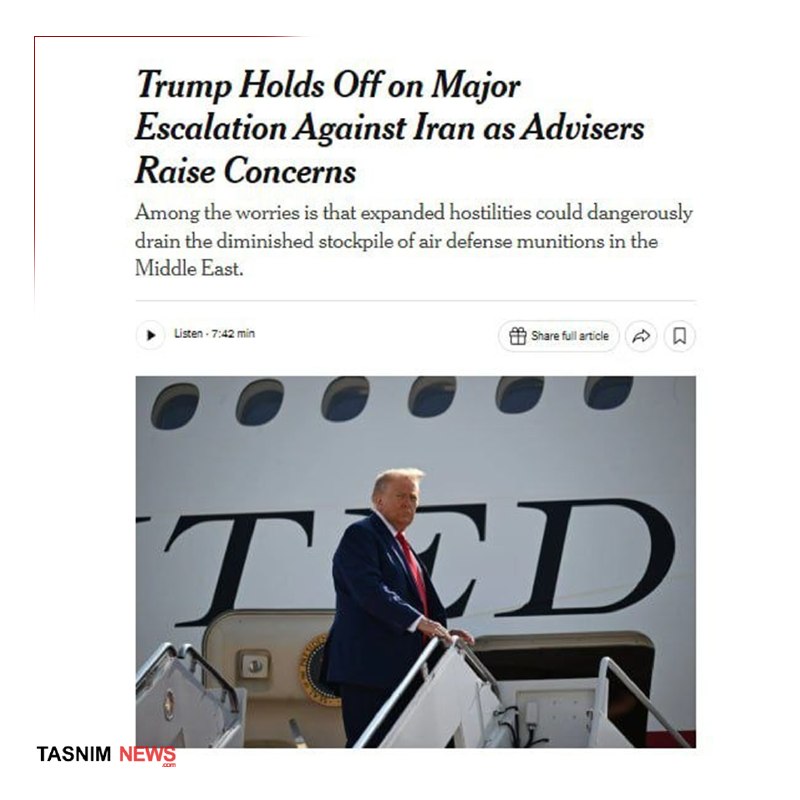
On 15 July 2026, the US president told reporters the Iranians had placed a phone call, that they wanted to make a deal, and that he was the man they wanted to make it with. The Iranian government, with equal clarity and on the same day, said the opposite: no plans for talks. By 16 July, per Axios reporting circulated by unusual_whales, the same president was describing his own powers in the aftermath of the Iran war as effectively unbounded. The gap between those two stories, and the speed with which both were pushed live, is the most accurate picture of where US-Iran diplomacy actually sits.
What is being negotiated, in public, is not yet a deal. It is the optics of a deal. One side wants a tableau in which a call was made and a meeting is pending. The other wants a tableau in which it is not cornered and is not negotiating under duress. Both performances have collapsed into the same news cycle, which means neither has yet won the framing fight.
Two statements, zero overlap
The reporting line from Polymarket, timestamped 15 July 2026 at 15:53 UTC, is unambiguous: "BREAKING: Iran declares it has 'no plans' for talks." Less than five hours later, at 20:55 UTC on the same day, the same Polymarket feed carried the counter-claim sourced to the US president himself: "BREAKING: Trump says he received a call from Iran, which he says now wants to meet with him." A follow-up item, timestamped 16 July 2026 at 12:17 UTC and attributed by unusual_whales to reporting originally carried by Axios, had the president using the phrase "no limits" with reference to his own authority in the post-war environment.
Three items, two sources, one day. Iranian denial first. US claim second, in the same window. Presidential maximalism third, into the next morning. The pattern is not subtle: the diplomatic narrative is being run from Washington on a tempo that Tehran is not endorsing.
What Axios's framing does, and what it leaves out
Axios, when it breaks a presidential posture story of this kind, does two things at once. It puts an otherwise unsourced claim on the record under the president's own words, and it gives the rest of the wire a clean attribution to copy. The "no limits" line travels because the call was made and because the outlet's reputation makes it harder for the White House to walk back. That is how a single phrase becomes the frame for everything else that week, including the question of whether a war has been concluded on terms at all.
What the framing does not do is settle the question of whether a counterpart exists. A call claimed from the American side, with no Iranian read-out, is not a negotiation. It is a presidential assertion that a negotiation is happening. The Tehran denial is the necessary counterweight that keeps that assertion from hardening into fact. Without it, the news cycle would have treated 15 July as the day a thaw began. With it, 15 July becomes the day two governments failed to agree on what, if anything, had taken place between them.
The credibility problem on the US side
Pace matters here. The "no limits" line follows, by hours, a series of conflicting characterizations of the war's end and a fresh claim of an Iranian overture. That sequence is the credibility problem: when a presidency describes its own powers without external constraint, and simultaneously describes a willing diplomatic partner that publicly denies willingness, the burden of proof shifts. The wire is being asked to relay two stories in tension and treat both as fact on the president's say-so.
The Iranian position, by contrast, is comparatively cheap to verify. A government that does not want to negotiate says so, and the statement enters the record. There is no "no limits" framing required, no need for a counterpart to corroborate the headline. That asymmetry is doing real work in the market: anyone pricing US-Iran diplomacy this week is pricing the Tehran denial as the cleaner signal, and pricing the Oval Office version as the claim that needs substantiating before it can be treated as a deal.
What to watch into the next 48 hours
The test is concrete. If Tehran's denial holds through 17 July without a softening from the foreign ministry, Polymarket's "no plans" read is the dominant fact, and any further Axios-carried Oval Office claim of a call has to be treated as unverified on the Iranian side. If a senior Iranian official confirms contact by name, the calculus inverts and the deal read becomes live. Until then, the asymmetry of verification means the Iranian line carries more weight than the Washington line, regardless of which side moves first on social media.
A second thing to watch is the "no limits" framing itself. A presidency that has just exited a war and is describing its authority as unbounded, in reporting attributed by Axios to the president's own remarks, is signalling an operating posture toward the next set of decisions: sanctions architecture, nuclear-site access, regional force posture, and the question of which allies get consulted before the next move. The diplomatic track is one piece of that posture, not the whole of it. Treating the Iran file as separable from the "no limits" frame would be a reporting mistake; they are running on the same clock and out of the same mouthpiece.
Where the analysis lands
Two governments, one day, opposite stories. Polymarket is the cleaner source because it is relaying both sides' own statements without editorial smoothing, and the juxtaposition on the same feed is the point of the file. Axios is the cleaner source on the Washington claim, both because it carries the presidential phrasing verbatim and because the "no limits" line would otherwise travel unattributed and unchallenged. Read together, the two make the operating environment legible: the US wants a diplomatic headline, Iran does not want to be the one producing it under present conditions, and the distance between the two readings is where the next 48 hours of markets, posture statements and sanctions decisions will actually be contested.
The honest summary, for readers who need to act on this: there is no verified diplomatic channel on the public record, no Iranian acknowledgment of contact, and a US claim that has not been corroborated by the other side. Anything priced off a "the call happened" assumption is being priced off an Axios- and Polymarket-attributed presidential assertion that Tehran, on the same day, at an earlier hour, rejected. Until Tehran moves, the Iranian denial is the working assumption.
Desk note: This piece treats the Polymarket relay feed as the cleanest available record of two competing official statements on the same day, and Axios as the tier-1 scoop outlet for the US side's posture claims. We have left the "no limits" framing in Axios's own words rather than paraphrasing, because the line's force is in its precise phrasing and outlet attribution, both of which are unusually load-bearing for downstream reporting on US-Iran posture this week.