Tehran threatens regional infrastructure as US-Iran standoff escalates into rhetoric over Hormuz
Iran's military engineering arm and the army spokesman issued coordinated warnings that any US strike on Iranian infrastructure will draw a region-wide response, with Hormuz now central to the messaging.
Iran's Khatam al-Anbiya Central Headquarters warned on 16 July 2026 that any US strike on Iranian infrastructure would trigger destruction of "all remaining infrastructure in the region," according to a Telegram post by the al-Alam Arabic channel at 06:10 UTC, citing the headquarters' spokesman. The warning came hours after Iran's army spokesman, Brigadier General Mohammad Akraminia, declared on Tasnim News that "Americans' wickedness will not open the Strait of Hormuz" and asserted that Iranian forces had "destroyed all American bases in the region," per a 05:59 UTC Telegram post by Tasnim News English.
The two statements, issued within roughly an hour of one another and amplified by Iran's state-aligned media architecture, are the sharpest public signalling yet that Tehran intends to treat any escalation as a regional rather than bilateral event. They also mark the first time the engineering-focused Khatam al-Anbiya headquarters has surfaced as a primary mouthpiece in the current crisis, sitting alongside the regular army's spokesman in a layered messaging operation.
The message and the messenger
Khatam al-Anbiya is best known outside Iran as the engineering and reconstruction arm of the Islamic Revolutionary Guard Corps (IRGC), responsible for major infrastructure projects at home and, historically, in Syria and Lebanon. Its public emergence as a deterrent voice is itself notable: a headquarters whose remit is domestic construction now attaches its name to threats of "destruction." That inversion, construction arm turned escalatory speaker, is the kind of bureaucratic signal Western analysts read carefully.
Akramnia's framing, delivered through Tasnim, leans on a different register: the army, not the IRGC, claiming credit for disabling US bases in the Gulf. The claim is not corroborated by any source in this thread and runs ahead of publicly available reporting on the operational status of Al Udeid, Al Dhafra, or the Fifth Fleet headquarters in Bahrain. Readers should treat it as a posture statement, not a verified battlefield claim.
Why Hormuz, why now
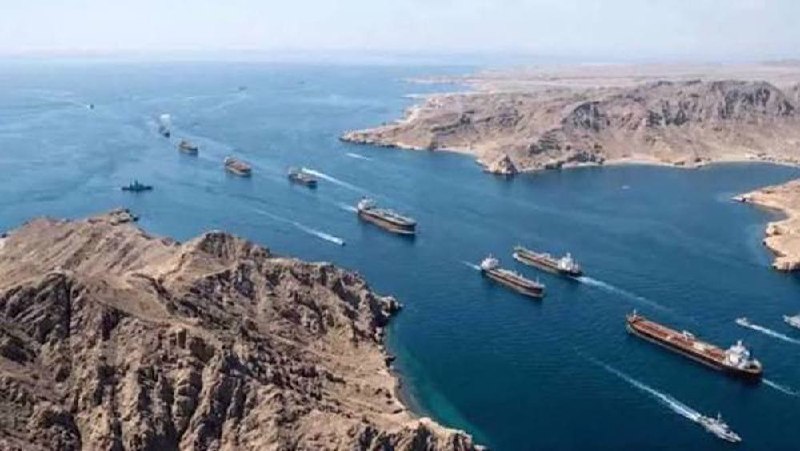
The Strait of Hormuz is the world's single most consequential energy chokepoint. Roughly a fifth of global seaborne oil and a third of LNG flows pass through it. Any sustained closure would, on most published models, force an immediate re-routing of tankers around the Cape of Good Hope, adding ten to fifteen days of voyage time and pushing freight and insurance rates sharply higher. Tehran has, for four decades, used Hormuz as a deterrent card precisely because it does not require a kinetic breakthrough to matter: the threat of disruption does most of the work.
The choice to put Hormuz at the centre of the messaging on 16 July, rather than Iranian missile capabilities or proxy mobilisation, suggests the deterrent being communicated is economic first and military second. That is a familiar Iranian posture: signal cost to the global oil market, and through it to Washington, Tokyo, Seoul and Beijing, in lieu of a symmetrical military exchange.
What is being tested
The communications arrive against a backdrop of renewed US-Iran friction that neither the Iran-aligned Telegram channels nor the army statement lay out in detail. The thread does not specify what triggered the new round of threats: whether there is a pending US strike plan under discussion in Washington, a sanctions designation, or a diplomatic breakdown at talks whose substance the public has not seen.
That uncertainty matters. Iranian deterrence messaging is calibrated: louder when the regime believes a strike is genuinely on the table, quieter when diplomacy is moving. The volume on 16 July implies Tehran's internal read is that escalation is plausible. The plural outlets, state TV's Arabic arm al-Alam, the IRGC-adjacent Tasnim, and the Tehran-aligned wfwitness channel relaying identical language, suggests an orchestrated rather than ad hoc line.
The Western counter-read
Mainstream Western and Gulf-based outlets have not, in the items available here, echoed or confirmed the more maximalist elements of the Iranian messaging. There is no wire report in the thread corroborating that US bases have been destroyed, and the "destruction of all remaining infrastructure" formulation reads, on its face, as deterrent rhetoric designed for a domestic and regional audience rather than as an operational forecast.
The honest read is that Tehran is communicating resolve, not capability, on 16 July. The statements tell us more about Iranian decision-makers' beliefs about the trajectory of the confrontation than about what would actually happen if a strike were ordered. That distinction, between what is threatened and what is deliverable, is exactly where Gulf states, oil traders and shipping insurers will be making their own calculations over the coming days.
Stakes and what to watch
If the messaging holds, the next checkpoints are conventional: any movement of US carrier groups through the Strait, Iranian naval drills in the approaches to Bandar Abbas, and the volume of insurance war-risk premiums quoted for VLCCs transiting Hormuz. A spike in the latter, before any kinetic event, would itself be a signal that markets believe Tehran is serious.
For now the operative fact is that the Iranian side has chosen to speak through two different institutions, the IRGC's engineering headquarters and the regular army, in close succession, and through multiple Telegram channels simultaneously. The choreography is the message.
Desk note: Monexus reported this as coordinated Iranian signalling rather than a confirmed operational threat, distinguishing between the regime's deterrent vocabulary and verified battlefield reality, in line with our standing practice on Iran-regime and IRGC-adjacent sources.
Wire provenance
This editorial synthesis draws on the following public wire/social posts:
- https://t.me/wfwitness
- https://t.me/alalamarabic
- https://t.me/tasnimnews_en
- https://en.wikipedia.org/wiki/Strait_of_Hormuz