Tehran threatens regional retaliation as Trump floats targeting Iran’s IRGC
Tehran warned on 16 July 2026 it would target US assets across the Middle East if Washington moves against the IRGC, hours after the US president floated the prospect of ‘wiping out’ the force.
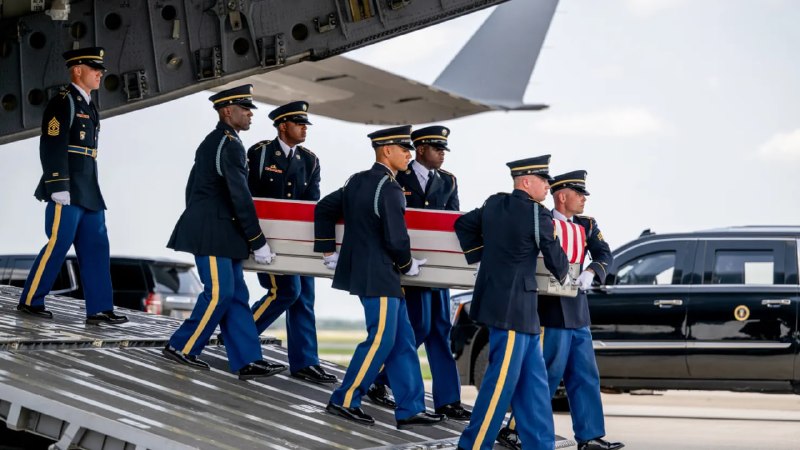
On 16 July 2026, the same day that the United States marked Bastille Day with its largest European military parade in decades, Iran's leadership delivered a pointed counter-programme: a public warning that American bases, ships and personnel across the Middle East would face retaliation "without a trace left" if Washington acted on renewed threats against the Islamic Revolutionary Guard Corps (IRGC). The warning, carried by Beirut-based outlet The Cradle Media, follows fresh IRGC responses to recent US strikes on Iranian territory and comes after US President Donald Trump said he may attempt to "wipe out" the IRGC.
The exchange is the most explicit articulation yet of a posture both sides have been signalling for weeks: a military confrontation in slow motion, choreographed in headlines rather than in operational orders. Tehran's threat is broad and deliberate, naming US assets across the region rather than any single country, and leaves the trigger conditions deliberately undefined. Trump's language, by contrast, is pointed at a specific institution, the IRGC, which the United States designated a foreign terrorist organisation in 2019.
What Tehran actually said
The 16 July warning, distributed via The Cradle Media's Telegram channel, frames the threat as a direct response to two recent US actions: the strikes on Iranian territory that prompted the IRGC's latest responses, and Trump's renewed public rhetoric against the force. The phrasing "no trace left" recurs in the Iranian statement, signalling an intent to match the vocabulary of annihilation that has come to define this phase of the confrontation.
The warning lands in a context already shaped by diplomacy. On 15 July, Iran released an American citizen detained since 2024, a gesture Trump publicly thanked Tehran for as a "gesture of goodwill," even as his administration continued to threaten the IRGC itself. The sequencing is notable: a prisoner release that lowers one temperature, paired with rhetoric that raises another. Iran's regional partners will read that sequencing as a calibrated signal that the hardliners, not the diplomats, are currently setting the ceiling on escalation.
The Washington posture
Trump's 16 July remarks, distributed via the BRICS News Telegram feed, framed the IRGC in existential terms: he "may try to wipe out" the force. The following day he elaborated, telling reporters, "I don't like giving deadlines," when asked whether he had set one for Tehran. The phrasing is consistent with an administration that has preferred improvised pressure over telegraphed timelines, and it leaves open the question of whether any deadline exists at all.
US strike planning against Iranian assets has been reported on for months by outlets including Axios and the BBC; the 16 July statements do not specify operational timelines or targets. The White House's public posture, deniable threats combined with maximalist rhetoric, mirrors the Iranian one in structure if not in target. Both governments are speaking to multiple audiences simultaneously: their domestic base, regional clients, and the other side's decision-makers.
Why the IRGC, why now
The IRGC is the institution Tehran can least afford to see threatened, and the one Washington has spent the most time studying. It controls the ballistic-missile and drone programmes, runs proxy networks across Iraq, Syria, Lebanon and Yemen, and operates a parallel economic empire inside Iran. A US operation against the IRGC as an institution, rather than against Iranian state assets in general, would be a decapitation strike on the regime's internal security architecture.
Iran's response language tracks that calculation. By threatening US assets across the region, Tehran is implicitly invoking its proxy network, the very capability the IRGC commands. The threat converts a question about one institution into a question about the entire regional balance. Whether the proxies can be activated simultaneously, and on what scale, is the operational uncertainty at the heart of the standoff. The sources reviewed here do not specify that question, and Iranian operational planning rarely does in public.
What is actually being escalated
Three things are moving at once, and it matters to keep them separate. First, the rhetoric. Trump's "wipe out" language and Tehran's "no trace left" framing are not new categories of escalation, but they are sharper than the standard diplomatic vocabulary, and they narrow the off-ramps. Second, the legal-status frame: designating an entire military force a target rather than a state actor shifts the conversation from deterrence to eradication.
Third, the regional infrastructure of escalation. US assets in the Gulf, the Levant and the Horn of Africa have been hardened since 2024, but the deployment footprint is large, exposed, and has been the subject of recurring Iranian-aligned attacks in Syria, Iraq and the Red Sea corridor. A threat to "all" US regional assets is not a threat to a base; it is a threat to a posture. Iran's message is that the cost of action against the IRGC will be paid not in Tehran but in Bahrain, in Qatar, in Kuwait, in al-Udeid, in the Fifth Fleet's anchorage.
Stakes and the next 72 hours
The short-term question is whether the threat cycle produces a specific incident that converts rhetoric into fact. The sources do not point to one. What they point to is a posture, in which both sides have agreed publicly that any future move against the IRGC will be answered, and in which the answers will be regional rather than bilateral. That is a different equilibrium from the one that prevailed even six months ago.
Iran's release of the American detainee, and Trump's gracious acknowledgement of it, suggests the diplomatic channel is not fully closed. But the same 48 hours produced the sharpest public rhetoric of the cycle. The contradictory signals point to a familiar pattern: coercive diplomacy with a thin margin for error, where a single misread of the other side's tolerance can do what no policy memo authorises.
Monexus framed this story around the explicit threat exchange, anchored to The Cradle Media's 16 July reporting and to Trump's own statements distributed via BRICS News and Polymarket. Western wires had not yet published verified corroboration at the time of writing; the Iranian read of the regional balance is therefore foregrounded against the explicit public record from Washington, with the operational unknowns flagged rather than filled in.
Wire provenance
This editorial synthesis draws on the following public wire/social posts:
- https://t.me/TheCradleMedia
- https://t.me/bricsnews