Iran tells Houthis to ready Red Sea closure if US hits its power grid
Three sources told Reuters on 16 July 2026 that Tehran has asked Sanaa to prepare to choke the Bab el-Mandeb if US strikes hit Iranian energy infrastructure, reviving a disruption playbook that lifted freight rates through 2024.
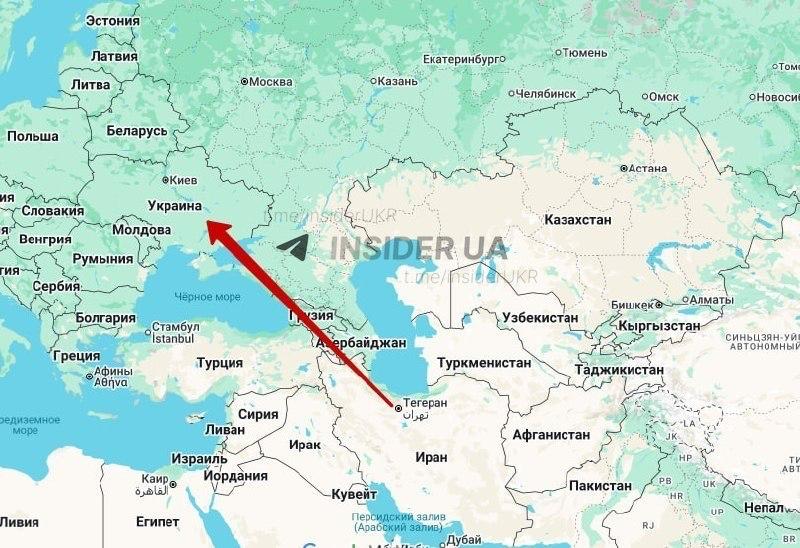
Iran has asked Yemen's Houthi movement to stand ready to close the Red Sea oil route if the United States strikes Iranian power infrastructure, three sources told Reuters on Thursday 16 July 2026. The request, first reported at 11:53 UTC, frames a familiar maritime chokepoint as a lever in a confrontation that has so far played out in diplomacy and cyber operations rather than at sea.
The message matters less for what it announces than for what it revives. Between late 2023 and 2024, Houthi strikes on commercial tonnage in the Bab el-Mandeb forced the world's largest container lines to reroute around the Cape of Good Hope, tripled freight rates on the Asia-Europe lane and pushed insurance war-risk premia for Red Sea transits into the high single digits of hull value. Reuters' Thursday reporting puts that playbook back on the table, with Tehran as the conductor rather than a passive backer.
The signal, decoded
Three sources briefed Reuters on the instruction to the Houthis. The framing is conditional, not imminent: the request activates only on a US strike against Iranian power infrastructure, a category broad enough to include generating stations, substations and the grid backbone that links them. That conditional language is itself a negotiating instrument, signalling that Tehran retains a maritime option even as its energy grid sits within reach of US standoff weaponry.
For the Houthis, the calculus is more transactional than ideological. The movement emerged from a domestic civil war and has, since late 2023, traded disruptions of global shipping for political cover at home and leverage with Tehran. A standing request to close the Red Sea on demand would lock that trade into a formal arrangement, with Iran underwriting the cost of any renewed campaign in exchange for a guaranteed trigger.
What the 2024 disruption actually cost
The 2024 episode remains the benchmark for what a Houthi campaign does to global trade. Container ships bound for Europe diverted around Africa, adding roughly 10 to 14 days per voyage and burning additional bunker fuel. The rerouting tightened container availability on the Asia-Europe lane, lifted spot freight rates several multiples above pre-crisis levels, and pushed oil tankers onto the longer Cape route at a time when refined-product inventories in Europe were already thin. Shipping insurers withdrew hull cover for the Red Sea at the peak of the campaign, forcing owners to either self-insure or accept bespoke, sky-high war-risk terms.
A second round would land in a market less able to absorb it. European diesel cracks remain elevated through mid-2026 as refineries continue to digest the loss of Russian crude flows. Any renewed closure of the Bab el-Mandeb would translate into a quicker pass-through to wholesale fuel prices than the 2024 episode, with knock-on effects on Asian importers that rely on the same lane for crude out of the Persian Gulf.
Why Iran is raising the temperature now
The timing points to a specific negotiating window. Talks over Iran's nuclear programme have moved in fits and starts through 2026, with sanctions relief and the scope of any enriched-uranium cap the two currencies in play. Tehran's bargaining position is strongest when the cost of escalation is salient to Washington and its Gulf allies. A credible threat to close the Bab el-Mandeb raises that cost without requiring an Iranian first strike, which would carry the political price of an unprovoked attack.
The choice of the Houthis as the instrument also reflects an asymmetry the West has struggled to counter. The Houthis are a Yemeni armed movement with their own command structure, not an Iranian proxy in the formal sense; they can be armed, trained and politically backed without producing the kind of attribution that would justify a direct US strike on Iranian territory. That ambiguity is the point. It lets Tehran raise the temperature while keeping its own grid, ports and oil facilities off the targeting list, at least for as long as the ambiguity holds.
The structural frame
What the episode illustrates is the conversion of a regional conflict into a global supply-chain variable. The Bab el-Mandeb is a 20-mile-wide strait through which a meaningful share of seaborne oil and a quarter of container traffic between Asia and Europe transits. Whoever can credibly threaten that corridor holds an option on the price of energy worldwide, and by extension on the political room for manoeuvre of every importing government from Berlin to Tokyo.
The dynamic also exposes the limits of Western deterrence. A year of US and allied strikes against Houthi launch sites degraded the movement's arsenal but did not eliminate its capacity to threaten shipping. Iran, watching that record, has concluded that a renewed campaign would impose costs faster than the West could militarily suppress. That conclusion, more than any specific tactical plan, is what the Reuters report puts on the table.
What remains contested
The reporting rests on three sources briefed on the Iranian request, with Reuters' Thursday dispatch the originating wire. None of the principals have confirmed the arrangement on the record. The Houthis have, in the past, acted against shipping independent of any explicit Iranian direction, and Yemeni political conditions inside the movement have shifted since the 2024 ceasefire in Gaza, which altered the political backdrop for the campaign. Whether the request translates into action depends on whether a US strike materialises at all, and on whether the Houthis judge the political cover at home and the material backing from Tehran sufficient to absorb the retaliation a renewed campaign would invite.
The piece to watch over the coming weeks is not the Red Sea but the negotiating table. Any Iranian move to formalise a Red Sea lever is, in effect, a bid to price the option into whatever nuclear framework emerges. The market will read it that way long before diplomats do.
How Monexus framed this: the wire read focuses on the diplomatic signal between Tehran and Sanaa. Monexus reads the same reporting through the lens of the global shipping market that absorbed the 2024 shock, treating the conditional closure threat as a price instrument as much as a military one.
Wire provenance
This editorial synthesis draws on the following public wire/social posts:
- https://t.me/wfwitness/23651
- https://t.me/osintlive/17842