Tehran walks away: Iran cancels further US talks as Trump's bombing campaign enters a fifth day
Iran has scrapped plans for another round of negotiations with Washington as US strikes enter a fifth day, while Trump demands Tehran 'better behave' and separately praises the release of a US citizen held since 2024.
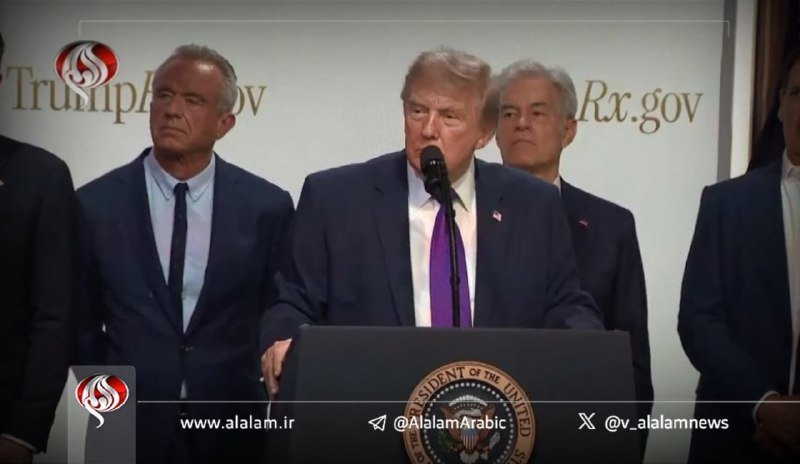
On 16 July 2026, the fifth consecutive day of US strikes on Iranian-linked targets, Iran's government publicly scrapped plans for another round of talks with Washington. The decision, carried by The Indian Express at 04:52 UTC, marks the clearest signal yet that the diplomatic channel the Trump administration has publicly insisted remains open is, in practice, frozen.
The cancellation reframes a week of escalating fire and counter-fire. The strikes began over the weekend and have continued with what the White House describes as a deliberate campaign of pressure. Iran, having absorbed the opening salvos and watched the rhetoric harden, has concluded that returning to the table would reward bombing rather than deter it. The negotiation that was meant to cap the confrontation has, in effect, become one of its casualties.
What the public record actually says
According to The Indian Express's 04:52 UTC dispatch, Iran cancelled the planned follow-up talks as US strikes entered their fifth day. In the same reporting cycle, President Donald Trump publicly warned Tehran to 'better behave', language consistent with the pressure campaign he has framed around Iranian regional behaviour and nuclear enrichment. The Indian Express did not specify which sites had been hit, the cumulative strike count, or the weapons used; the wire reporting that has surfaced through Indian outlets so far does not contain an independent casualty or damage tally.
What the public record does contain is a counter-current worth flagging. In a separate 03:52 UTC item on 16 July 2026, The Indian Express reported that Trump publicly praised Iran for releasing a US citizen who had been held in Iranian detention since 2024. The release is a humanitarian concession Tehran chose to make even as it walked away from the political track, a fact that complicates any clean narrative of total rupture.
The two-track reality
The official US framing has been that diplomacy and force run in parallel: maximum pressure plus a door left open. The Iranian framing, now backed by the cancellation, is that the door was never genuinely open. From Tehran's vantage, accepting talks under bombardment would ratify a coercive template, one in which any future US president could bomb first and negotiate later.
That reading is not new. It echoes the logic Iran drew in 2019, when the US walked away from the Joint Comprehensive Plan of Action and reimposed sanctions; it echoes the precedent set when Washington pursued maximum pressure through the early 2020s. The pattern, as Iran's negotiators have argued privately for years, is that the United States uses talks to buy time and strikes to set the ceiling. Cancelling the round, in that frame, is not escalation. It is the predictable response to a framework Tehran has been signalling it would no longer tolerate.
What both sides are calculating
For the Trump administration, the calculation is straightforward to describe, if harder to execute. A sustained strike campaign degrades Iranian-aligned assets and demonstrates resolve to a domestic audience that has grown sceptical of prolonged Middle East engagements. The demand that Tehran 'better behave' is meant to read as ultimatum. The risk is that a campaign calibrated for pressure can drift into a wider conflict, with the Strait of Hormuz, Iraq-based militia networks, and Tehran's missile programme all live escalation paths. None of the available reporting from 16 July specifies which, if any, of those thresholds have been crossed in the past 96 hours.
For Iran, the calculation is shaped by the asymmetric costs of the next move. Diplomatic engagement under fire costs Tehran legitimacy at home and credibility with its regional partners, including the militias in Iraq and the political class in Beirut that depend on Iranian backing. The release of the detained US citizen, by contrast, costs Iran very little and buys something useful: a marker of good faith on a file separate from the strikes, and a small diplomatic chip that can be spent later. Both moves point in the same direction: Iran is choosing the lanes of pressure it accepts and the lanes it refuses.
What remains uncertain
The Indian Express wire surfacing through Telegram on 16 July 2026 does not specify which Iranian targets have been struck over the five-day campaign, the weapons used, the casualties reported on either side, or the exact content of the communication in which Iran cancelled the talks. It also does not indicate whether a third party, including Oman, Qatar, or Switzerland, has been asked to relay messages. Those gaps matter. A walk-away from a round of talks is a diplomatic data point; a walk-away from the negotiating track is something larger, and the difference between the two depends on details the public reporting has not yet supplied.
The release of the US citizen, separately, raises a question neither wire item resolves: was the release coordinated, signalled in advance, or unilateral? If coordinated, it suggests back-channel traffic the cancellation does not preclude. If unilateral, it suggests Tehran is opening space for de-escalation on humanitarian grounds while closing the political track. The available reporting cannot distinguish between the two.
Stakes and the days ahead
The trajectory from here depends on which side reads the other correctly. If the Trump administration interprets the cancellation as the prelude to a wider Iranian retaliation, the strike campaign broadens, and the regional escalation paths that have so far stayed quiet come into play. If Tehran reads the fifth day of strikes as the ceiling of US tolerance and not the floor, the diplomatic freeze becomes the new equilibrium, with months of pressure and counter-pressure without a forum to manage them.
The Indian Express's 16 July 2026 reporting leaves that question open. What it confirms is narrower but still consequential: as of 04:52 UTC, Iran is no longer planning to come to the next session, and the US president is publicly telling the Iranian government, in his own words, to 'better behave'. Between those two data points, a diplomatic track that was already narrow has effectively closed.
This Monexus desk piece draws on Indian wire reporting that surfaced through Telegram on 16 July 2026. Where the wire specifies numbers or institutional actors, those have been preserved; where it does not, the gaps are flagged in the body rather than filled with parallel sourcing.