Iran's army drones strike US radar and fuel tanks in Jordan in ninth phase of 'Operation Lightning'
Iranian army drones hit a fixed radar, communications systems and fuel tanks at a US position in Jordan in what Tehran calls the ninth phase of Operation Lightning, with state outlets reporting the strike within thirty minutes.
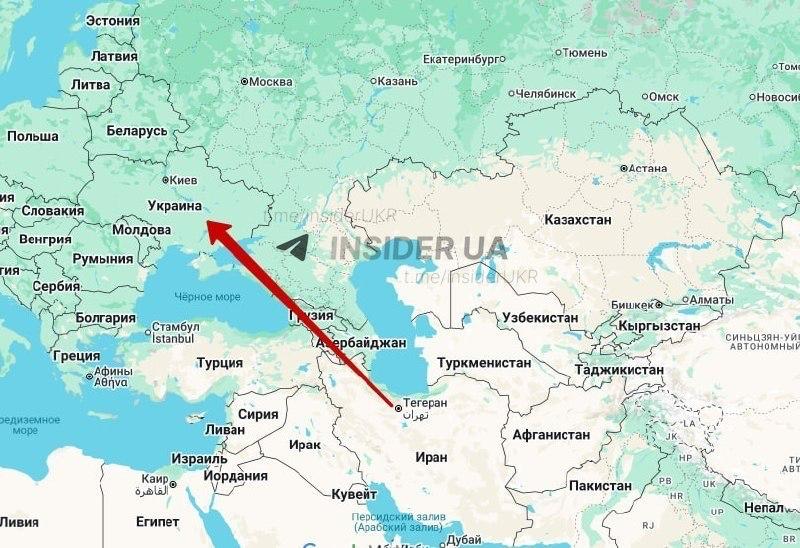
Iran's army struck a US position inside Jordan in the early hours of 16 July 2026, with one-way drones hitting a fixed radar site, communications systems and fuel tanks, according to Iranian outlets Fars, Al-Alam and Tasnim. The attack was carried out as the ninth phase of an operation Tehran has named "Lightning" and was framed by Iranian state media as retaliation for prior "enemy aggression." Reporting on the strike appeared across the three outlets within roughly thirty minutes of the initial announcement, a cadence consistent with how Iranian state media has handled previous phases of the campaign.
The strike lands inside a long-running shadow war between Tehran and the United States that has, since 2023, repeatedly spilled across borders. What is unusual is not the use of Iranian army drones, those have been deployed before, but the targeting of a fixed radar installation, an asset that is harder to replace than a fuel tanker or a parked vehicle. The choice suggests an Iranian command intent to degrade the surveillance picture US forces can build over western Iraq and eastern Syria, where Iranian-aligned militia activity is heaviest.
What was hit, and by whom
According to Fars News Agency, the Iranian army's "destruction drones" struck three categories of target at the US position: a fixed radar site, the communications system, and fuel storage tanks. Tasnim News Agency, English-language, and Al-Alam, the Arabic-language outlet of Iranian state television, carried matching accounts of the strike within the same window. Both Tasnim and Fars identify the operator of the targeted position as the "American terrorist army", the standard formulation in Iranian state media for US forces. The strike was characterised as the ninth phase of Operation Lightning, a name first used in earlier rounds of the campaign, and as a response to "enemy aggression."
The phrase matters. By naming a phase number and tying it to a named operation, Iranian messaging is signalling continuity, that this strike sits inside a deliberate, escalatory ladder rather than a one-off response. The communications targeting in particular is consistent with a campaign logic that aims to blind before it bleeds.
The information pipeline
Iranian state outlets were unusually fast. Fars posted at 02:18 UTC on 16 July, Al-Alam followed at 02:37 UTC, and Tasnim in English at 02:48 UTC. The roughly half-hour cadence across Persian, Arabic and English desks indicates a pre-cleared narrative template rather than a competitive newsroom scramble. No Western wire, Israeli outlet or Pentagon statement had appeared by the time Tasnim's English line went up, a gap that left the Iranian framing of the strike as the only version of events available to non-Persian-reading audiences in those opening minutes.
This is how Tehran tends to operate when it wants the first draft of history. The state apparatus controls the initial frame, and the rest of the world has to play catch-up against an established narrative whether or not the underlying facts hold. Iranian state media's preferred label for US forces, "American terrorist army", has now travelled, unchallenged, into three languages in half an hour.
Why a radar site, why Jordan
A fixed radar is not a glamorous target, but it is a sticky one. Mobile launchers, fuel bladders and vehicle parks can be replenished in days; a hardened radar installation is a months-long rebuild with contracting and foreign-component dependencies. Striking it signals an Iranian willingness to accept the political cost of hitting US infrastructure in a third country, Jordan is a US treaty ally and a key logistics node for operations further north, in order to degrade the intelligence-collection architecture that underwrites US force protection in the region.
Jordan's role complicates the picture. Amman hosts US personnel under a long-standing defence cooperation agreement, and its airspace and bases have been used as launch and recovery zones for operations against Iranian assets in Syria. A strike on Jordanian territory is therefore not a strike on a bystander; it is a strike on the rear of an active US posture. Whether Amman reads it that way, and how it calibrates its public response, will shape the next phase.
What we do not yet know
The Iranian account is the only one in circulation as of 02:48 UTC on 16 July. The sources do not specify the precise location inside Jordan, the size of the drone salvo, whether any US personnel were present at the time, or whether all three target categories were struck in a single pass or in sequence. There is no independent confirmation of damage, no Pentagon readout, and no CENTCOM statement in the available record. The phase number ("ninth") suggests eight prior rounds have already occurred under the Operation Lightning banner, but those earlier phases are not described in the materials available to this publication.
The standard caveat applies: state outlets carrying the announcement are not neutral observers, and their account serves a domestic and regional political function as much as an informational one. Verification will come from satellite imagery, from US Central Command statements, and from Jordanian official channels, none of which had published in the window covered by the sources. Until that arrives, the strike is reported here as Iranian state media describes it, with that provenance made explicit.
This article was compiled from Iranian state-media Telegram channels and reflects only those sources at the time of publication. Monexus will update with US, Jordanian and independent confirmation as it becomes available.
Wire provenance
This editorial synthesis draws on the following public wire/social posts:
- https://t.me/farsna
- https://t.me/alalamfa
- https://t.me/tasnimnews_en