Houthi leader says Israel is breaking the Gaza deal. Sanaa is watching whether the ceasefire still holds.
Abdul-Malik al-Houthi accused Israel on 16 July of reneging on its Gaza commitments. With Houthi attacks in the Red Sea already paused, the question is whether the speech marks pressure or pivot.
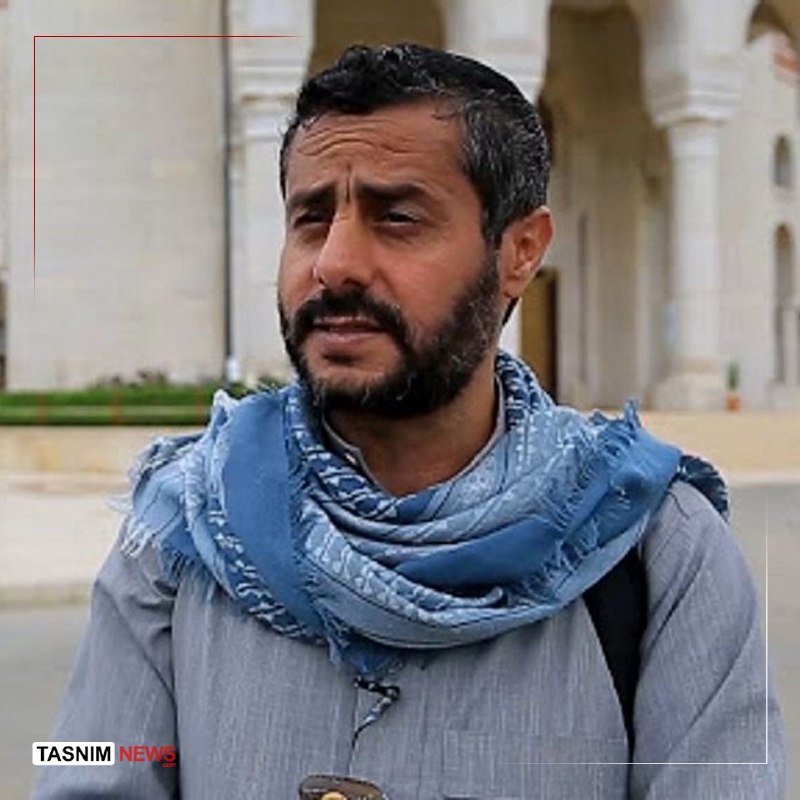
At 13:40 UTC on 16 July 2026, Abdul-Malik al-Houthi, leader of Yemen's Ansarullah movement, took to the airwaves with a speech that mixed theology, geopolitics, and a pointed accusation: that Israel was violating its Gaza commitments. Within an hour, his remarks had been rebroadcast by Iranian state-aligned outlets Press TV and Al-Alam, and clipped onto Telegram channels covering the war.
The immediate provocation, in al-Houthi's telling, was Israeli behaviour inside Gaza. He accused Israel of occupying "a vast area of the Gaza Strip" and of breaching the agreement that paused the fighting, citing what he framed as a blockade of aid and food deliveries. The language was at once sectarian, he described the United States and Israel as "the source of evil and instability in the world", and transactional. Sanaa wants the deal to hold, and it wants credit for it holding.
For more than a year, the Houthis have run the file on the Palestinian cause from a Yemeni perch, sustaining attacks on shipping in the Red Sea and Bab el-Mandeb until a ceasefire arrangement quieted the corridor. That pause was the Houthis' single biggest leverage card, and it was extended in part because of what Israel, by al-Houthi's account, was supposed to deliver in return: a complete withdrawal from Gaza. On 16 July, the Yemeni leader said the bargain is breaking down.
What the speech actually said
Three versions of the address circulated on Telegram within an hour, sourced to wfwitness, Press TV, and Al-Alam. The core complaint was consistent. Al-Houthi accused Israel of "violating their agreement to completely withdraw from Gaza," of imposing a blockade on aid and food deliveries, and of pressing "expansionist" settlement activity in the West Bank, the last point carried by the Press TV summary rather than by al-Houthi's own recorded words.
The framing was deliberate. The Houthi leader has spent much of 2026 arguing that Palestinian solidarity is not a slogan but a strategic obligation, and that Yemen has paid for that argument in blood and treasure. The speech leaned on a familiar triad: a call to the "oppressed" to "seek justice" so that "tyrants" do not continue "unchecked," a denunciation of American and Israeli policy as the engine of regional instability, and the implicit threat that the Sanaa–mediated calm in the Red Sea is contingent on Israeli behaviour in Gaza.
Press TV's coverage added two specific claims the speech itself did not spell out: that Israel had destroyed Palestinian structures in the West Bank "in pursuit of expansionist land," and that aid flows into Gaza remained choked despite the ceasefire. Al-Alam's translation framed the same remarks in slightly more theological language, calling the United States and Israel "the source of evil and instability in the world." Telegram aggregators repeated both. None of the three summaries cited Israeli or Western officials responding in real time.
Why this matters now
The Houthi complaint is not novel. It is, however, the first major Houthi statement since the latest Gaza arrangement took hold that explicitly threatens to relitigate the Red Sea file. Throughout 2025, Ansarullah's missile and drone campaign against commercial shipping tied up carriers, drove up insurance premiums, and forced naval deployments from a US-led coalition through the corridor. When the ceasefire began, the shipping pressure eased. The political logic of restraint in the strait was always that Gaza would get a deal, and the deal would hold.
That is the arrangement al-Houthi now says Israel is testing. The structural problem is that the same actor who can re-open the Red Sea front, by authorising renewed strikes on shipping, does not control events inside Gaza. Israeli decisions on troop withdrawals, aid entry points, and reconstruction permits are made in Tel Aviv and Jerusalem, not in Sanaa. The Houthi leverage is therefore positional: keep the threat credible enough that mediators treat Yemen as a stakeholder in any Gaza renegotiation, without paying the political cost of actually re-launching attacks.
The Iran angle is the elephant in the room. Al-Houthi's speech reached English-speaking and Farsi-speaking audiences within minutes through Press TV and Al-Alam, both Iranian state-aligned. Sanaa and Tehran have spent three years presenting themselves as a single strategic axis on the Palestinian file. A Houthi threat aimed at Israel is also a message to the Islamic Republic about the cost of letting the Gaza deal drift: the Red Sea front can be re-opened.
What the other side says, and what is not yet on the record
The thread context does not include an Israeli or Western wire response to al-Houthi's 16 July remarks. That is, on its own, a reporting gap. Israeli officials have, in past weeks, framed continued operations in parts of Gaza as targeted against Hamas infrastructure rather than as a violation of any ceasefire terms. Press TV's specific claims about West Bank demolitions and aid blockades were not corroborated in the same thread by Haaretz, the IDF Spokesperson, Times of Israel, or any Western wire.
The honest read is that the public record on 16 July consists of one Houthi speech, restated in three translations. There is no corresponding Israeli statement in the sources reviewed, no UN aid-agency confirmation of the blockade claim, and no third-party documentation of the West Bank demolition allegation. Reporters covering this file should treat al-Houthi's accusation as a position, not as a confirmed breach, and should be alert for a wire response inside the next 24 to 48 hours.
The structural read, plainly stated
Across the last decade, the post-2011 regional order has been quietly rewritten by a set of non-state actors who can hold chokepoints: Ansarullah in the Bab el-Mandeb, the Popular Mobilisation Forces in northern Iraq, Hezbollah along the Lebanese border, and the Houthis' Iranian sponsors in the Gulf. Each of these actors understood, faster than the Western analytical class, that the cost of disrupting a single corridor can outweigh the cost of any one battlefield.
The Houthi position on 16 July is best read as continuity with that logic. Al-Houthi is not threatening to escalate. He is signalling that the price of restraint has a renewal date, and that renewal is contingent on Israeli compliance with what he says was promised. It is the rhetoric of a creditor, not a combatant, on the day the bill comes due.
Stakes over the next month
Three things are worth watching between now and mid-August. First, any Israeli or American public response to al-Houthi's accusations, and whether it engages the substance of the Gaza withdrawal claim or stays at the level of rhetorical pushback. Second, the United Nations' and recognised humanitarian agencies' public line on aid access into Gaza, since the blockade allegation is the only specific factual claim in al-Houthi's speech that is independently verifiable. Third, traffic through the Bab el-Mandeb and the southern Red Sea: any signal that Ansarullah has loosened its operational discipline on shipping would be the first hard indicator that the speech was a warning shot rather than a posture.
What remains genuinely uncertain is whether the Houthi leadership has internal consensus for a renewed campaign. The 2025 attacks on shipping cost Yemen politically with Arab League partners and economically with shippers. Reopening the corridor would be a major decision, and the public speech on 16 July was calibrated to extract movement from mediators without yet committing to that path. The line between pressure and pivot, in Yemeni politics, is drawn in a language outsiders rarely hear in real time.
This article leans on the speech as transmitted by Ansarullah-affiliated and Iranian state-aligned outlets; the Israeli response and independent aid-flow verification were not present in the materials reviewed at publication.
Wire provenance
This editorial synthesis draws on the following public wire/social posts:
- https://t.me/wfwitness/
- https://t.me/presstv/
- https://t.me/alalamfa/
- https://t.me/presstv/2
- https://t.me/wfwitness/2
- https://t.me/alalamfa/2