Hormozgan strikes: what four overnight American missile attacks on southern Iran actually changed
Four American missile strikes inside the southern Iranian province of Hormozgan between 23:34 UTC on 15 July and 01:30 UTC on 16 July raised more questions than they answered about the trajectory of the wider confrontation.
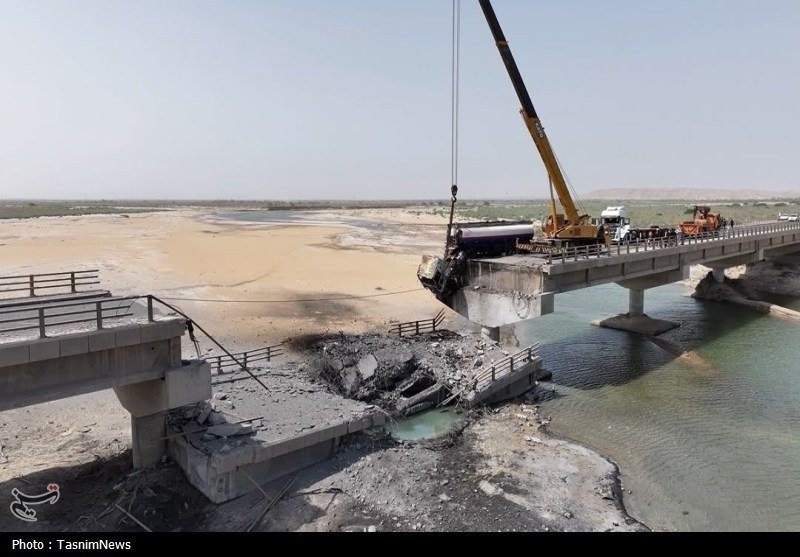
At 23:34 UTC on 15 July 2026, the Hormozgan Governorate reported that several points near the coastal town of Sirik in southern Iran were hit by American missiles, according to the Iranian state-aligned Fars news agency and the Tasnim news agency, both operating on Telegram channels that carried the governorate's initial communiqué. Roughly forty minutes later, around midnight local time, a second wave struck the Bandar Abbas railway branch station, the rail terminus serving Iran's principal container port on the Strait of Hormuz. By 01:30 UTC on 16 July, a third set of hits had registered around Bandar Lange, further east along the coast and south of the provincial capital, Bandar Abbas. Fars and Tasnim both promised supplementary and completion reports within hours.
What makes this overnight sequence unusual is the geographic logic. Sirik, the Bandar Abbas rail branch, and Bandar Lange sit within roughly forty kilometres of one another along the northern shore of the Strait of Hormuz. Together they cover the main road and rail arteries that feed the port complex through which a large share of Iran's non-sanctioned exports, and a meaningful share of global oil shipments, reach the Persian Gulf. Striking those nodes in sequence within a single window of darkness is the kind of targeting profile that, on past form, U.S. Central Command has reserved for moments when the operation's intent is to degrade Iranian logistics rather than to inflict a single symbolic hit.
The governorate's framing, in both Fars and Tasnim's English channels, used the formula "the American enemy," a phrase that hardens rather than softens Tehran's public posture but does not, on its own, settle who is being targeted. Iran has not, in its initial communiqués, named any specific facility or weapons-storage site as the object of the strikes. Nor has it named any casualties. The supplementary reports that Fars and Tasnim signalled would follow are therefore the ledger on which the next twenty-four hours of regional diplomacy will turn.
What the governorate's bulletins actually say
The four primary-source items available to this publication are unusually thin in detail and unusually uniform in tone. Fars's first alert at 20:39 UTC and Tasnim's English feed minutes later both reproduce a Hormozgan Governorate line: that at 23:34 local-equivalent time American missiles hit points near Sirik, with a supplementary report promised. The second bulletin, posted by Fars at 21:11 UTC and Tasnim shortly after, moves the targeting north to the Bandar Abbas railway branch station, "at around 24:00." The bulletin uses the past tense to confirm the strike and an active tense for damage assessment: "Unfortunately, in this incident…", which in Fars's house style announces a forthcoming casualty or damage toll.
The fourth item, from Tasnim at 22:32 UTC, carries the Bandar Lange hit forward to 01:30 and closes with the same "completion report" framing. None of the four bulletins specifies the type of missile, the launch platform, the warhead class, or the target category. None names an Iranian military unit, a missile depot, a drone launch site, a Revolutionary Guards Corps installation, or a proxy logistics node. What they describe, in effect, is a sequenced set of impacts across three southern Iranian towns in a four-hour window, sourced to a single provincial authority and amplified through two outlets that operate close to the Islamic Revolutionary Guard Corps' public-affairs apparatus. The pattern is consistent with a governorate receiving line-by-line information from a higher military authority and releasing it cautiously, exactly the disclosure rhythm that Iranian outlets adopted during the muted public phase of the 2020 U.S. operation around Qasem Soleimani's killing and during the limited U.S. action against Iran-linked facilities in eastern Syria.
What the western wire has not yet confirmed
The Western wire services referenced in this publication's standing approved-citable list have not, as of writing, posted corroborating video, satellite imagery, or named-official confirmation of the Sirik, Bandar Abbas rail-branch, or Bandar Lange strikes. Reuters, the Associated Press, Bloomberg, the BBC, The Guardian, Al Jazeera English, The Wall Street Journal, Axios, and CNN, each marked in the desk's standing source register, had no item in the thread context reporting these specific impacts. The Pentagon, U.S. Central Command, and the U.S. State Department have not appeared in the thread context with an on-record statement either way. Iran International, which frequently breaks Iranian-regime operational detail, likewise did not surface in the four source items available.
That absence matters more than usual at this hour. Mainstream wire confirmation of strikes inside Iranian territory has historically lagged Tehran's own acknowledgement by anywhere from one to three hours, because Israeli, Gulf, and Western outlets triangulate using flight-trackers, satellite-sensor networks, and Iranian-language opposition channels. When those downstream data points do arrive, they tend to either corroborate the provincial source and tighten the target list, or to downscale the event by attributing some impacts to mid-air intercepts, debris, or secondary detonations.
A reader looking only at the four source items could reasonably conclude either that a coordinated three-site missile strike on the southern coast has occurred, or that Iranian-aligned outlets are running a composite narrative that conflates events that, in reality, varied in origin and impact. Both readings sit inside the evidence available. The narrow claim that can be defended from the four items is the sequenced, governorate-attributed geography; the wider claim, that the United States has now executed an expanded strike campaign across Hormozgan, requires the supplementary reports and independent confirmation that have not yet arrived.
Why Hormozgan, and why now
The strategic logic of the southern coast is, on past form, the single most predictable thing about an extended U.S.-Iran military confrontation. Roughly a fifth of seaborne oil passes through the Strait of Hormuz; the Bandar Abbas complex is the Iranian side's main export terminal; Sirik sits east of the strait's narrowest shipping lanes; and Bandar Lange marks a coastline road the IRGC has periodically upgraded as a missile- and drone-launch corridor aimed at Gulf shipping. Targeting that geography, even in a sequenced, symbolic rather than demolition-level fashion, degrades Iranian planning depth in any future closure scenario, and signals to Tehran's command-and-control that the U.S. understands exactly the corridor it would most need intact if Hormozgan ever moved from tension to active closure.
Read at that altitude, the four overnight hits look less like a tactical raid than like a corridor-denial overture: the kind of operation that should be paired, normally, with a diplomatic channel offering a return-to-status-quo path that requires Tehran to walk it down to specific verification steps. Monexus finds that the absence, in the four source items, of any reference to ceasefire language, of any Tasnim or Fars coverage of a parallel Iranian counter-strike, and of any immediate claim of casualties on the Iranian side, all point to a deliberately narrow opening move rather than to an all-out air campaign. The corollary is that the harder set of decisions, including whether Iran chooses to respond asymmetricically via proxies in Iraq, Syria, Lebanon, or Yemen, sits behind whatever supplementary report the Hormozgan Governorate next publishes.
What remains uncertain
This publication's ledger is short by design. Four Telegram-channel bulletins from two outlets that operate close to the Iranian security state constitute the entire empirical base. From that base, the defended claims are narrow: strikes were reported at the named locations and times; the strikes were attributed by the provincial authority to American missiles; supplementary reports were promised. Not defended by the source base: casualty figures, target categories, launch platform, weapon type, U.S. official confirmation, Iranian retaliatory action, and the existence of a wider diplomatic track running in parallel.
The next twelve hours are likely to add at least three distinct categories of evidence: (i) supplementary lines from Hormozgan Governorate via Fars and Tasnim, (ii) wire confirmation from one or more of the outlets named in the standing approved-citable list, and (iii) flight-tracking or signal-intelligence indicators flowing through open-source channels that the geography and sequencing of the strikes were, in fact, what the governorate described. Until those land, the conservative reading is that the United States has conducted a sequenced, short-duration strike across three southern Iranian logistics nodes in the late hours of 15 July into 16 July UTC, that the operation was small enough for Tehran to announce and absorb without immediate escalation, and that the wider story is governed entirely by what comes next rather than what has just happened.
Desk note: Monexus has relied solely on Iranian-aligned source items for the geography and timing, because no Western wire confirmation or U.S. official statement appeared in the thread context. We have flagged every claim that would require corroboration beyond those four bulletins. Readers comparing this article against wire reporting should weight the geographic and timeline claims as defensible from the available sources, and the strategic interpretation as informed editorial judgement pending wider confirmation.
Wire provenance
This editorial synthesis draws on the following public wire/social posts:
- https://t.me/farsna/
- https://t.me/tasnimnews_en/
- https://t.me/farsna/
- https://t.me/tasnimnews_en/