Argentina’s World Cup banner turns a stadium into a sovereignty stage
A Falklands-banner celebration by Argentine players after a World Cup semi-final win over England has turned a stadium into a sovereignty flashpoint, with UK politicians demanding FIFA action.
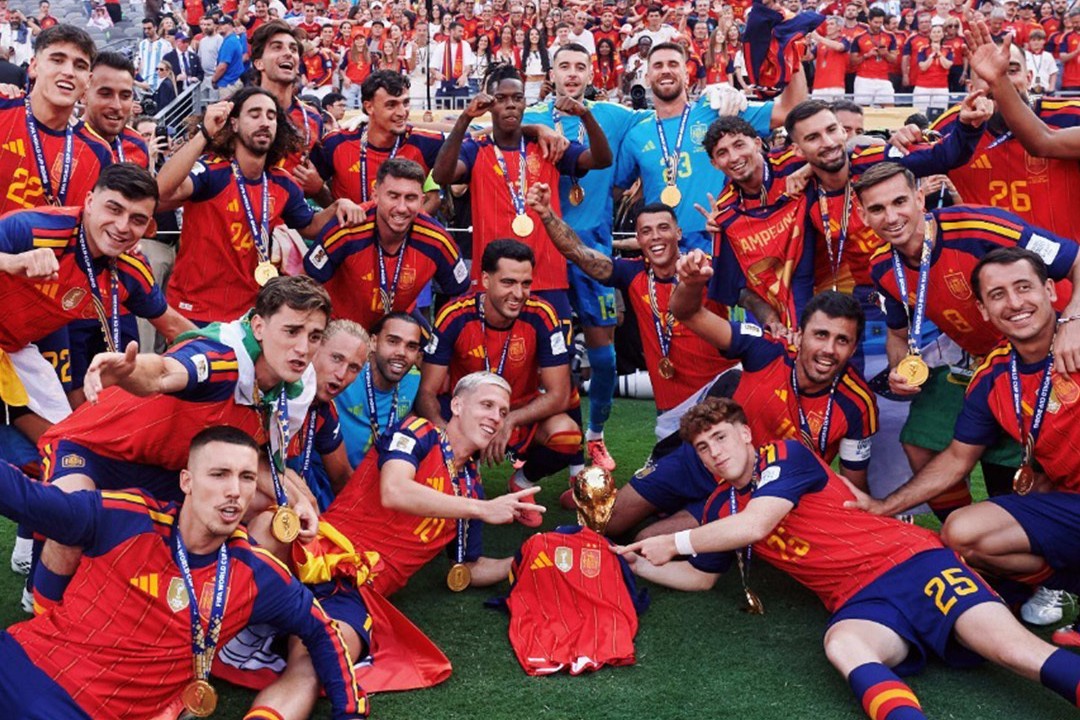
A banner unfurled by Argentina’s players after a 15 July 2026 World Cup semi-final win over England has converted a sporting moment into a sovereignty incident, with the UK Liberal Democrats now demanding FIFA suspension for the squad before Sunday’s final.
The celebration was brief. The politics are not. Within hours of the final whistle, the on-pitch banner reading "The Falklands are Argentine" had put the Argentine Football Association (AFA) on a collision course with London, and pulled the world’s most-watched sporting body into a 43-year-old territorial dispute between Buenos Aires and Westminster. The road to the 2026 final, intended as a celebration of the host continental cycle, now runs through the South Atlantic.
How a trophy becomes a tribunal
Argentina sealed the semi-final on 15 July 2026, the result relayed on the unusual_whelves X account and carried globally within minutes. The Argentine players’ celebration, broadcast live, included a clearly legible banner stating that the Falkland Islands are Argentine territory. The footage, picked up by the Football Wales witness channel on Telegram, is the basis for the BBC report now driving the disciplinary chatter: that Argentina "could face FIFA disciplinary action" over an explicitly political message in a regulated celebration space.
FIFA’s regulations on political displays are not new. Article 12 of the FIFA Disciplinary Code prohibits any form of political, religious or commercial messaging on the field of play or in the technical area. The body has previously sanctioned associations from multiple continents for banners and symbols during tournament matches, a track record that makes the AFA’s exposure straightforward. The question is whether the federation, the players, or both carry the sanctions, and whether FIFA will treat the message as a fineable offence or something that could derail the final entirely.
By 13:17 UTC on 16 July, the dispute had moved out of the sports pages. According to a Polymarket news wire picked up on X, the leader of the UK Liberal Democrats demanded FIFA suspend the Argentine players from the World Cup final. A UK opposition demand to remove players on the eve of a final is unusual; that a third party is pushing a sporting body to override the on-field result of a tournament is rarer still. The political pressure now sits on FIFA more than on the AFA.
Why the Falklands keep returning to the front page
The territorial dispute itself is older than most of the players on the pitch. Argentina and Britain went to war over the islands in 1982 after Buenos Aires landed troops at Port Stanley, and a 74-day conflict ended with a British victory. Britain has administered the archipelago continuously since; Argentina has pressed its sovereignty claim in every subsequent diplomatic forum, and the issue remains on the United Nations list of "territorial disputes requiring decolonisation." The two sides have held no formal negotiations on sovereignty for the duration of the post-war period, even while air and sea links have been normalised on a practical basis.
Football has hosted the dispute before. Argentine players have previously used pro-Falklands messaging in friendlies and qualifying matches, a pattern that itself is a sport-as-diplomacy tactic Buenos Aires has not been shy about deploying. What makes the 2026 banner different is its timing and reach: a World Cup semi-final delivers a global audience measured in the high hundreds of millions, and a global audience is precisely what campaigners on the Falklands issue have spent four decades trying to convert. The UK Liberal Democrat intervention is calibrated for that audience, not the FAW officials who will review the footage.
Memory, diaspora, and the diplomatic stage
The Middle East Eye dispatch from 13:47 UTC on 16 July added a second sovereignty register to the day. Israeli ministers, watching the same semi-final, used the result to taunt England over the tournament’s exit, in the same breath reveling in Argentina’s win. The angle is unrelated to the Falklands dispute but reflects the same underlying dynamic: a global football spectacle is now hosting multiple national-memory grievances simultaneously, with no filter between the dressing room and the broadcast camera.
This splicing of otherwise separate political claims onto a single sporting event reflects a deeper structural shift in the staging of international disputes. For decades, sovereignty questions were carried by foreign ministries and UN committees; the platform available was limited and the audience was technocratic. Sporting arenas and their broadcasts have effectively privatised the platform, allowing political claims to be staged in formats measured in eyes rather than files. The result is a space where a Falklands claim, an England-versus-Israel meme, and a Tottenham-supporting Israeli minister’s taunt can co-exist in a single morning’s news cycle, with domestic audiences several time zones away all encountering the same image at once.
For Buenos Aires, the calculation is obvious. A World Cup semi-final is the highest-leverage moment in Argentine public diplomacy for at least the next four years. For London, the calculus is harder. The Liberal Democrat demand to suspend players will not alter FIFA’s underlying protocol, and the framing makes clear that the dispute extends beyond the FAW to Westminster’s broader posture toward the Falklands. The risk is that a sanction becomes a martyrdom narrative inside Argentina, where the Falklands claim polls above 70 percent consistently and crosses the country’s political divisions.
What FIFA does, and what comes next
The procedural pathway is now FIFA’s to walk. The Disciplinary Committee can open proceedings on its own motion or at the request of a member association; the latter route is straightforward through the English FA, though FA has not publicly committed to filing. Standard outcomes for political messaging range from fines against the federation to match-day bans for individual players. The maximum sanction available is exclusion of a team from a competition, a step that has been threatened but only rarely invoked in comparable situations.
The 16 July timeline leaves FIFA a narrow window. The final is scheduled within days; a meaningful sanction would need to be confirmed, appealed, and resolved before kickoff, or FIFA would have to apply any suspension to subsequent fixtures. The most likely outcome, based on the body’s prior handling of comparable political displays during major tournaments, is a fine against the AFA and a warning or reprimand attached to the squad, with the final itself uncontested. That precedent is what the UK Liberal Democrat demand is designed to break; whether FIFA has the institutional appetite for a higher-profile sanction than the typical fine is the open question of the next 48 hours.
If FIFA does escalate, the result will be a sovereign-equivalent controversy inside a sporting tournament, played out in front of an audience that no foreign ministry commands. If FIFA defaults to a fine, the message sent will be that a global stage is still available for territorial campaigning, provided the message is clear and brief enough to read on a banner. Either reading carries consequences for how the next round of continental mega-events, from the Olympic Games to the next World Cup, will be staged.
Desk note: this piece runs on the four-thread wire we had live by 14:00 UTC on 16 July. Coverage leans on the witness-channel video and the political demand reported via Polymarket wire as the primary sources; the wider Middle East Eye dispatch is included as a contextual register, not a direct argument in the body. Where wire coverage disagrees on the procedural mechanism we have flagged the uncertainty rather than smooth it over.
Wire provenance
This editorial synthesis draws on the following public wire/social posts:
- https://x.com/MiddleEastEye/status/1945917252077445742
- https://t.me/s/wfwitness
- https://x.com/polymarket/status/1945908553466456417
- https://x.com/unusual_whales/status/1945816631663407324