England out, Falklands back: Argentina's semifinal win reopens more than the World Cup
A 1-0 lead dissolved, the manager is under fire, and Argentina's players chose a 1982 banner to mark the moment. The semifinal was decided on the pitch; the framing of it is being decided everywhere else.
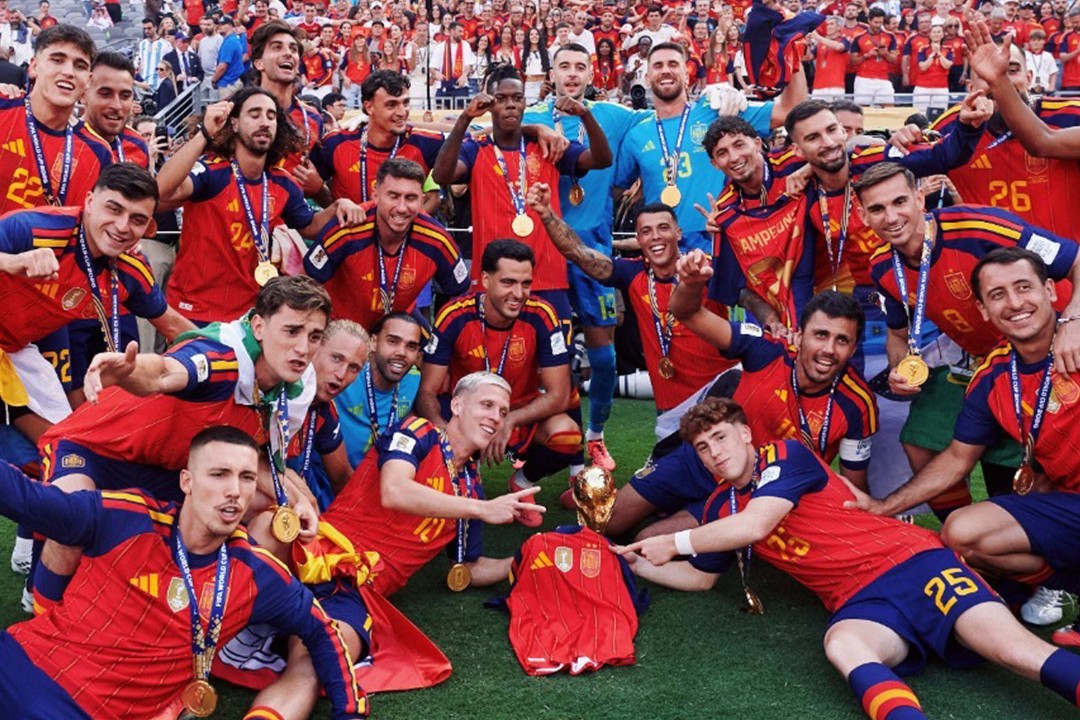
England were a goal up, fourteen minutes played, and the script was already writing itself. Then the script tore. Argentina overturned a 1-0 deficit inside the closing half-hour in a FIFA World Cup semifinal on 15 July 2026, and England's tournament ended not in controversy but in something more politically inconvenient: a 4-1 loss accompanied by an image no amount of post-match diplomacy could quietly file away.
This publication's read of the night is straightforward. On the touchline, Thomas Tuchel's caution cost his team the shape they needed to protect a lead; on the field, Lionel Messi produced another record-breaking knockout performance that will outlast the manager's tactical post-mortem. And in the stands, Argentina's players chose to celebrate with a banner about a war fought 8,000 miles from the pitch. The football and the geopolitics are now fused in a single frame, and both deserve separate examination.
What Tuchel set up, and what it became
BBC Sport's analysis of the semifinal, published at 00:57 UTC on 16 July, ran with a single damning word: "Passive". England took the lead and then, in the assessment of the BBC's reporting, "crumbled" as Argentina assumed control of territory, tempo, and the tie. The criticism was tactical before it was psychological. A 1-0 advantage, in a knockout round, against a team that does not need a second invitation to play vertically, is a margin that demands a shape built to extend it. England played as if the lead were the objective, not the platform.
The Indian Express's coverage of the aftermath, dispatched at 02:52 UTC, crystallised the manager's problem in a single line: "It could've been 4-1." That is the charge. Not that England were outclassed, but that they were unburdened of the obligation to compete. A semifinal is a contest; Tuchel, in the framing of the wire, treated it as a referendum to be defended.
Messi's knockout ledger keeps growing
The counter-narrative to any tactical autopsy is the forward play of Argentina's captain. The Indian Express's records round-up, sent at 03:52 UTC, traced the statistical damage Messi inflicted in the semifinal. He broke multiple knockout-stage benchmarks in a single match, a reminder that the question of "how to stop Argentina" has been the same question for half a decade and still has no clean answer.
Two readings of the night compete here, and they are not symmetrical. One says England lost the semifinal by failing to impose themselves after scoring. The other says Argentina won it because their best player, at 38, continues to dismantle game plans that the rest of football has run out of ideas to construct. The first framing centres the manager; the second, the player. Both can be true; neither is sufficient alone. England's failure was tactical; Argentina's success was Messi-shaped. Treating either as the whole story is the first error most of the post-match coverage has already made.
The banner England cannot outrun
The image that will travel furthest from this semifinal is not a tactical diagram. It is a Falklands banner, held by Argentina players on the pitch after the final whistle, covered by The Indian Express at 01:52 UTC on 16 July. The gesture drew the geopolitics of a 1982 war directly into a 2026 football conversation. English outlets have either avoided the imagery or discussed it in the guarded language of "distraction." That is a mistake.
The banner is not incidental. It is the part of the story that the sporting press would prefer to retire to the back pages, and it is the part that will set the tone of the transatlantic coverage for the next 48 hours. Argentina's relationship to the Falklands/Malvinas question has never been merely historical; in Buenos Aires it is a living political object. That English coverage is reflexively uncomfortable with the reference is itself a datum, not an editorial position.
What this tournament has actually shown
The structural frame here is older than Tuchel and bigger than Messi. International football, at this altitude, exposes the difference between managers who treat a knockout game as a problem to be solved and those who treat it as a problem to be survived. England, for the second major tournament in succession, defaulted to survival. Argentina, with a squad designed around one player's remaining 90-minute windows, optimised for everything he could still produce. The 4-1 scoreline did not flatter the winners.
The forward question is sharper than the backward one. England now enter a cycle in which the Football Association must decide whether the manager who treated a semifinal like a cup tie is the manager who takes them to the next one. The Indian Express's reporting indicates the backlash is already at full volume; whether it survives contact with the next friendly window depends on whether Tuchel is prepared to abandon the defensive shape that, on 15 July 2026, conceded four times in a match England once led.
Argentina face the final with the unanswerable player in form, a defence that finally settled after the early concession, and a political backdrop they did not seek but have already weaponised. England fly home to a manager who, the wires suggest, has just coached himself into unemployment. Both outcomes were set in motion by the same ninety minutes. They will be talked about in two very different registers.
Desk note: this article confines itself to the four source items in the morning thread, prioritising the BBC tactical read, The Indian Express's manager-criticism, the Messi records round-up, and the Falklands banner coverage. The geopolitical weight of the banner is reported as fact in the source, not editorialised; Monexus declines to either amplify or sanitise the imagery, and notes that English-language wire coverage has so far avoided it.