England bow out in Atlanta as Messi's vintage show sends Argentina through
Harry Kane conceded England tried to sit on a 1-0 lead against Argentina in Atlanta and paid for it, as Lionel Messi's side overturned the deficit to reach the 2026 World Cup final.
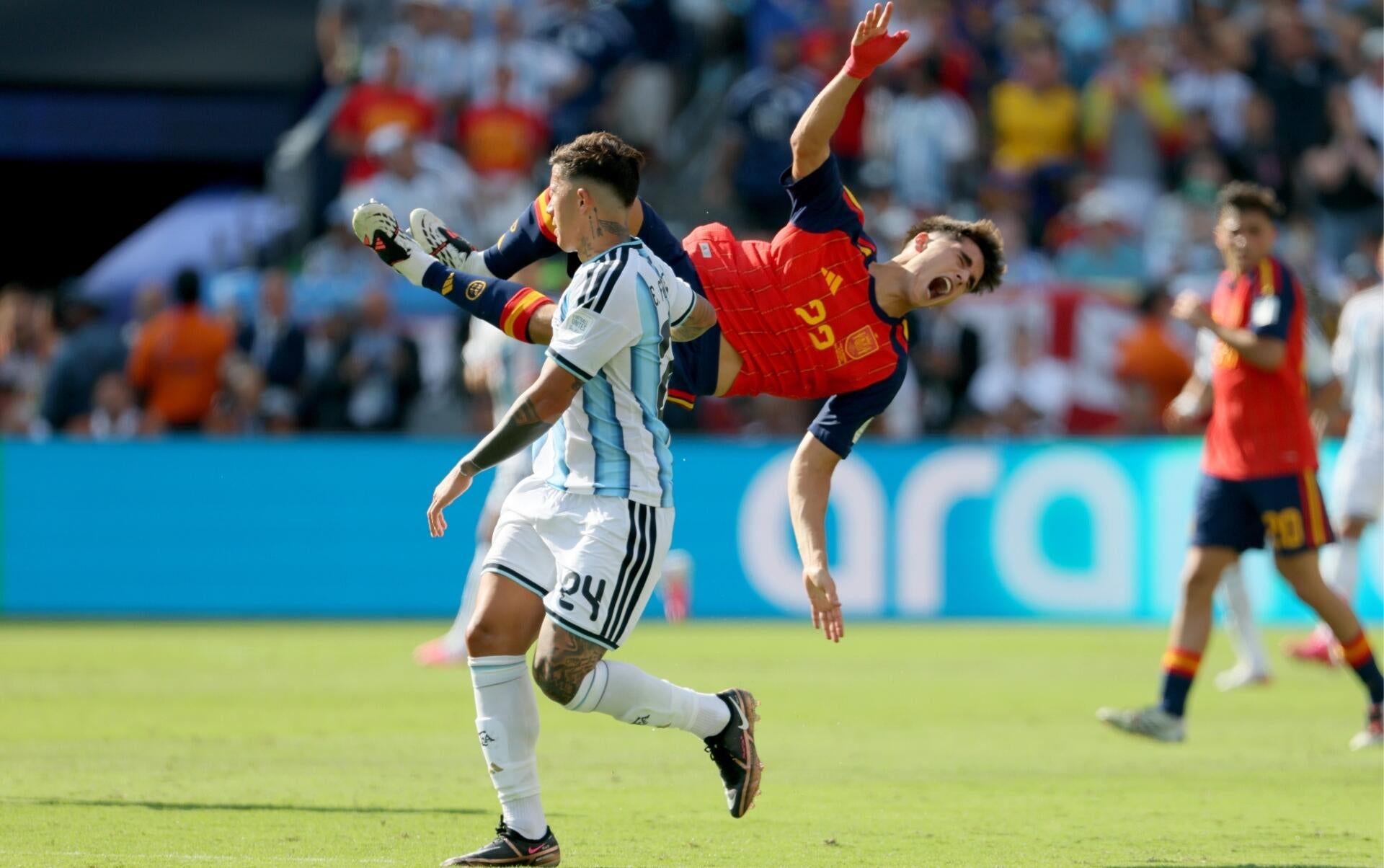
England's 2026 World Cup ended the way so many of their recent tournaments have: with Harry Kane standing in front of a microphone, shoulders heavy, trying to explain a lead they could not keep. The captain told Sky Sports on 15 July 2026 that "holding on was not enough" against Argentina, after a 2-1 semi-final defeat at Atlanta Stadium sent the South Americans into the final and the Three Lions home.
It is the story of a tournament, and arguably of a generation, compressed into 90 minutes. England led 1-0 and retreated. Argentina, stirred by a 39-year-old Lionel Messi who still bends games to his will, scored twice in the closing stages. The night belonged to Messi, the post-mortem to Kane.
The 60 minutes that decided it
For an hour, the script looked familiar to anyone who watched England at Euro 2020 or Qatar 2022: disciplined shape, a Kane goal, a wall in front of Jordan Pickford. The BBC's player ratings had Pickford responsible for "little chance with either goal" and credited him with a "sensational save" against Argentina's Julián Álvarez, the kind of intervention that suggested the evening might just hold.
Then it did not. According to the BBC's match coverage, England's failure was not a single catastrophic moment but a slow surrender of territory and initiative. Kane's own diagnosis, given to Sky Sports shortly after full time, was blunt: trying to protect a 1-0 lead against a side containing Messi is a strategy with a half-life measured in minutes.
The pattern is worth naming plainly. Against elite opposition, England have repeatedly built leads and then asked their centre-backs to do the work of an entire midfield. It worked against lower-ranked opposition in the group stage. Against Argentina, with Messi dropping into the pockets between the lines and Álvarez running beyond, the geometry broke.
A captain, a veteran, and the long goodbye
There is a temptation, on nights like this, to make the story about endings. Kane, now 32, told The Athletic via David Ornstein on 15 July that it was "too early to know" whether this was his last World Cup, before adding that Messi playing at 39 showed why he would "never put a limit" on his own international career. The line was half-defiant, half-deflective, and entirely in character.
Messi, by contrast, played the second half as if he were 29 rather than 39. The Guardian's player ratings described him as "at his effervescent best," and the Argentine press has, fairly or not, already framed the performance as another installment of the Messi immortality series. The temptation to read this as a passing-of-the-torch narrative is strong, and worth resisting on the evidence. Kane is two years younger than Messi was at his previous World Cup peak. What Atlanta showed was not a generational handover but a stylistic mismatch: a team built to defend narrow leads against a side built to prise them open.
What the structure of the night actually tells us
Strip away the romance and Argentina's comeback was a tactical inevitability as much as a heroic one. England's expected-goals map, even before the goals arrived, was shrinking. Pickford's save against Álvarez was the last meaningful intervention a defensive England could make; from there the pressure compounded. Argentina's bench, deeper and more flexible, tilted the middle third in their favour from the 70th minute onward.
This is the structural lesson, and it is one that travels beyond this match. England have, across four major tournaments, built the world's most expensive squad without resolving the question of what they do with the ball when the opposition stops ceding it. The Kane era has produced a Champions League winner, a Euro 2020 final appearance, a Euro 2024 quarter-final, a World Cup quarter-final, and now a semi-final exit. The arc is not decline; it is a ceiling.
What comes next, and what to watch
The Football Association now faces the same decision every major-tournament exit forces on it: whether continuity or change serves the next cycle better. Kane's comment that he will "never put a limit" on his international career leaves the door open, but the dressing-room calculus is more complicated than one man's wishes. The 2026 final, on 19 July 2026, will be Argentina's first since 2022; England's wait for a first final since 1966 now stretches another four years at minimum.
The players to watch in the immediate aftermath are the younger ones the squad took along: Jude Bellingham, Bukayo Saka, Cole Palmer. Whether Gareth Southgate's successor, named or not, builds the next team around Kane or around them is the substantive question behind the condolence-circuit. The Argentine model offers one answer: keep your generational talent in the side as long as his legs hold, then let the squad's structure do the rest.
The result itself is settled. Argentina go on; England go home. The interesting question is whether the FA treats Atlanta as an ending or as the most recent of several near-misses that share a common cause.
This Monexus desk piece drew on reporting from Sky Sports, BBC Sport, the Guardian's player ratings, and The Athletic's David Ornstein feed on 15 July 2026; the structural read is the desk's own, not the wires'.