Delhi's startup seed money, a NEET topper from the capital, and a UP police raid: three July 16 stories that sketch Modi's India
Three pieces from a single news cycle illustrate how the central government's reform agenda, exam grind, and state-level policing sit alongside each other in Modi's India.
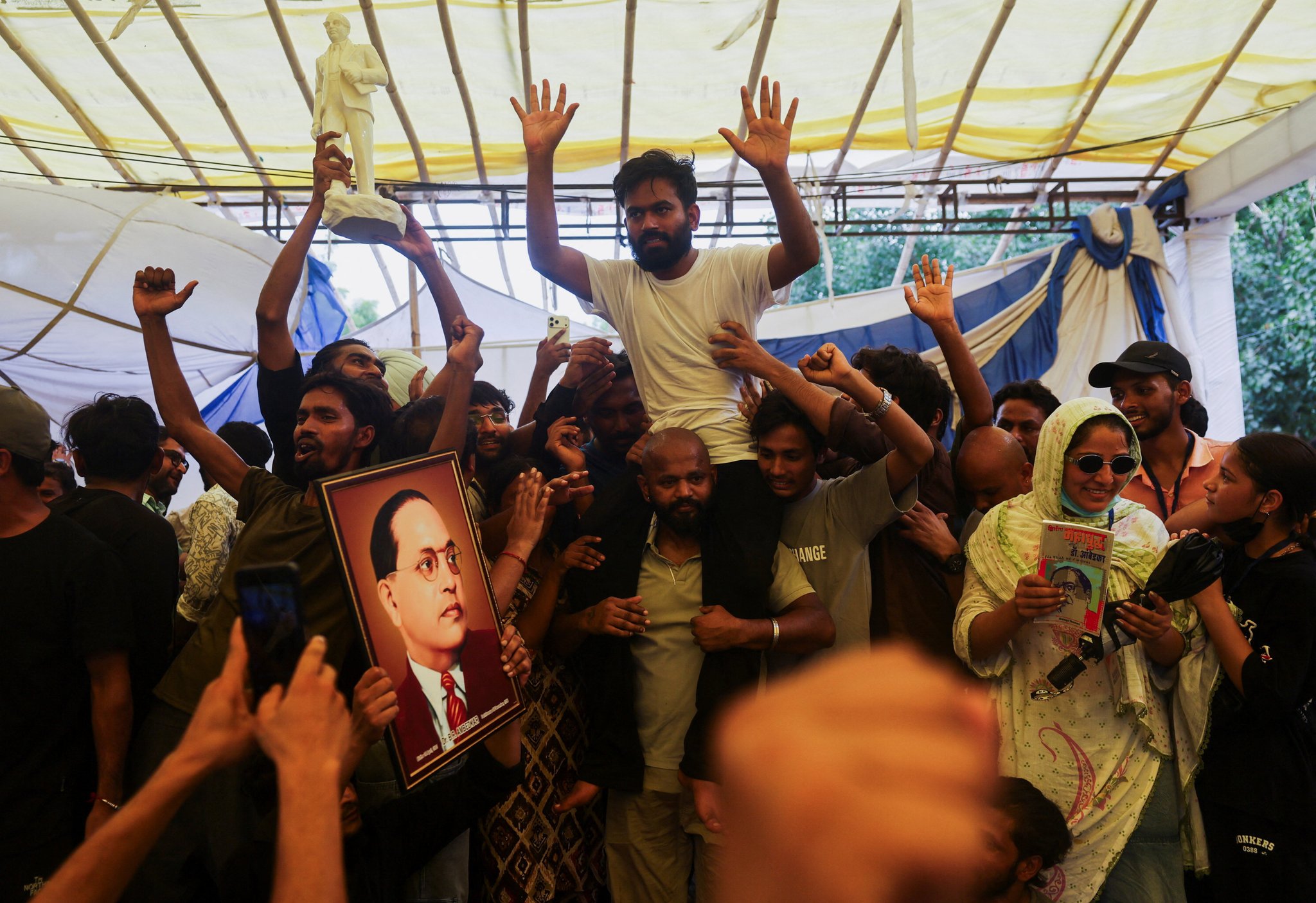
At 13:22 UTC on 16 July 2026, the Delhi government put a number on the table: up to ten lakh rupees per student, offered as seed funding to young founders inside the capital. Within hours of the announcement crossing wire services, a separate story surfaced about a 17-year-old in Delhi who had just secured the all-India rank 1 in NEET-UG, the country's most consequential medical entrance exam, and was already speaking about AIIMS as her next horizon. The same day's third big domestic thread, carried by The Indian Express, concerned a "beef raid" in Uttar Pradesh in which police arrested four additional people following an encounter, a term Indian English borrows from Hindi-language police shorthand for a shooting or violent altercation during arrest.
Taken individually, each is a small piece of social texture. Read together, the three items sketch the terrain of contemporary India under the Narendra Modi government: a national capital recasting itself as a startup hub, an exam apparatus that still decides the life-chances of millions, and a state-level policing regime that operates with lethal latitude on cattle-related cases. The friction between those three pictures is itself the story.
Delhi's seed bet
The Delhi government's new startup policy, as reported by The Indian Express on 16 July 2026, commits up to Rs 10 lakh in seed funding per student entrepreneur. The framing is deliberately youth-facing: the money is calibrated to a student-scale founding round, not a Series A. For a city-state with the political pressure of being the national capital and the demographic pressure of being among India's youngest urban populations, the policy reads as an attempt to convert Delhi's dense university ecosystem into incorporated companies, IP filings, and payrolls.
The structural bet is familiar. India's national startup ecosystem has, for a decade, rewarded depth in software services, fintech, and direct-to-consumer commerce. State governments have competed for founder mind-share by offering subsidies, single-window clearances, and in some cases direct equity participation. Delhi's announcement slots into that pattern, but with a smaller ticket and a tighter demographic: students, not serial entrepreneurs. The risks are the standard ones. Seed-stage capital without mentorship or procurement access can produce a thicket of dormant private-limited companies; the headline number can become the policy, rather than the throughput of operating businesses two years out.
A perfect finish, a familiar grind
The second thread, also from The Indian Express on 16 July, profiles a Delhi student who secured AIR 1 in NEET-UG on her second attempt, with eyes now trained on AIIMS. NEET-UG, the National Eligibility cum Entrance Test for undergraduate medical courses, sits at the centre of a giant and intensely commercialised coaching industry centred on Kota and the urban metros. Success at the top of the rankings is statistically rarer than at the bottom of the civil services list, and the press treatment of rank-one holders is correspondingly ceremonial.
The structural frame here is older than the current government. India's doctor-supply problem is well documented: a low doctor-to-population ratio by global standards, a heavy concentration in urban private practice, and persistent shortages in primary-care postings in rural districts. The exam is the bottleneck, and the bottleneck rewards coaching-camp families. Delhi's own school and tuition infrastructure means the capital tends to over-perform on rank lists, which makes a Delhi AIR 1 politically legible in a way a topper from, say, a smaller state college is not. The student herself is the protagonist; the apparatus that produced her is the subplot.
The raid in UP
The third thread, again from The Indian Express on 16 July, concerns a "beef raid" in Uttar Pradesh, where police arrested four additional people after an "encounter." The reporting uses the local-police vocabulary. The Indian Express is one of the few national outlets that uses quotation marks around "beef raid" and "encounter," a deliberate editorial signal that the case sits inside a contested legal and political terrain.
Cattle-related cases in UP under successive Bharatiya Janata Party governments have produced a documented pattern of arrests, dismissals, and occasional fatalities. The structural context is the state's 2020 cow slaughter legislation, which widened the scope of offences and increased penalties, and a state police force that has, in many cases, treated the discovery of beef or the suspicion of cattle transport as grounds for immediate arrest. The "encounter" framing in particular carries weight: Indian human-rights commissions have documented dozens of cases over the past decade in which suspects in custody have been killed in allegedly spontaneous shootings, with follow-up enquiries that often take years. The Indian Express's reporting here is brief, and the article does not specify the date of the encounter, the names of the arrested, or the legal status of the underlying cattle allegation. Those gaps matter, because the public record on similar cases is uneven.
Three pictures, one polity
Read sequentially, the three threads illustrate the editorial challenge of covering Modi's India in 2026. The startup policy is an attempt to mobilise the country's demographic dividend through administrative means. The NEET topper is the visible peak of a vast, inequitable sorting machine. The UP raid is the underside of a state-level policing regime that the central government has not reined in. Each is true; together they describe a federation in which reformist announcements from one capital coexist with violent enforcement practices in another, and in which the national press treats both with the same flat typography.
For outside readers, the takeaway is not that India is one thing or another. It is that the same 24-hour news cycle that produces a student-policy announcement also produces a police-shooting story, and that neither cancels the other. The next data points to watch are the disbursement schedule for the Delhi seed funding, the AIIMS counselling round in which the AIR-1 holder places, and the chargesheet status of the four arrested in UP. Each will tell the reader whether the headline survived contact with the calendar.
The Indian Express's three pieces on 16 July were sourced to a single wire day; this article does not extend claims beyond what those three reports stated.
Wire provenance
This editorial synthesis draws on the following public wire/social posts:
- https://en.wikipedia.org/wiki/National_Eligibility_cum_Entrance_Test_(Undergraduate)
- https://en.wikipedia.org/wiki/Cow_slaughter_in_India