Delhi, one day in three dispatches: cameras on the bulldozers, a bribery network inside the prisons, and a lawyers' strike called off after a minister's door opens
On 16 July 2026, three Indian Express dispatches from Delhi sketched a single day of state repair: civic demolition squads now work under camera, an extortion racket trading favours for cash inside the prisons was busted, and High Court lawyers returned to court after a meeting with the Law Minister.
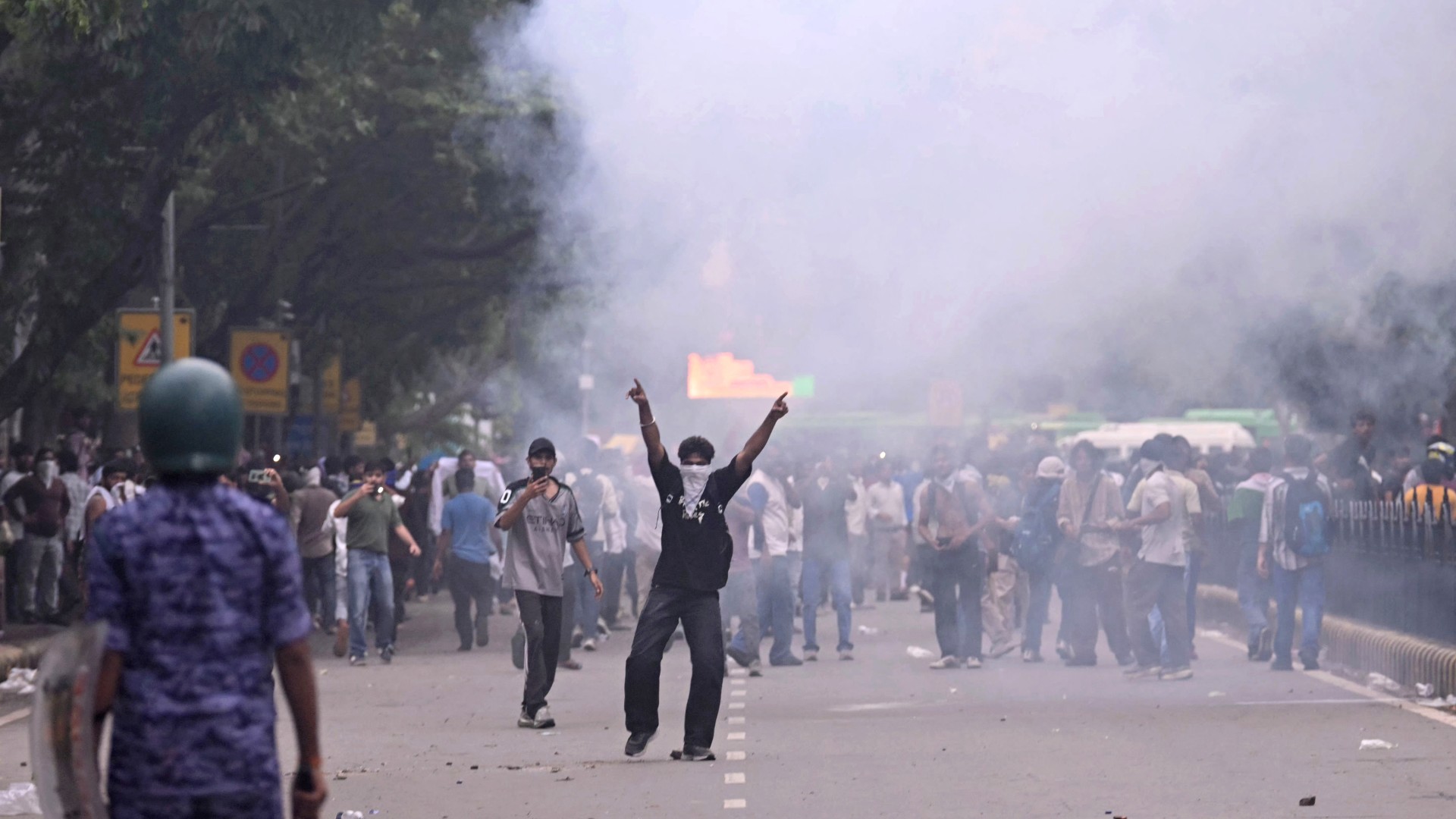
At 16:52 UTC on 16 July 2026, the Monexus desk noted three Indian Express dispatches that, taken together, sketch one day in the working life of Delhi's state apparatus. The first mandated that every civic demolition and enforcement drive across the capital be recorded on camera. The second reported an extortion racket that allegedly took cash from prisoners' relatives in exchange for illegal favours inside the capital's jails. The third, filed an hour later, said lawyers at the Delhi High Court had called off a strike over jurisdiction after a meeting with the Union Law Minister. Three stories, one calendar, three distinct organs of government: municipal enforcement, the police-prison complex, and the bar. Read in sequence they are less a news round-up than a partial audit of how Delhi is being run, and at what altitude accountability is being attached.
The day's thread is that Delhi is responding to its own scandals with instruments of visibility rather than of redesign. The pattern is familiar from other capitals under scrutiny: the camera on the bulldozer, the case file on the jail middleman, the closed-door meeting with a minister. Each instrument has a constituency. None, on its own, answers the structural questions the dispatches surface.
A camera on the bulldozer
The opening dispatch, filed at 16:52 UTC, set out a new rule of municipal conduct: from encroachment removal operations to enforcement actions, every civic drive in the capital will now be recorded on camera. The reform reads as procedural, but its origin lies in a longer quarrel about what Delhi's drives actually do, and to whom. Encroachment removal in the city has, for years, been the subject of both litigation and political dispute, with critics arguing that demolitions disproportionately fall on informal housing and small商户 in particular neighbourhoods while leaving comparable encroachments elsewhere untouched. The Indian Express framing positions the new rule as a transparency fix rather than a change in the underlying enforcement policy.
The political economy of the camera is straightforward. A recorded drive produces a contemporaneous record that can be challenged in court, cited in compensation claims, or used by a successor administration to disown a predecessor's actions. It also produces a record that can be selectively released. Visibility reforms of this kind do not by themselves rewrite the rules of who gets removed and who does not; they shift the burden of documentation. The dispatches do not yet specify who will hold the footage, for how long, or under what access regime. Those details will determine whether the reform functions as a constraint or as cover.
Bribes, favours, and the prison corridor
At 16:53 UTC the same desk reported that an extortion racket had been busted in Delhi. According to the Indian Express dispatch, the network solicited bribes from the relatives of prisoners in exchange for "illegal favours." The short notice does not specify which prison, which agency led the arrest, how many arrests were made, or what the chain of custody looked like from the relatives' end to the officials named. These are questions the reporting will have to answer as the case file fills out. The fact-pattern described is, however, a well-known variant of one of India's recurring corruption typologies: an intermediary who claims access to officers inside a jail, takes cash for promises of better classification, faster hearings, remissions, or contact, and disappears or denies the promises when the money changes hands.
The structural point worth holding onto is that this is a market in opacity. The relatives who pay are paying for something the system does not advertise: a route around official queues. Where courts are slow, classifications opaque, and visit regimes restrictive, the rent is generated by the very scarcity the state has built. Transparency reforms inside the prison, from recorded visits to digitised grievances, can compress this market; they can also push it further underground. The dispatch, taken alone, leaves both outcomes open. It also leaves open whether the accused were private intermediaries, public employees, or some combination. Indian Express's short piece is the alert, not the indictment.
The bar opens its door, then goes back to work
The third dispatch, at 17:52 UTC, closed the working day for the desk's purposes. Lawyers at the Delhi High Court had struck work over concerns about jurisdiction; after a meeting with the Union Law Minister, they called off the strike and returned to court. The notice is silent on which side raised the concern, what the specific jurisdictional question was, and what was offered or conceded at the meeting. Those omissions matter. A strike call-off after a ministerial meeting can mean a substantive concession was secured, a procedural assurance was given, or the symbolic value of being received at the ministry was enough to bring the body back.
The bar's leverage in Delhi is unusual. The High Court sits at the intersection of the Union government's regulatory writ and the city's own jurisdictional questions, which makes its calendar a political object. Stoppages cost litigants time they often cannot afford; they also signal to the bench and the government that the bar considers an institutional matter worth its members' lost earnings. The fact that the Law Minister met the delegation, rather than dispatching a junior, is itself a data point. What the delegation carried back to its members is not yet on the record.
A single thread across three institutions
Read together, these dispatches point at a quieter underlying argument about how accountability is being assembled in Delhi. The camera, the criminal case, and the ministerial meeting are three different instruments, but they share an operating logic. Each is reactive to a reputational pressure that has already produced headlines. None, in the form reported, reorganises the underlying institution. The municipal department will go on removing encroachments; the prison system will go on processing inmates; the High Court will go on hearing cases. The rule changes described sit on top of these continuities, attached like instruments to a machine that has not been rebuilt.
That is not necessarily a criticism. Incremental governance instruments are often what survives legislative arithmetic in a federal system where the Union government, the city government, the police, and the judiciary each have a partial view. The question the dispatches do not yet let us answer is whether the instruments are connecting to a coordinating layer, a court monitor, an oversight body, a published dashboard, that would convert isolated reforms into a continuous reading.
The counter-read, and what it costs to disagree with it
A plausible counter-read of the same facts holds that the three dispatches are evidence of a working accountability system: drives are being filmed, extortion rackets are being busted, and the bar is being received at the ministry when it speaks collectively. On this reading, each story is a small instance of institutional correction rather than a signal of structural failure. The day is, on this account, ordinary. Most large capitals generate this kind of file by mid-afternoon on a working day.
That reading is fair, and worth keeping in view. It does, however, have its own costs. If the day's three stories are routine, then the bar for what counts as a scandal has shifted; if they are exemplary, then Delhi's accountability layer is being assembled incident by incident rather than designed. The dispatches alone cannot settle which is the case. They can, however, be read against other reporting, court orders on demolition drives, status reports in pending prison-overcrowding cases, precedent on bar–government consultations, to see whether the instruments described here are landing on a structure that holds, or on air.
The Indian Express reporting is the opening of three files, not the closing of them. Each of the three stories has a natural next beat that the paper will, in time, return to: who held the camera footage, and on what terms; who was named in the extortion case, and what their institutional position was; what the delegation told its members after the ministerial meeting. Until those next beats appear, the day's ledger will read as the present dispatches read: a city being audited in small, camera-shaped increments, with the institutional rearrangements left for another bulletin.
Desk note: Monexus read the day's three Indian Express desk wires as a single working-day ledger and treated each instrument, camera, case file, meeting, on its own evidentiary basis before drawing a structural reading. Sources are short-notice desk pieces; quantitative claims beyond the scope of those pieces have been left out by design.