From Karachi to Tokyo: a week when the legal scaffolding around crypto went vertical
A 72-hour stretch delivered halal rulings in Pakistan, financial-asset recognition in Japan, a state-asset-management bill in South Korea, and a US-UK tokenisation pact. The market read it the way it reads everything now: with $211 million of forced short liquidations.
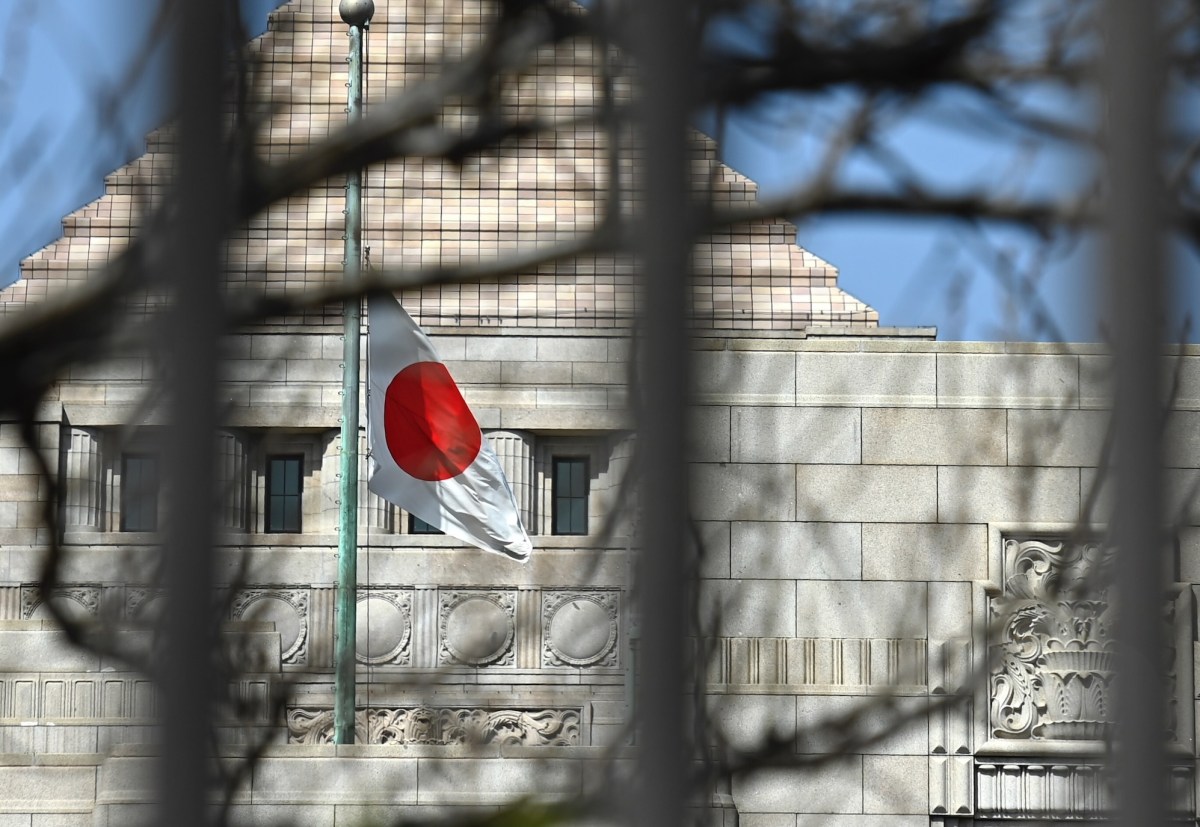
A Pakistani seminary on one side of the Indus, a Japanese cabinet on the other. Between them, in roughly 72 hours, the legal scaffolding around digital assets went vertical: senior clerics trading contradictory fatwas on whether crypto is halal, Tokyo formally reclassifying tokens as financial assets, Seoul drafting crypto into a state asset management framework, and Washington with London announcing a joint plan for cross-border tokenised assets and stablecoins. The market, characteristically, answered all of it the same way. Between 12:15 UTC on 14 July 2026 and 13:20 UTC on 15 July, traders saw roughly $211 million of leveraged short positions forcibly closed in two separate one-hour cascades, according to data flagged by the WatcherGuru Telegram wire.
The week's news is not a single story but a synchronisation. Across three of Asia's largest economies, governments are now answering a question the industry spent a decade treating as settled: what kind of thing is a token? For the first time, the answers are converging on a model that places crypto inside the perimeter of conventional finance, with all the obligations and the legitimisation that implies. The cost of the perimeter, as ever, is being paid at the open.
From fatwa to financial asset
The most visible flashpoint is also the most theologically textured. On 16 July 2026, debate inside Pakistan's clerical establishment over whether cryptocurrency is permissible under Islamic law spilled into public view, with senior religious authorities issuing rulings on opposite sides of the question, according to a Polymarket-flagged wire item. The dispute is not new; Pakistani muftis have wrestled with crypto since at least the 2018–2019 bull cycle, when the State Bank of Pakistan first moved to restrict banks from facilitating token transactions. What has changed is the volume of capital looking for a religious cover, and the willingness of senior voices to stake one out publicly.
The Pakistan story matters less for the local market, which remains small, than for the export of the answer. Indonesia, Malaysia, the Gulf Cooperation Council states, and Turkey all host Muslim-majority populations with growing retail crypto exposure. A binding ruling in one of the region's largest countries tends to be read as a regional benchmark within months. Tokyo's decision the day before, on 15 July, points in a different but adjacent direction. The Japanese government formally passed a law recognising crypto as "financial assets," a WatcherGuru-flagged report on the same day indicated, aligning the asset class with securities-like disclosure and custody expectations rather than the looser payments-rail treatment that has governed the industry in Japan since 2017. Seoul moved in parallel. Also on 15 July, South Korea announced it would fold crypto into a planned state asset management law, a step that, if enacted, would bring digital assets inside the architecture used to manage sovereign reserves.
A Pacific pact, and a cascade
The Anglo-American leg of the week arrived 24 hours earlier, on 14 July 2026, when US and UK officials announced a joint plan to support cross-border tokenised assets and crypto stablecoins, according to a WatcherGuru-flagged item. The framing, stripped of diplomatic varnish, is straightforward: a coordinated regulatory lane for stablecoin issuers and tokenisation platforms that want to operate on both sides of the Atlantic, with supervisory handoffs modelled on the equivalence arrangements long used in traditional finance. For an industry that has spent five years asking where the G7 actually stands, the answer is now on the record.
The market's response was not diplomatic. Within an hour of the US PPI print, traders cleared roughly $111 million of leveraged short positions, WatcherGuru-flagged data showed at 13:20 UTC on 15 July. A near-identical cascade of roughly $100 million of crypto shorts had unwound the previous day, on 14 July at 13:15 UTC, in the wake of the IBM earnings miss. The $211 million two-day total is not, on its own, a regime-shifting print. It is notable because the catalysts were heterogeneous: a producer-price surprise on one side of the Atlantic, a bellwether stock earnings miss on the other, and a regulatory architecture that, by the end of the week, no longer looked like a draft. The market has begun to price the perimeter, and the perimeter has begun to look like a binding contract.
What the convergence is actually building
Read together, the four moves describe a single architecture. State recognition in Japan pulls tokens into the securities perimeter. State custody in South Korea pulls them into the sovereign-balance-sheet perimeter. The US-UK pact pulls stablecoins and tokenised assets into the cross-border supervisory perimeter. The Pakistani debate is the periphery of the same shape, asking whether religious law recognises the asset class at all, and on what terms.
The structural point is that the industry is moving from a regime of toleration to a regime of permission. The implication is a quieter one. Inside the perimeter, issuers face disclosure, capital, and custody obligations that look much like those of a bank or a broker-dealer. Outside it, the same issuer can still operate, but only for customers who can clear the relevant jurisdictional, professional, and now religious gates. The two-track outcome is not an accident; it is the model that conventional finance has used for decades to manage products that policymakers cannot quite bring themselves to outlaw.
The stakes, and what is still soft
Who wins. The largest, most deeply capitalised exchanges and stablecoin issuers, who can afford the compliance build-out. Banks that have spent the cycle waiting for a clean entry point. The first-tier audit, custody, and surveillance vendors, who effectively become the gatekeepers. State balance-sheet managers, who gain a new asset class to deploy.
Who loses. Smaller venues and unhosted-wallet-friendly operators who cannot absorb the cost of disclosure and segregation. Retail users in jurisdictions where the perimeter becomes prohibitive rather than protective. Speculative leveraged books on the long side as well as the short side, which the two-day $211 million print suggests are repricing faster than the news flow.
What remains genuinely soft. The Pakistani debate is, at the moment this article publishes, a dispute among scholars, not a regulatory decision. The South Korean state-asset-management bill is a plan, not an enacted text. The US-UK pact is an announcement of intent; the binding rules, supervisory memoranda, and equivalence determinations are still to be drafted. The IBM 25 percent drop and the two short-liquidation prints are market events that, on their own, would warrant one paragraph. The fact that the same 72 hours delivered a halal row, a Tokyo statute, a Seoul draft, and a Washington-London communique is what elevates the week. The watch items are dated: the South Korean bill text, the next State Bank of Pakistan guidance note, the next G7 finance-ministers' communique, and the next US PPI print.
Desk note: Monexus reads this week as a regulatory synchronisation rather than a price story. The two short-liquidation prints are the only directly market-attributable figures in the cluster; the rest is architecture, and architecture travels faster than price.
Wire provenance
This editorial synthesis draws on the following public wire/social posts:
- https://t.me/s/WatcherGuru
- https://t.me/s/WatcherGuru
- https://t.me/s/WatcherGuru
- https://t.me/s/WatcherGuru
- https://t.me/s/WatcherGuru
- https://t.me/s/WatcherGuru
- https://t.me/s/WatcherGuru