Congo's Ebola outbreak outruns every previous one, WHO warns
A two-month-old outbreak in the Democratic Republic of Congo has now produced more than 2,000 confirmed cases, with the World Health Organization warning on 16 July 2026 that transmission is moving faster than in any prior Ebola event on record.
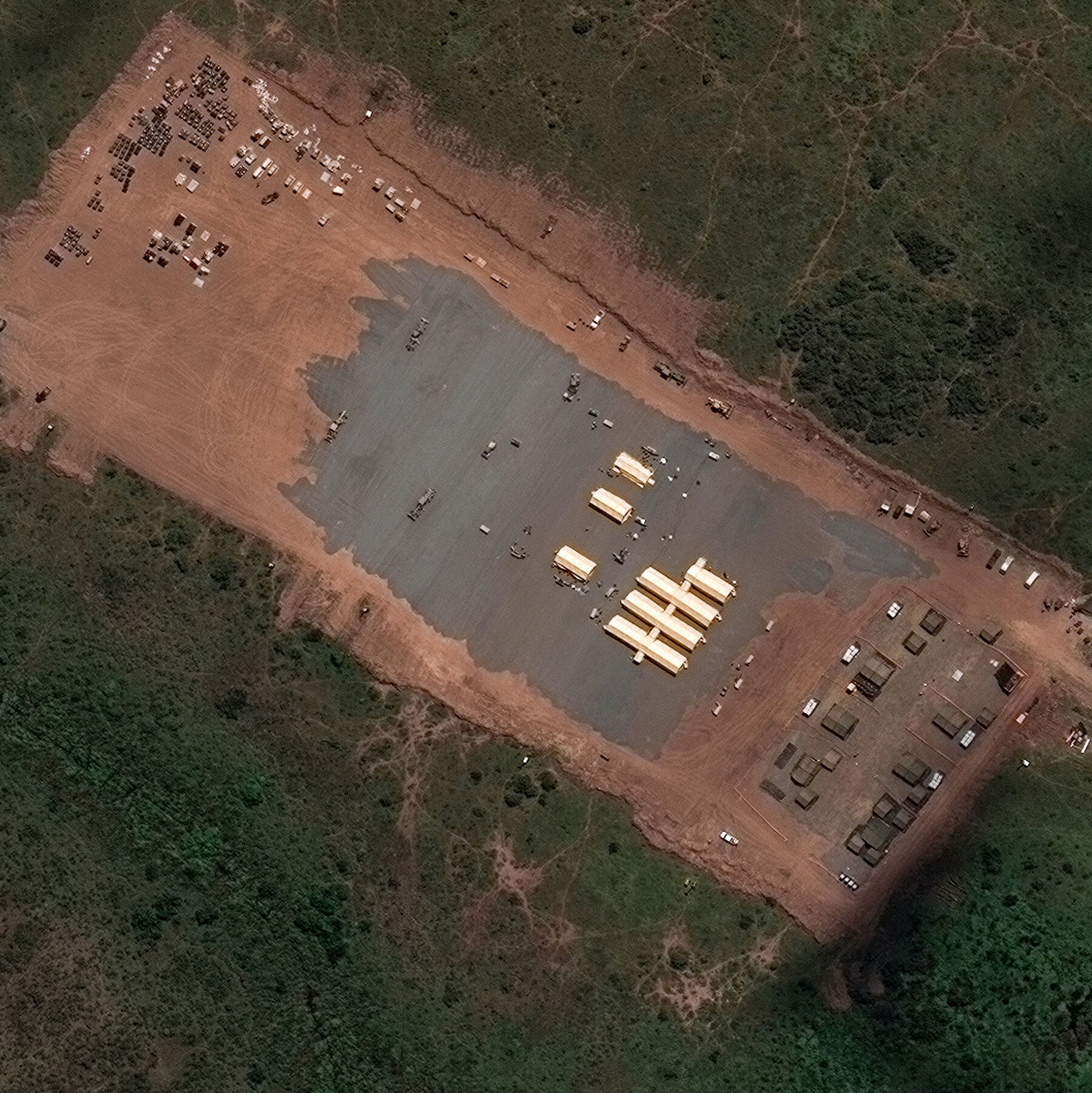
On the afternoon of 16 July 2026, the World Health Organization said what its country office in Kinshasa has been signalling for weeks: the Ebola outbreak now tearing through the Democratic Republic of Congo is moving faster than any previous outbreak of the disease. The warning, issued from Geneva and relayed within minutes by French wire, English wire and a clutch of open-source intelligence channels, marks a sharp escalation of a crisis that public-health officials had until recently described as serious but containable. More than 2,000 cases have now been confirmed, according to the WHO briefing carried by France 24, and the curve of transmission is steeper than the 2018-2020 Kivu epidemic, the 2014-2016 West African epidemic, and every earlier recorded episode in the country's long, grim history with the virus.
The outbreak in question was declared roughly two months ago. In the standard arc of an Ebola response, two months is the moment when case counts should be flattening, not climbing; when contact-tracing teams should be closing chains of transmission in provincial health zones; when vaccination of frontline workers and confirmed contacts, using the Ervebo regimen, should be visibly bending the curve. Instead, the WHO's own description, repeated almost verbatim by France 24, France 24's English service, the Insider Paper wire, and the Open Source Intel Telegram channel on the afternoon of 16 July 2026 UTC, is that the virus is spreading "faster than all previous ones." The phrase is not a turn of rhetoric. It is a clinical statement about doubling time, case-fatality ratios, and geographic spread across health zones that, until this year, had never hosted a confirmed case.
What "faster than any previous outbreak" actually means
The WHO's caution against reading the word "outbreak" as a single event matters here. The DRC has now endured more than a dozen declared Ebola outbreaks since 1976, when the virus was first identified near the Ebola River in what was then Zaire. Each of those events had its own dynamics: rural versus urban, single-province versus multi-province, contained within weeks versus smouldering for years. The 2018-2020 Kivu outbreak became the second-largest in history, with roughly 3,470 cases and 2,287 deaths, before it was brought under control in the eastern provinces of North Kivu, South Kivu and Ituri.
The current episode, by contrast, is younger and steeper. France 24's English service reported on 16 July 2026 that there are now more than 2,000 confirmed cases, a figure that, if the trajectory holds, will overtake the Kivu totals within weeks rather than months. France 24's French channel, in a parallel bulletin on the same day, stressed the speed of transmission specifically in contrast to all previous DRC outbreaks, not just the largest ones. The Open Source Intel summary posted to Telegram at 15:57 UTC captured the WHO framing in compressed form: the outbreak is "spreading faster than any previous outbreak." The phrase echoes the language used by WHO Director-General briefings during the West African emergency of 2014, when the organisation was later criticised for declaring a Public Health Emergency of International Concern months after its own country offices had begun to ring the alarm.
Why the curve is steeper this time
The WHO has not, in the briefings made public on 16 July 2026, given a single cause for the acceleration. But the pattern it describes is consistent with three structural factors that public-health officials working in the DRC have flagged for years.
The first is movement. The health zones currently reporting the heaviest caseload sit along major commercial corridors linking Kinshasa to eastern provincial capitals, and onward to cross-border traffic with Uganda, Rwanda and South Sudan. The 2018-2020 Kivu outbreak was driven, in part, by the density of those corridors and the impossibility of tracing contacts across active conflict lines. The current outbreak, by the WHO's own description, is exploiting the same density while benefiting from the post-pandemic expansion of regional road and air links.
The second factor is trust. Community resistance to Ebola response teams has been a documented feature of every DRC outbreak since 2018, and is the proximate cause of the killings of response workers in North Kivu in 2019. When the WHO says a virus is "spreading faster than any previous outbreak," part of what it is encoding is that contact-tracing, safe burials, and vaccination drives are being delayed, denied or rerouted by communities that have not been adequately brought into the response. The figure of 2,000 confirmed cases is, in that reading, a floor rather than a ceiling.
The third is the global withdrawal. The West African epidemic of 2014-2016 produced the largest-ever international Ebola response, with US military deployments, large NGO presences, and billions of dollars in emergency funding. That apparatus, by every independent reading, is no longer in place. The WHO's own contingency funding is depleted, the United States has since 2025 cut several categories of global-health support, and the European response capacity that was rebuilt after Covid-19 has been redirected toward other priorities. An outbreak that in 2014 would have triggered a multi-billion-dollar international mobilisation is, in 2026, being met largely by Congolese health workers, a handful of NGO partners, and the WHO country office in Kinshasa.
The counter-narrative, and why it does not hold
The plausible counter-reading is that "faster than any previous outbreak" is a statement about the early curve, not the eventual size. Outbreaks in remote areas often produce steep early growth as surveillance catches up to a virus that has been circulating undetected for weeks; the apparent acceleration can reflect better detection, not faster transmission. The WHO has, in the past, overstated the speed of early-phase outbreaks to justify the declaration of a Public Health Emergency of International Concern, an action that mobilises funding but also travel and trade restrictions on the affected country.
The counter holds partially. The 2,000-case figure is clearly a function of expanded testing capacity in DRC, and the WHO's own bulletins emphasise laboratory confirmation. But the same bulletins describe cases across multiple health zones, including zones with no prior documented Ebola transmission, and report fatality ratios consistent with the Zaire ebolavirus species rather than with surveillance artefact. The combination of geographic spread, fatality ratio, and confirmed laboratory counts is not consistent with a detection-driven illusion. The dominant framing, that this outbreak is genuinely outpacing its predecessors, holds.
There is a second, more uncomfortable counter-narrative: that the international system is structurally incapable of mounting the kind of response that contained the West African epidemic, and that the WHO's warning, however accurate, will not be matched by the operational surge it implicitly demands. That reading does not contradict the WHO's clinical statement. It amplifies it.
What the next sixty days look like
The shape of the next two months is set by three variables. The first is whether the WHO and the DRC's Ministry of Public Health can deploy enough vaccine doses to ring-fence the active chains of transmission. The Ervebo vaccine, manufactured by Merck, has been used in DRC outbreaks since 2018 and remains the primary countermeasure; the constraint is logistics in provinces with limited cold-chain capacity, not the vaccine itself. The second is whether cross-border coordination with Uganda, Rwanda and South Sudan can keep pace with the movement of cases along the same commercial corridors that drove the early spread. The third is whether international funding, currently described in WHO bulletins as insufficient, can be mobilised before the outbreak crosses the threshold of a Public Health Emergency of International Concern.
A declaration of a PHEIC, the WHO's highest formal alarm, would unlock the International Health Regulations framework, formally notify all 194 member states, and in principle trigger the release of emergency funding from bodies including Gavi, the Vaccine Alliance, and the World Bank's Pandemic Fund. It would also, as in 2019-2020, carry costs for the DRC, including screening requirements at international airports, and the risk that some trading partners will impose restrictions not justified by the epidemiological evidence.
The watch-points between now and mid-September 2026 are therefore specific. The WHO's next situation report will be the test of whether the 2,000-case figure represents a true doubling-time ceiling or a continuing acceleration. The DRC Ministry of Health's daily briefings will show whether new health zones are being added or whether the geographic spread is stabilising. And the funding lines, particularly the gap between the WHO's flash appeal and what has actually been disbursed, will show whether the international system is willing to treat the warning as the early signal it was when the same warning was issued, and largely ignored, in the spring of 2014.
The phrase "spreading faster than any previous outbreak" is, in the end, a clinical statement. What the next sixty days show is whether the rest of the international system chooses to treat it as one.
, Monexus framed this as a public-health emergency in a single country whose international response architecture is contracting, rather than as a global crisis on the West African model. The wire line on 16 July 2026 focused on the WHO's clinical warning; this publication also reads the warning against the post-2024 reduction in global-health financing.
Wire provenance
This editorial synthesis draws on the following public wire/social posts:
- https://t.me/osintlive
- https://t.me/insiderpaper
- https://t.me/france24_en
- https://t.me/france24_fr
- https://www.cdc.gov/ebola/about/index.html