A disabled tanker and the blockade that finally started moving
A Curaçao-flagged tanker bound for Kharg Island was hit by U.S. Hellfire missiles after ignoring repeated warnings. What had been a slow-burn blockade is now a kinetic one.
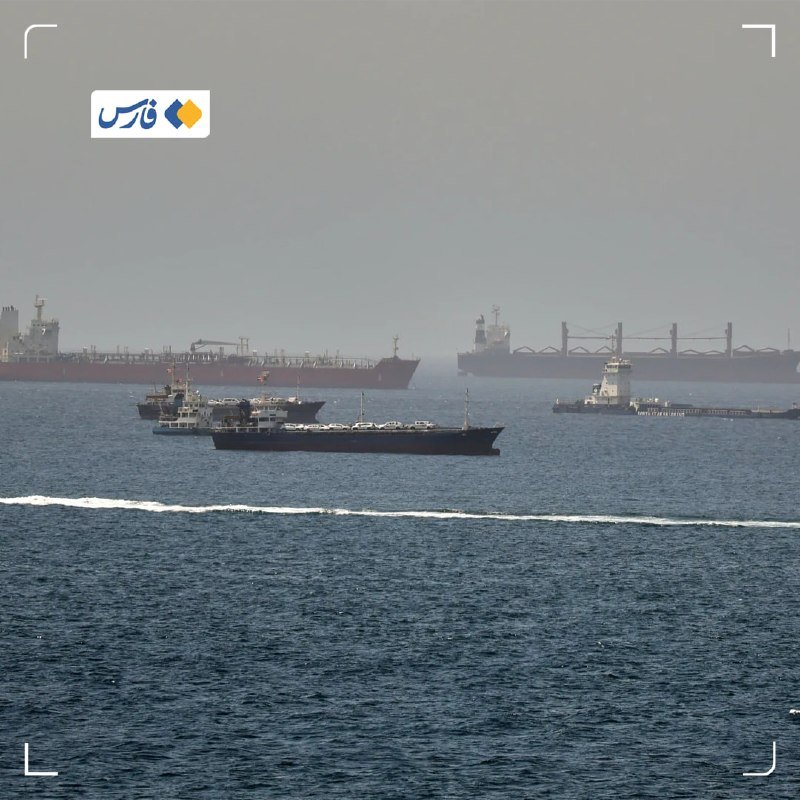
On 16 July 2026, in the waters leading into the Strait of Hormuz, U.S. Central Command fired Hellfire missiles at the empty oil tanker M/T Belma, a Curaçao-flagged vessel that, by the U.S. military's account, ignored repeated warnings as it closed on Iran's Kharg Island terminal. The tanker, unladen and inbound for the world's most consequential crude export point, was disabled rather than sunk. CENTCOM later confirmed the strike publicly.
The Belma is the first kinetic act of what had, until this morning, been a slower, more bureaucratic form of pressure: a U.S.-led maritime interdiction regime in the Gulf that has mostly worked by inspection, registration checks, and the threat of penalties. It is no longer working that way. With one disabled tanker, the blockade has moved from paperwork to ordnance.
What the wire says, and what it doesn't
Two Telegram channels with established track records on regional military movements carried the initial read. GeoPWatch reported at 04:43 UTC that CENTCOM disabled the Belma after the unladen vessel ignored repeated warnings, identifying the ship by name and flag. The English-language feed of Iranian-aligned analyst @englishabuali confirmed at 06:12 UTC that the U.S. had begun actively enforcing a blockade and that the target was an empty tanker heading for Kharg. AMK Mapping, a third independent open-source channel, added at 06:31 UTC the specific weapon used: Hellfire missiles, fired after warnings went unheeded.
None of these accounts offer independent video or imagery of the strike itself. None identify the operator of the Belma, its beneficial owner, or which party of the boarding protocol (if any) was attempted before fire. All three rely, ultimately, on U.S. Central Command's statement. That is the thinnest part of the public record. It is also, for now, unavoidable: the U.S. Navy is the only source on the water, and the U.S. is also the only party confirming the sequence of warnings.
Why Kharg, and why now
Kharg Island handles the large majority of Iran's crude exports. A vessel steering for Kharg from the south, unladen and bound in, is almost certainly returning for a load. Intercepting a ballast ship rather than a laden one in-bound is unusual: the standard blockading logic is to stop the cargo, not the empty hull. The fact that CENTCOM acted on the inbound direction signals that the operation has widened from inspecting oil leaving Iran to managing the entire loop of vessels tied to Iranian trade, not just the crude itself.
There is a quieter reading, too. A blockade enforced selectively, against inbound tugs and barges, can degrade an export system without producing the visual signature of a tanker on fire. Disable an empty ship, salvage it, and you make a point to every owner in the loading queue without lighting up the LNG market. Whether that calculus survives the first casualty from another tanker is the open question.
The Iran file has its own logic
Tehran's regional posture in mid-2026 is not the posture of 2019. Iran has a wider and more practiced network of proxies, a sanctions-evasion fleet with non-Iranian flags, and a doctrine of calibrated escalation that has, in past cycles, met kinetic moves with deniable kinetic answers: mines, drone strikes on tankers, seizure-for-swap operations in the Gulf of Oman. The Hezbollah file is a separate war. The Houthi file can close the Bab el-Mandeb independently of what happens here. A Hellfire on an empty tanker is not a closing move; it is an opening one, and Iran's playbook for the response is well-rehearsed.
Iranian state-aligned channels have, characteristically, framed the incident as piracy, with the usual legal scaffolding about innocent passage and freedom of navigation. The Iranian foreign ministry has not, in the materials available to this publication, issued a formal response at the time of writing. The Iranian oil ministry, asked for comment, has not responded. The asymmetry of messaging matters: U.S. statements are public and on the record; the Iranian side is still gearing its line.
What this becomes if it holds
If CENTCOM treats the Belma as a template rather than an exception, the operating cost of any Iranian-linked voyage rises meaningfully. Insurance underwriters, who already price the Gulf of Oman at war-risk premiums, will reprice. Charterers will reroute cargoes through Persian Gulf ports not on Kharg's loading queue, where possible. Independent refiners in Asia, already buying discounted Iranian crude with the help of shadow-fleet operators, will see their logistics chains stretch.
If, alternatively, this is a one-off and the next inbound vessel is inspected and turned around rather than hit, the regime looks like a slow squeeze rather than a hot blockade. That outcome is the more conventional reading of a sanctions-plus-interdiction policy. The fact that the first act was a missile strike rather than a boarding pushes the read toward the hot side.
What remains genuinely uncertain, and what even the sharpest open-source channels cannot yet adjudicate, is what the Belma's operator knew, who chartered her for the run, and whether the warnings in question were radio calls, hailed approaches by U.S. Navy small boats, or both. Those facts will surface in the coming 72 hours; until they do, the public record remains a single-source one. Single-source is not the same as wrong. It is, however, the appropriate epistemic posture for readers to keep until more is on the wire.
This publication's frame prioritised the U.S. military account because it is the only on-scene source currently on the record, while flagging openly that no independent video, owner identification, or boarding attempt has been documented. The next twelve hours of wire traffic will likely resolve more than the last twelve have.
Wire provenance
This editorial synthesis draws on the following public wire/social posts:
- https://t.me/s/GeoPWatch
- https://t.me/s/englishabuali
- https://t.me/s/AMK_Mapping