Argentina into the final, into the Falklands row, and into a FIFA fine that may not be the last word
A 2-1 win over England was supposed to be the story. A banner unfurled in the aftermath made sure it wasn't, and handed Buenos Aires a geopolitical problem the squad did not pick but now has to carry into the final.
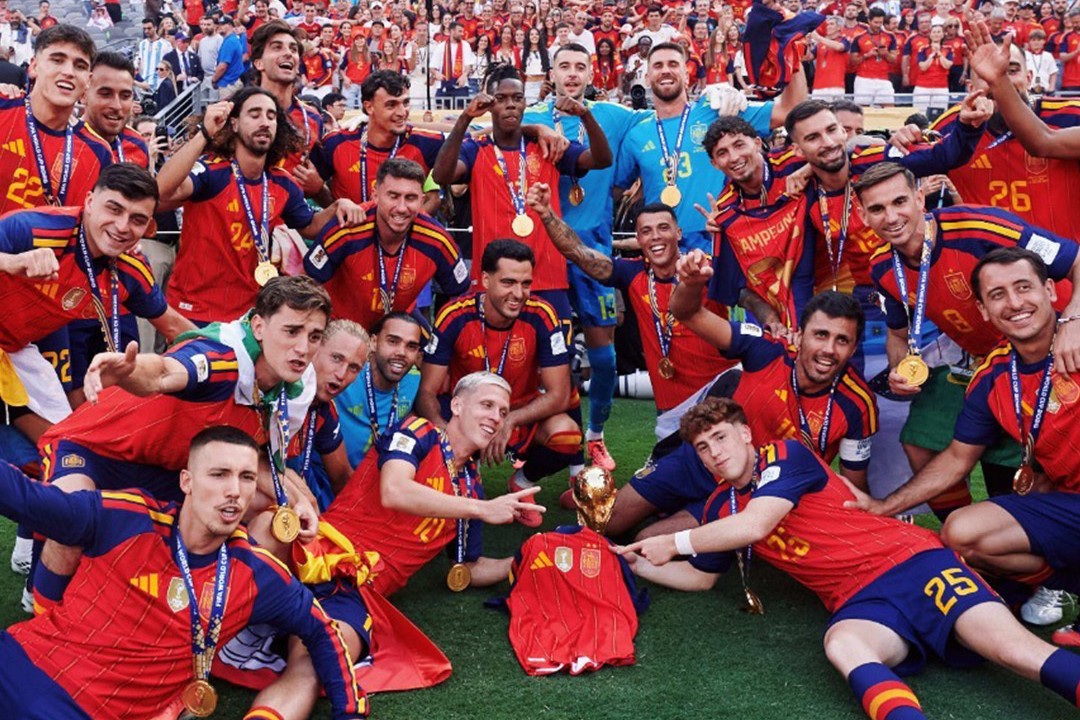
Lautaro Martínez's stoppage-time goal in Qatar on 15 July 2026 broke England 2-1, sent the holders into a World Cup final against Spain, and detonated a row that will outlast the tournament. As the squad celebrated on the pitch, players paraded a banner reading "The Malvinas are Argentine," with a stylised map of the Falkland Islands. Within hours, the gesture had become a separate story, picked up by British outlets, magnified by a UK opposition leader, and placed on the desk of FIFA's disciplinary branch.
The win itself was a tactical story. Argentina trailed for most of the second half, equalised in the 85th minute, and finished England off two minutes into added time through Martínez, according to Sky Sports' match report at 21:12 UTC on 15 July 2026. CBS Sports' previews throughout the day had framed the tie as a collision between an England side chasing its first final since 1966 and a holder determined to extend a dynasty. Both frames held. What neither preview anticipated was that the contest's afterlife would be a sovereignty claim, not a tactical post-mortem.
A banner, and what FIFA does next
FIFA rules prohibit political messaging on the field of play. The Argentine Football Association (AFA) now faces a fine; whether individual players are sanctioned before Sunday's final is the live question. BBC Sport reported at 22:37 UTC on 15 July that "Argentina face the prospect of a Fifa fine" over the banner, citing the governing body's regulations against displaying political symbols during matches. By 01:08 UTC on 16 July, market-watchers on Polymarket had priced the disciplinary angle as the dominant news thread; a separate Polymarket-flagged item at 13:17 UTC the same day noted that the leader of the UK's Liberal Democrats had publicly demanded FIFA suspend Argentine players from the final.
The sport-governance point is straightforward. Players are officers of their national federation for the duration of a tournament, and the on-pitch product is the property of FIFA's commercial partners as much as of the players themselves. Sovereignty gestures breach the rules even when, as in Buenos Aires' telling, they are also acts of public memory. The harder question is political: whether FIFA, headquartered in Zurich and deeply attuned to its largest commercial markets, chooses to treat this as a routine yellow-card fine or escalates the case into a suspension fight that itself becomes a news cycle.
Why this banner, and why now
The Malvinas claim is not a footballer whim. Argentine governments of every stripe have maintained that the islands are occupied territory since 1833, and the claim is embedded in school textbooks, conscription-day oaths, and the country's constitution. The 1982 military junta's attempt to seize the islands by force ended in defeat and an estimated 649 Argentine and 255 British military deaths, and the political cost inside Argentina was catastrophic. Whatever today's players meant by the gesture, a populist provocation, a sincere patriotic statement, a coded signal to Buenos Aires, they were reaching into a wound that predates everyone on the pitch.
The choice of opponent thickened the resonance. England and Argentina have met at World Cups in 1986, 1998, and 2002, with the Maradona "Hand of God" quarter-final still the reference point for older English fans. That rivalry already carries geopolitical charge. The Malvinas claim converts a football match into a referendum on a 192-year-old sovereignty dispute, with a television audience measured in the high hundreds of millions.
The counter-pressures
In Westminster, the political response was immediate. The Liberal Democrats' call for suspensions, reported on Polymarket at 13:17 UTC on 16 July, sits inside a broader British consensus that the gesture was inflammatory. UK Foreign Office statements over decades have held the line that the Falklanders' right to self-determination is not negotiable. The British government does not accept bilateral sovereignty talks while islanders vote to remain British, most recently in a 2013 referendum reported at near-100% in favour of staying with the UK.
Argentina's counter-position is that the islanders were planted by Britain in the 19th century and that self-determination cannot be invoked to lock in what Buenos Aires frames as an occupation. Both readings are coherent within their own traditions. Neither is going away because of a Sunday final.
What to watch before Sunday
Three concrete things happen next. FIFA's Disciplinary Committee will rule on whether the AFA, the players, or both face charges; the timeline is typically days, but with a final looming the committee may move faster to preserve the spectacle. Buenos Aires will calculate the political cost of fighting the fine versus absorbing it; previous Argentine federations have treated FIFA sanctions as a domestic-political asset. And the British press will keep the story on the front page for as long as there is a fresh quote to chase.
The most under-reported angle is commercial. FIFA's broadcast partners carry the final into markets where the Malvinas question is not a curiosity but a lived grievance. A heavy sanction would be defended as principled; a light one would be defended as proportionate. Either way, the federation is now refereeing a sovereignty dispute it did not want, on the eve of its showpiece event.
Desk note: Monexus framed the on-pitch result as the lead and the sovereignty gesture as the second act, in line with how the wires sequenced their own coverage. The Falklands claim is treated as a legitimate, long-standing Argentine position rather than as provocation or theatre, and the British counter-position is given equal weight. The story remains live: a FIFA ruling, an AFA response, and a final against Spain on Sunday are the next three beats to watch.
Wire provenance
This editorial synthesis draws on the following public wire/social posts:
- https://x.com/polymarket/status/...