Argentina book World Cup final with Spain after late collapse of England's resistance
Two late goals in Atlanta ended England's tournament and set up a repeat-final against Spain. The pattern, not the scoreboard, is what matters.
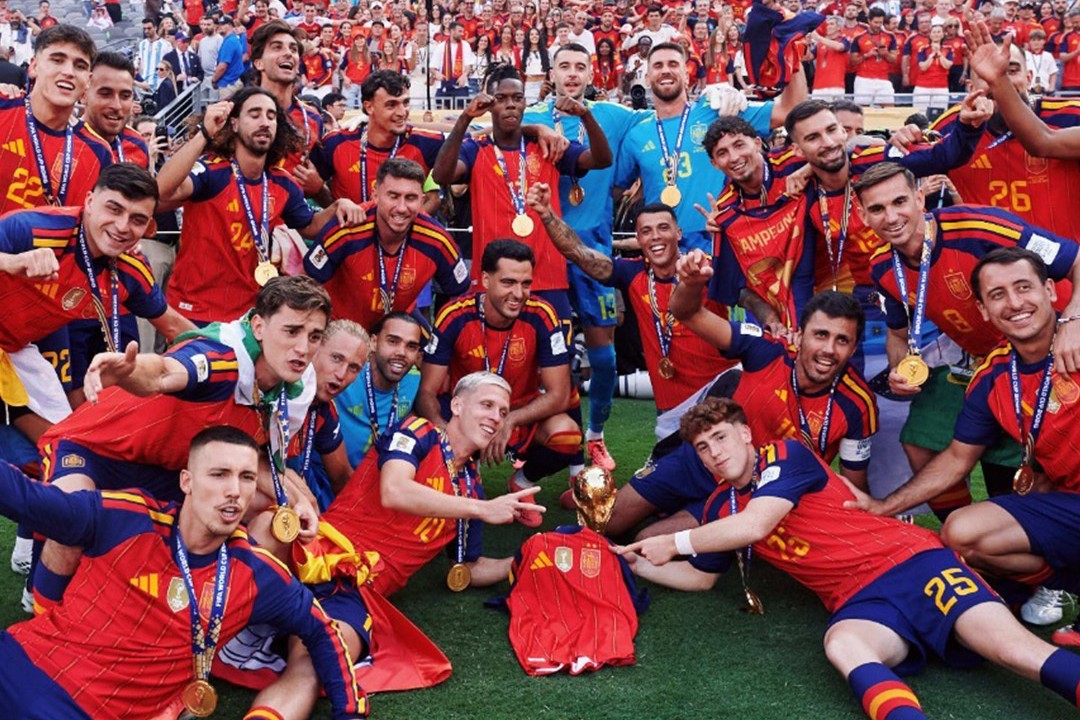
Argentina struck twice in the closing stages at Atlanta Stadium on 15 July 2026 to overturn England 2-1 and advance to the World Cup final against Spain, confirming the defending champions' reputation for late, decisive football at the sharp end of major tournaments. The result, confirmed in the aftermath coverage that ran into the morning of 16 July UTC, sets up a repeat of the sport's modern hierarchy: the European champion against the South American champion, with a world title on the line.
The pattern is now too consistent to ignore. Argentina have made a habit of turning knockout matches into endurance tests, then cashing in once the opposition's legs go. Spain will be the next side asked to absorb that pressure over ninety-plus minutes. The lesson for England is older and more uncomfortable: tournament football is decided in windows, and Argentina keep finding theirs.
How the match broke
England controlled the middle portion of the game and took the lead through a set-piece goal that briefly quieted a stadium split between travelling England supporters and a vocal Argentine contingent, according to the Guardian's live blog. The BBC noted before kick-off that both national anthems were drowned out by crowd noise inside the Atlanta venue, a small signal of how heavily the venue tilted toward the South American side despite the official neutrality of the venue.
The equaliser arrived late, and the winner arrived later still. ESPN's recap framed the finish as Argentina "flipping the script yet again," with two goals in the final stretch to stun England and seal a place in the final. The structure of the comeback, two quick goals rather than a single dramatic strike, mirrors the way Argentina broke France in the 2022 final in Lusail: absorb pressure, then convert territory into territory-against in the moments the opponent stops tracking runners.
Why England could not hold
The structural problem for England was not talent. It was the absence of a second plan once the game tilted into a chase. Argentina's defending, organised and willing to foul tactically in midfield, forced England to attack down the flanks, where the crosses into the box could be cleared or contested. Once the equaliser landed, England had to push a fourth and fifth attacker forward, and that is exactly the space Argentina's front line has punished all tournament.
There is a counter-reading worth airing. England were, by most live accounts, the better side for an hour. A team that dominates a World Cup semi-final for 60 minutes is not a team that has been outclassed. The defeat is a result of late execution rather than systemic failure, and it leaves the underlying generation of players broadly intact for the next cycle. That framing is defensible. It is also the framing England have used after every knockout exit since at least 2018, and it has not yet produced a final.
The structural frame, in plain terms
What we are watching is a tournament in which possession football has been made to answer for itself. Spain's run to the final has been built on exactly the patient, position-based game England aspired to play. Argentina's run has been built on a different logic: defensive shape first, individual brilliance at the point of contact, and a refusal to accept that the scoreline is the game. Two different theories of how to win a World Cup have survived to the last match.
The deeper read is about squad depth and tournament temperament. Argentina's bench, including the substitutes who tilted the semi-final, is the deepest in the competition. England's core players logged heavy minutes across the knockout rounds and ran out of legs in the final 20 minutes. That is not a tactical failure of the manager; it is a roster construction problem that recurs at every major tournament for sides built around a small group of starters.
What Sunday decides
Spain versus Argentina in a World Cup final is the match the bracket pointed toward from the moment both sides cleared the quarter-finals. Spain will want the ball; Argentina will let them have it and try to win the second phase. The Golden Boot race, the official tournament tracker the Guardian has been running through the knockout rounds, will carry its own subplot: an Argentine forward and a Spanish attacker are both within striking distance, and a goal in the final is worth more than two in any earlier round.
For England, the cycle opens immediately. The Football Daily newsletter, linked in the Guardian's live blog, will spend the next 48 hours auditing the squad's age curve, contract situations and likely retirements. For Argentina, the only question that matters is whether the players who dragged them back into this final can do it one more time. The past three major tournaments say yes. Spain, for the first time in a decade, are the team with the better answer.
This publication framed the semi-final around Argentina's late-window pattern rather than around the final scoreline, on the grounds that the pattern is the news and the score is the consequence.