Argentina's stirring semifinal win lands a political weight the World Cup rarely carries
A 2-1 semifinal comeback over England carried Argentina into a final against Spain, and stirred memories of 1982 among veterans on both sides of the South Atlantic.
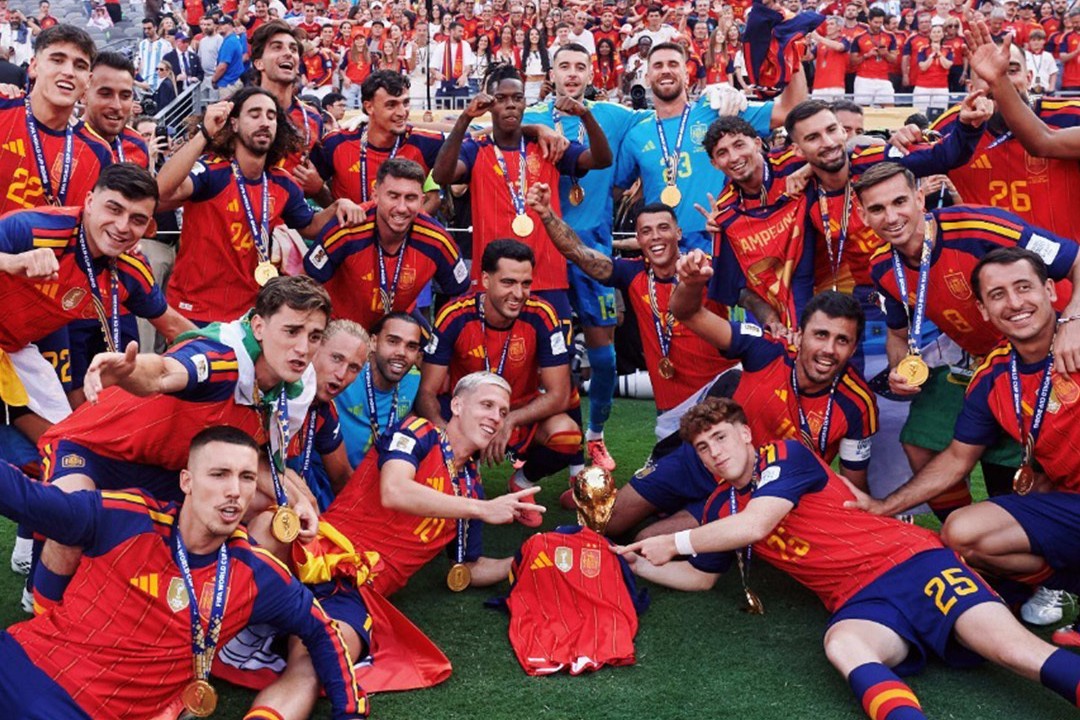
At 17:45 local time on 15 July 2026, Argentina erased a one-goal deficit at the World Cup semifinal and walked off the pitch with a 2-1 win over England, setting up a final against Spain on 19 July. Reuters reported that the result resonated with veterans of the 1982 Falklands War, who described the evening as deeply emotional. Among the named moments: Anthony Gordon's 55th-minute opener for England, and the Argentine response that followed. FRANCE 24 framed the comeback in a single line that summarises a national sporting self-image: "If you don't suffer, it's not Argentina."
The match itself is a sporting event. What it has detonated is older. Sport has a way of compressing politics into ninety minutes, and the Anglo-Argentine fixture has done this more honestly than most. The Falklands War of 1982 killed 649 Argentine servicemen, 255 British servicemen, and three Falkland Islanders; it ended in Argentine defeat and a diplomatic freeze that took most of a decade to thaw. The reporting from Reuters does not paper over that lineage. It puts the veterans' voices alongside the result, and asks the reader to hold both.
Sporting context: a final that was always going to sting
Argentina arrived at the semifinal as defending champions and as a side built to absorb pressure and counter-punch. England's opening goal from Gordon, per FRANCE 24's match report, did what good tournament football demands of the underdog: it forced the favourite to chase. The Argentine equaliser and winner completed a comeback that, on form, was consistent with how this team plays. The Spanish opponent waiting in the final, previewed by SBS News Australia on 16 July, offers a different kind of test: possession-dominant, technically dense, and unbeaten in regulation through the knockout rounds.
For English supporters, the loss is a second consecutive tournament exit from a semifinal; for Argentine supporters, the win is the kind of vindication that partisan framings will read as much more than a result. Reuters's angle on the veterans is the news peg. It is also the angle the rest of the coverage will inherit.
A rivalry that runs through a war, not around it
The 1982 conflict is unusually durable in sporting memory because it was unusually short as a war, unusually total in defeat, and unusually visible on television for its era. Argentine veterans quoted by Reuters describe the result as deeply emotional in language that exceeds normal fan commentary. That emotion is not random or sentimental; it is the residue of a defeat the Argentine state has never formally renegotiated. A goal at a World Cup does not repair that. It does offer the kind of symbolic recompense that political settlement has not.
SBS's preview of the Spain-Argentina final is written in neutral preview-register; it does not invoke 1982. The omission is editorial. The Argentina-England fixture does not get to stay neutral, and any wire copy that runs the Argentine reaction has to acknowledge that the loudest celebrations are not just about football.
What the framing choices reveal
Western sports media has historically treated Anglo-Argentine fixtures as a curiosity, a flavour note to attach to the broader tournament storyline. Reuters's choice to lead on the veterans is a slight break from that pattern: it positions the match inside a political memory that is constitutive of how the Argentine public experiences it. FRANCE 24's framing is even more pointed, granting the Argentine suffering-script the dignity of a national self-understanding rather than a joke about it.
The counter-read is also available. Global South outlets have, for two decades, increasingly framed the Falklands dispute in decolonial terms; outlets aligned with Buenos Aires read 1982 as an inheritance of imperial reach rather than as a discrete bilateral conflict. The Reuters piece does not argue either position, but by foregrounding Argentine veterans rather than British ones it tilts the weight, even if unintentionally, toward the war as Argentina still carries it.
Stakes before the final whistle on Sunday
Spain will be the favourite on 19 July. Argentina has the defending-champion gravity and the emotional fuel of an emotional week; Spain has the structural advantages of an unbeaten run without conceding in regulation. The political stakes are real but contained: a Spanish win does not wound Argentine nationalist sentiment the way an English loss has done for Argentina this week, and an Argentine win would not damage Spain's standing in any comparable register.
The harder beat to call is what carries forward from the veterans' reaction. Reuters quotes Argentine 1982 veterans who described the result as deeply emotional; the report does not give the British counterpart veterans equal space. That asymmetry is the story under the story. Sports coverage that ignored 1982 during the week of an Argentina-England game would be guilty of a worse omission; coverage that names 1982 once and moves on underplays the durable political weight the fixture has carried for forty-four years.
What remains unsettled by the reporting available is the question of whether this framing will hold in the Spanish final, or whether the Argentine press cycle resets to a sporting register once a non-postcolonial opponent stands between the team and the trophy. The evidence from the wire coverage suggests it will not: the decolonial framing of the Falklands has been building in Argentine and Latin American media for at least a decade, and a victory over Spain, the former metropole of much of Latin America, would compound rather than dissipate it.
This article was filed by Monexus's geopolitics desk using wire reporting from Reuters, FRANCE 24 and SBS News, with the Reuters veterans' framing treated as the lead peg. The piece deliberately sets the Spanish final preview in its own register, with the political memory held to the match that earned it.
Wire provenance
This editorial synthesis draws on the following public wire/social posts:
- https://reut.rs/3SV1cci
- https://www.sbs.com.au/news/article/fifa-world-cup-2026-argentina-v-spain-preview/0g4mzgl9m