Zelenskyy taps Naftogaz chief Koretsky to be Ukraine's next prime minister
The head of Ukraine's state energy company becomes the wartime cabinet's newest nominee, with the parliamentary vote now the central question.
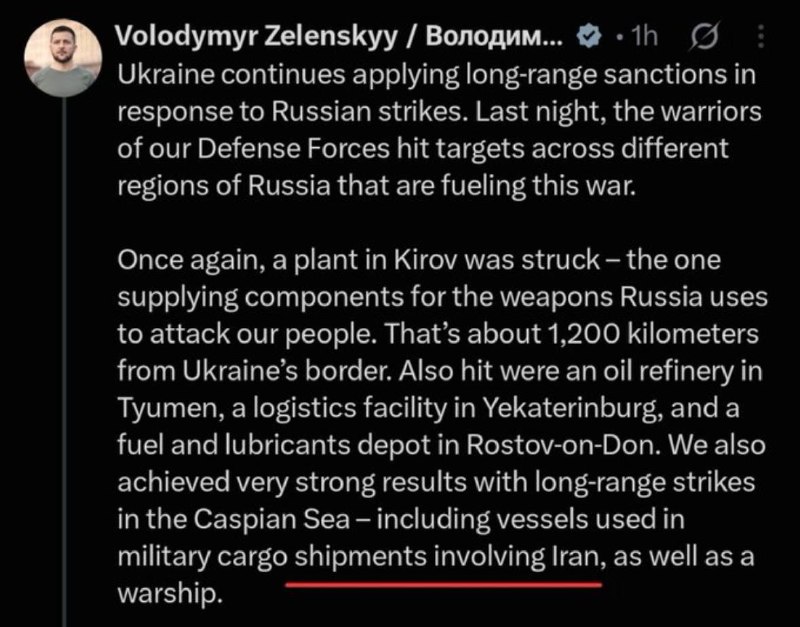
Volodymyr Zelenskyy on 15 July 2026 submitted to the Verkhovna Rada the candidacy of Serhiy Koretsky, currently the general director of Naftogaz, for the post of prime minister of Ukraine, Verkhovna Rada chairman Ruslan Stefanchuk confirmed at 21:40 UTC. The move follows Koretsky's public profile as the wartime head of the state energy company, a position that placed him at the centre of pipeline politics, gas-storage decisions and the diplomatic file on transit to neighbouring states.
The choice puts a technocrat in charge of the cabinet, in a country where the wartime energy brief is also the wartime budget brief. Koretsky's Naftogaz ran the country's underground storage, negotiated with European buyers, and absorbed Russian-asset risk on behalf of the state. Elevating him into government marries two of Kyiv's most binding preoccupations: heating the country through winter and keeping the treasury solvent while the front consumes revenue.
From the gas fields to the cabinet table
Koretsky is not a parliamentary insider. His career sits inside the national oil and gas company, where the relevant metrics are cubic metres stored, contracts renegotiated, and equipment kept running through blackouts. The president's team is signalling that the next cabinet will be assessed on operational delivery rather than legislative choreography. A prime minister who already commands the energy file can, in theory, move faster on winter-readiness and on the gas-purchase schedule than one who would have to learn it on the job.
The submission is procedural, not yet an appointment. The Verkhovna Rada must now vote on the candidacy, a step that turns a personnel decision into a coalition arithmetic problem. The parliamentary majority backing Zelenskyy's previous cabinet will determine whether Koretsky becomes prime minister by the end of the week or whether his name becomes the starting point of a horse-trading round.
The energy file as a foreign-policy file
Naftogaz's remit stretches beyond Ukrainian borders. Transit contracts with European buyers, storage capacity rented to neighbours, and the legal architecture around formerly Russian-linked assets have made the company a de facto foreign-policy instrument. Koretsky will arrive in the cabinet room already carrying relationships with European energy ministries, something a parliamentary career rarely furnishes.
That overlap is also a vulnerability. Anti-corruption institutions have scrutinised the energy sector closely since 2022, and the wartime environment has not always rewarded transparency. A prime minister nominated from inside a state company will face questions about conflict of interest and about how the line between shareholder and government is drawn. The coming parliamentary debate will be the first public forum in which those questions get put to Koretsky directly.
A wartime government in a wartime economy
Ukraine's government has been reshuffled against the backdrop of a war economy: defence spending consumes a large share of the budget, donor support is regular but never automatic, and revenue collection is uneven across the regions. The prime minister's office is the machine that converts those constraints into monthly payments to soldiers, civil servants and contractors. Koretsky's record at Naftogaz is one of running a state company through shock; whether that translates into running a state through the same shock is the empirical question now before the Rada.
A counter-reading runs as follows. A wartime cabinet benefits from a prime minister who is a known quantity to international partners and to the financial institutions underwriting the budget. Koretsky, on this view, is a continuity choice dressed as a change. The argument cuts the other way too: a clean break from the energy file might have given the new cabinet distance from any pending investigations and a broader political base. The president has chosen the version that prioritises competence over distance.
The vote and what it tells us
What the Verkhovna Rada does next is the live story. A clean majority for Koretsky would confirm that the wartime governing coalition still holds and that Zelenskyy's nominee calculus has not been disturbed by the personnel change. A fractured vote or a delay would point to a coalition under strain, with energy-sector backbenchers and reform-minded deputies pulling in opposite directions. Either outcome will be read in Kyiv and in the European capitals that fund the budget.
The structural pattern is familiar. Wartime governments turn on competence in operational files, and prime ministers are judged less on legislative programme than on whether the trains run and the gas flows. Koretsky's appointment, if confirmed, would make that logic explicit. A defeated candidacy would make the political limits of that logic the news instead.
This publication framed the submission through the energy-file lens rather than the routine-reshuffle lens, on the view that Koretsky's track record at Naftogaz is the only verifiable claim available before a parliamentary vote reshapes the picture.
Wire provenance
This editorial synthesis draws on the following public wire/social posts:
- https://t.me/euronews/1
- https://t.me/hromadske_ua/1