Zelensky's Paris entrance and the optics of a Europe still divided on Ukraine
A reported traffic-stop in Paris became a Rorschach test for a continent that says it backs Kyiv but cannot agree on what that means in practice.
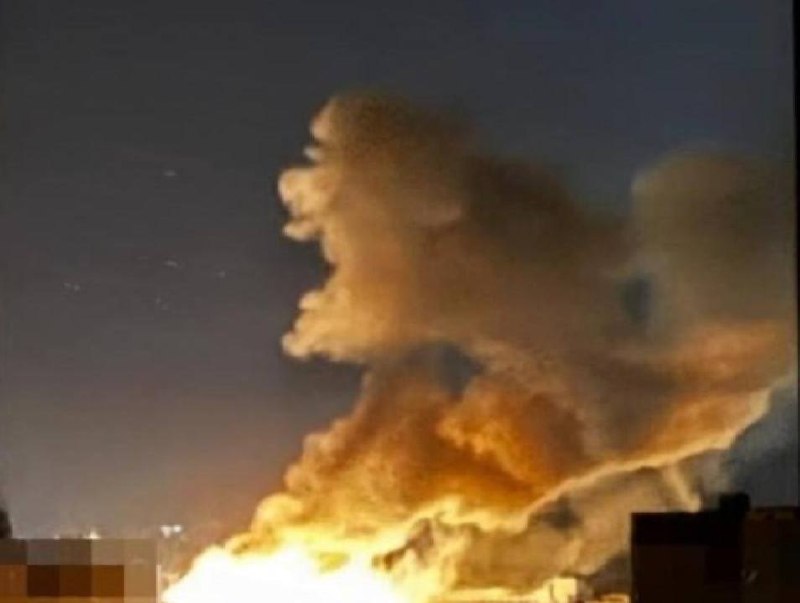
A presidential motorcade stalled near the Champs-Élysées on 15 July 2026, and within hours the incident had migrated from French traffic reporting into a wider argument about the state of European support for Ukraine. Two Telegram channels covering Zelensky's Paris visit on the morning of 15 July 2026 described the episode in near-identical terms: a Ukrainian president whose arrival disrupted traffic in the French capital, and an EU still visibly divided over how to translate solidarity with Kyiv into a durable political line.
The traffic story is trivial on its face. Its usefulness lies elsewhere. It gives European commentators a contained, photogenic episode through which to discuss a much larger question: whether the continent's verbal backing of Ukraine has hardened into operational consensus, or whether it remains a patchwork of national positions that share vocabulary more than substance. Three reactions, broadly described in the Telegram reporting, captured the fault line: those who treated the Paris stop as a logistical nuisance, those who read it as a small humiliation for a visiting head of state, and those who treated the whole scene as evidence that Europe is no longer willing to absorb disruption on Kyiv's behalf.
The three European reactions
The first reaction is procedural. A motorcade in central Paris produces a traffic hold-up; the news value is the inconvenience, not the politics. By this reading, the morning's chatter is a slow-news-day artefact and the diplomatic content of any meetings held during the visit is what actually matters. Telegram channels with a neutral geopolitical framing, including the English-language aggregator englishabuali, leaned heavily into the logistical dimension, treating the episode as colour rather than signal.
The second reaction is sympathetic but uncomfortable. Zelensky arrived in a Europe that has spent four years declaring Ukraine's cause its own. To see the Ukrainian president's motorcade treated as a routine nuisance by French traffic reporters, rather than as a moment of staged solidarity, sits awkwardly with that declared position. The sympathetic read does not require any hostility to France; it requires only noting the gap between the rhetoric of European partnership with Kyiv and the everyday indifference of a Paris traffic bulletin.
The third reaction is the one that does political work. Here the visit is read as evidence that European publics have absorbed enough of the war that the optics of Ukrainian statecraft no longer command automatic deference. The continent, on this telling, has shifted from active backing toward managed distance, with Zelensky becoming a more transactional visitor and less a cause. The Telegram channel abualiexpress, covering the same events in parallel, foregrounded this framing more directly, presenting the Paris stop as part of a broader pattern of European coolness.
What the American and Chinese clocks say
The two Telegram channels that surfaced this story both framed the Paris incident as one beat in a larger score titled "USA, China and Europe." That headline matters more than the traffic. The implicit argument is that European disarray on Ukraine cannot be read in isolation; it has to be read against Washington's fluctuating appetite for the war and Beijing's patient positioning on the diplomatic margins.
On the American side, the underlying question is whether sustained backing for Kyiv survives domestic political rotation. On the Chinese side, the question is whether Beijing is content to let Europeans drift, or whether it will press its preferred settlement language while attention is divided. The Telegram framing treats Europe's internal divisions not as a domestic inconvenience but as the contested ground on which both Washington and Beijing will operate over the coming quarters.
The structural point, stripped of any academic scaffolding, is straightforward. When a hegemonic patron shows signs of fatigue and a rival system offers an off-ramp, the middle powers in between start to price the cost of commitment more carefully. Europe in mid-2026 is doing exactly that calculation, and a stalled motorcade in Paris is a convenient surface on which the calculation becomes visible.
Why the optics matter more than the traffic report
For Kyiv, the substance of any Paris meeting matters more than the streets around it. But the streets are what Europeans actually see. A continent that has been told, repeatedly and at the highest levels, that Ukraine's defence is a European project absorbs presidential visits through the same filter it absorbs any other political event: via short video clips and traffic bulletins. If those clips show friction rather than ceremony, the cumulative effect on public tolerance for further disruption, financial or military, is real even if it cannot be measured in a single morning.
This is the uncomfortable truth for Kyiv's European advocates. Solidarity expressed in communiqués does not automatically translate into a public that welcomes the daily frictions of supporting a wartime ally. The Telegram channels' choice to lead with the Paris traffic scene rather than with any communique issued afterwards is, in that sense, an honest editorial decision: it reflects which version of the story will actually travel.
Stakes and what to watch next
If the dominant reading holds, the coming months will see European support for Kyiv expressed in shorter, more conditional sentences. Expect aid packages bundled with explicit benchmarks, accession language slowed rather than accelerated, and a visible effort by individual capitals to keep their distance from maximalist Ukrainian negotiating positions. If the sympathetic reading holds, Paris becomes an isolated incident and the underlying European consensus reasserts itself at the next summit. The American and Chinese clocks keep running either way; what changes is how much European bandwidth Kyiv can borrow while those clocks tick.
The traffic stop was real. The diplomatic weather around it is what is contested, and the Telegram coverage that surfaced on 15 July 2026 is best read as a snapshot of three readings competing for the same small fact.
Desk note: Monexus framed the Paris incident through the lens of European political alignment rather than as a stand-alone traffic story, leaning on the multi-source Telegram reporting to surface three distinct European reactions and the wider US-China-Europe triangulation those reactions sit inside.
Wire provenance
This editorial synthesis draws on the following public wire/social posts:
- https://t.me/englishabuali
- https://t.me/abualiexpress