Who runs Iran now, and what a 17% peace-market is really pricing
Al Jazeera asks who is calling the shots in Tehran as the war with the US grinds on, while prediction markets have collapsed to a one-in-five shot at talks by month-end.
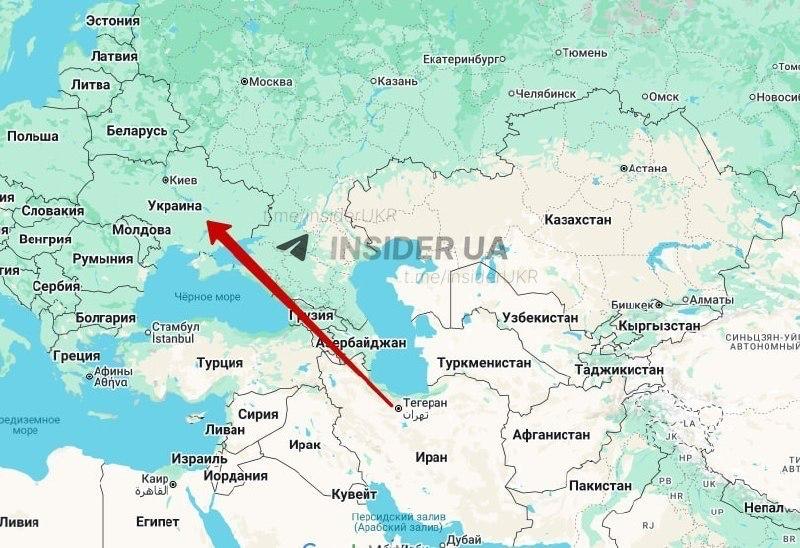
The question aired by Al Jazeera English on 15 July 2026 was deceptively simple: amid a war with the United States now bloodier and longer than the confrontations of 2019 and early 2024, who is actually issuing orders in Tehran. The broadcast, carried on the network's global channel at 19:03 UTC, framed Iran's wartime decision-making as a contest between civilian political figures, the Islamic Revolutionary Guard Corps, and a clerical inner circle whose deliberations remain opaque to outside observers.
Three weeks into the open US–Iran conflict, the polling evidence sitting on prediction markets is unkind to the diplomatic track. Two Polymarket contracts posted to X on the same day, 15 July 2026, priced the chance that Washington and Tehran hold formal peace talks before the calendar turns to August at 20% and 17% respectively. That collapse from earlier optimism tells the story of the war as plainly as any frontline dispatch: the combatants are still killing each other, and the off-ramp is not yet in sight.
Who is giving the orders
Al Jazeera's reporting points to a system in which formal authority sits with the Supreme Leader's office and the elected presidency, while operational tempo has migrated to the IRGC and its irregular allies in Lebanon, Iraq and Yemen. The result, the network's correspondents argue, is a decision loop that runs faster than civilian ministers can follow and slower than battlefield conditions sometimes demand. Read against the prediction-market numbers, that mismatch helps explain why de-escalation has lagged: the people with the power to stop fighting are not the people running it on a day-to-day basis.
What the markets are actually pricing
The Polymarket contracts are not polls in any conventional sense. They aggregate real money, in small parcels, from thousands of traders who have skin in their own forecasts. A 17% reading on US–Iran talks by 31 July means roughly one in six dollars is betting that negotiators will sit down in the next sixteen days. The earlier 20% print, posted three hours earlier, suggests drift rather than rally; the contract is decaying, not recovering. Treat it as a continuous, real-time sentiment gauge: the off-ramp is losing traders' confidence in slow motion.
The structural read
What the Al Jazeera question reveals, beneath its surface, is the standard contradiction of a regime organised for ideological resilience meeting a war run by technocratic instruments. Iran in 2026 is fighting a coalition that includes integrated air defence, cyber capability, and sustained precision strike packages delivered across weeks, not the crisis-and-bargain cycle of 2019. The clerical-political-IRGC compact that has held the system together for decades was designed for sanctions endurance and regional deterrence, not for high-intensity air warfare with a peer industrial adversary. When those three power centres disagree on tempo, the institutional default is to keep fighting at the intensity the IRGC last approved, not at the intensity the civilian president would prefer.
What remains genuinely uncertain
Al Jazeera's broadcast flags, without resolving, whether the wartime command authority in Tehran has shifted decisively to security institutions or whether the civilian direction is intact and simply constrained. The prediction market cannot answer that, and neither can open-source reporting from outside Iran. The contracts are blunt about the off-ramp: traders who think the war is going to stop in July are down to one in five, and the day's drift was downward. The market's price and Al Jazeera's question converge on a single uncomfortable fact: until someone in Tehran is publicly empowered both to start and to end a war, every prediction about when this one ends is essentially a guess about internal Iranian politics that the outside world cannot see.
Desk note: Monexus treated the Al Jazeera broadcast as the primary frame because it names the question the war has been begging for weeks, and the Polymarket contracts as the secondary frame because they convert speculation into a number the reader can interrogate. Both pieces carry caveats: a foreign broadcaster and two contracts priced by anonymous traders are not the same as a confirmed chain of command or a confirmed negotiating track.
Wire provenance
This editorial synthesis draws on the following public wire/social posts:
- https://t.me/aljazeeraglobal