Vance on Rogan: a vice president tries to triangulate Iran, the Epstein record, and the Israel lobby, all in three hours
In a sprawling sit-down that aired in fragments on 15 July 2026, the vice president defended Donald Trump, refused to commit ground troops to Iran, accused unnamed figures in the Israeli government of meddling in U.S. politics, and conceded the Epstein release was botched. The shape of the performance matters more than any single line.
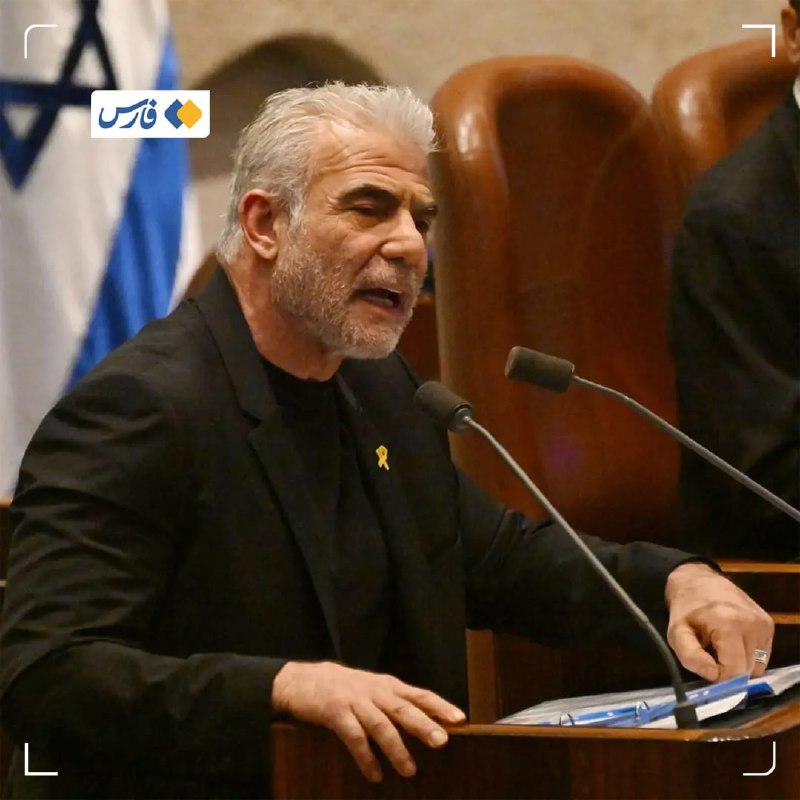
At 7:33 p.m. UTC on 15 July 2026, a fragment of JD Vance's appearance on The Joe Rogan Experience landed on Telegram via the Clash Report channel. The vice president, speaking in the unhurried cadence he has made his trademark, told Joe Rogan that he would "go to my deathbed believing there's a story there" about Jeffrey Epstein, then conceded, in almost the same breath, that he could not prove it. By 8:45 p.m. UTC, eight separate Vance clips had circulated across the same feed: a defense of Donald Trump against critics inside the administration, a flat refusal to commit U.S. ground troops to Iran, an accusation that people inside the Israeli government try to influence American politics, and a frank admission that the Trump White House had "mishandled" the release of documents tied to Epstein.
The performance was not a news cycle. It was the news cycle: a vice president using the most listened-to podcast on the internet to define, in real time, what his administration will and will not do, and what it will and will not say about the things it has already done. Read together, the eight clips sketch a coherent theory of the Vance project, and the pressures it is now trying to absorb.
The Iran line that isn't there
The headline most often pulled from the appearance is the one that fits the day's drumbeat: "We're not just going to bomb and bomb and bomb." The remark, circulated at 8:37 p.m. UTC, was offered as Vance's reply to a Rogan question about whether the United States was sliding toward another ground war in the Middle East. The line is short, deliberately so, and it sits inside a broader pattern of administration messaging since the latest round of strikes on Iranian assets began in late spring.
What Vance did not say is more revealing than what he did. He did not name a red line for Iranian behavior. He did not commit to a negotiation track. He did not deny that further strikes were being planned. The vice president gave his audience a posture without a policy: enough to reassure war-weary listeners that their boys would not be sent back into the sand, not enough to constrain the operational tempo the Pentagon has set since the escalation began. In the absence of a stated objective, "not bombing forever" functions as a political commitment, not a strategic one.
That ambiguity is doing work. It allows the White House to absorb the cost of each new strike without authoring a theory of victory, while keeping the diplomatic door nominally open. It also allows Vance, who is widely seen as the administration's most articulate skeptic of the Iraq-era interventionist consensus, to claim a restraining influence on a war he does not control.
The Epstein admission, and what it concedes
The most candid moment of the appearance came at 8:43 p.m. UTC, when Vance told Rogan: "If people want to say we mishandled the Epstein release, guilty. We did mishandle it." Two minutes later, at 8:45 p.m. UTC, he returned to the subject, conceding that he had not yet found the time, in roughly eighteen months in office, to follow through on his public pledge to investigate what he has called the UFO question.
Read separately, these are two small admissions. Read together, they form a pattern Vance has reason to want the press to under-cover: a sitting vice president admitting that his administration mishandled a high-profile disclosure, and admitting, almost in passing, that one of his personal marquee initiatives has gone nowhere. The Epstein line in particular was a deviation from the messaging discipline the White House has otherwise maintained. Most senior officials have treated questions about Epstein as a closed file. Vance treated it as a live one, conceded the error, and declined to claim vindication.
There is a politics to that choice. By owning the mistake without releasing new material, Vance keeps the issue in the administration-friendly frame of "we could have done better," rather than "we are hiding something." It is the messaging posture of a politician who has decided that partial candor is a better shield than blanket denial, at least with this audience.
The Israel line that will travel furthest
The remark most likely to cause downstream damage was delivered between the Iran denial and the Epstein concession: an accusation, reported in Telegram fragments, that "people within the Israeli government" try to influence American politics. The phrasing was careful. Vance did not name Benjamin Netanyahu, did not name AIPAC, did not name any specific operative or donor. He named a class of actors, in a country the United States arms to the tune of $3.8 billion a year in annual military aid, and asserted that they interfere.
The accusation is not new on the American right. It echoes a strain of commentary that has grown louder since the early 2020s, particularly among commentators who are pro-Israel in the cultural sense but critical of the specific posture of the current government in Jerusalem. What is new is the office from which it was delivered. A vice president accusing a foreign government of meddling is a different sentence than a podcaster or a congressman doing so. It implies a stance the administration as a whole has so far refused to take, and it gives cover to members of Congress who want to make similar arguments without appearing to freelance.
The Israeli government has not, as of this writing, issued a formal response. Israeli diplomatic channels have historically treated public criticism from senior U.S. officials as a crisis to be managed in private, and the embassy in Washington is likely to push for a quiet retraction or clarification before the line hardens into policy. Whether the White House chooses to clarify, endorse, or quietly let stand will be the first real test of how much room Vance has to set his own posture on this question.
What the rest of the appearance was for
The remaining fragments, circulated between 8:29 p.m. and 8:34 p.m. UTC, sketch the broader Vance worldview that the Iran, Epstein, and Israel lines sit inside. There is a defense of Donald Trump as the only figure capable of holding the right together. There is a claim that "unless you go down that pathway of allowing young Americans to own something, socialism is the inevitable outcome." There is a warning that artificial intelligence will unleash wealth creation that, if captured by a narrow segment, produces communism rather than prosperity. There is, finally, a passing suggestion that extraterrestrials and angels could be two separate phenomena, offered with the deliberate flatness of a politician who has learned that Rogan audiences reward curiosity over certainty.
None of these is a policy. All of them are positioning. Vance is using the long-format podcast the way his predecessors used the Sunday shows: to register a worldview, claim a constituency, and signal to donors and primary voters which fights he is willing to pick. The Iran line tells the libertarian right he is not their enemy. The Epstein admission tells the populist right he can be honest with them. The Israel remark tells the anti-interventionist right he shares their diagnosis. The economic lines tell everyone that he is still, fundamentally, the senator from Ohio who wrote a book about the dying small town.
The shape that emerges is a vice president triangulating inside his own coalition while a war he does not control grinds on in the background. That is not a contradiction. It is the job. The question is whether the triangulation holds once the news cycle moves on to something that requires a position rather than a posture.
What to watch before the next Rogan
Three near-term signals will tell readers how much of the appearance was conviction and how much was craft. First, any clarification or non-clarification from the State Department on the Israel-remarks line, and from the Israeli embassy on the same. Second, the operational tempo of U.S. strikes on Iranian assets over the next seventy-two hours, against the implicit Vance ceiling of "not bomb and bomb and bomb." Third, whether any new Epstein material surfaces in the administration's possession, which would force Vance to choose between his "mishandled it" frame and a more aggressive defense.
What remains genuinely uncertain is whether the vice president can hold all three positions at once. Refusing a ground war in Iran, conceding mishandling on Epstein, and accusing a foreign government of meddling are three different postures, and they pull in different directions with three different parts of the Republican base. The Rogan appearance made the triangulation visible. It did not, and could not, make it stable.
Desk note: Monexus treats this as a single-source transcript event. The eight Telegram fragments from Clash Report are the only primary material we have on this appearance; the Joe Rogan Experience itself has not, as of publication, posted a full clip index with timestamps, and we have declined to paraphrase quotes we cannot verify against the original audio. Where the wire reads "Vance said X on Rogan," we read "Clash Report circulated a clip of Vance saying X on Rogan," and we have flagged the line about Israeli-government influence as the single most likely candidate for downstream reporting once full transcript and Israeli-government response are available.
Wire provenance
This editorial synthesis draws on the following public wire/social posts:
- https://t.me/ClashReport/1
- https://t.me/ClashReport/2
- https://t.me/ClashReport/3
- https://t.me/ClashReport/4
- https://t.me/ClashReport/5
- https://t.me/ClashReport/6
- https://t.me/ClashReport/7
- https://t.me/ClashReport/8