US strikes hit Chabahar as Iran confrontation enters a new kinetic phase
Explosions were reported in the southeastern port city of Chabahar in the early hours of 15 July 2026, with multiple monitoring channels pointing to a fresh US air operation. The strikes, if confirmed, would mark a geographic widening of an American campaign already running across the Islamic Republic.
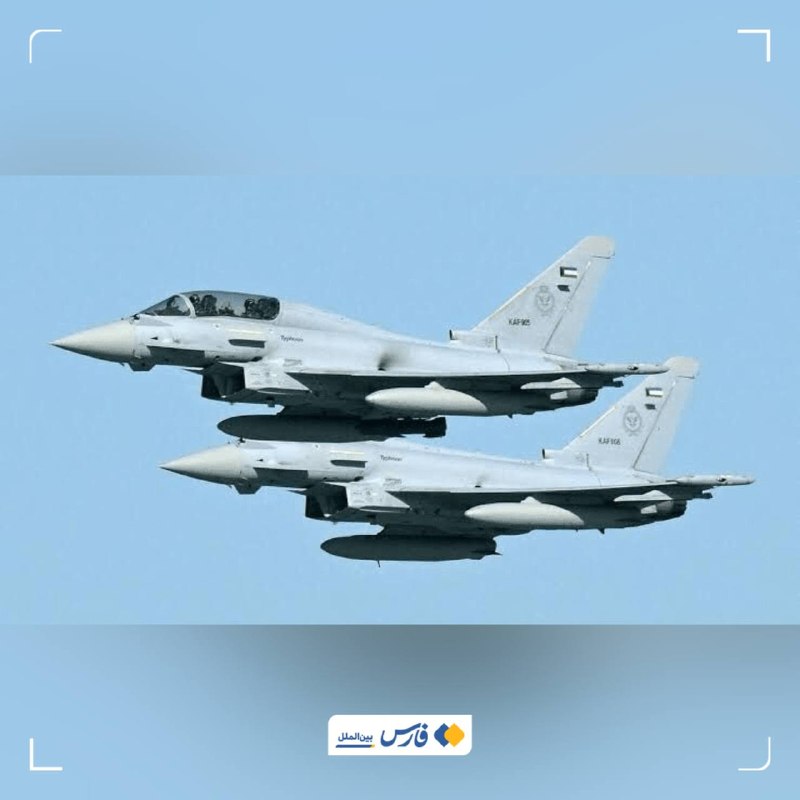
At 02:06 UTC on 15 July 2026, the open-source monitor AMK_Mapping posted a four-line alert: "New U.S. airstrikes on Chabahar, southeastern Iran." Within the next half hour, two further bursts of reporting arrived on Telegram, first from the @wfwitness channel noting "Explosions in Chabahar, Iran" at 02:07 UTC, then additional scene footage from inside the city at 02:23 and 02:32 UTC, all timestamped and geolocated to the same southeastern port. If the early framing holds, the United States has carried out a fresh wave of air operations against a target on Iran's southeastern coast, far from the more familiar axis of escalation in the country's west and centre.
The geography matters. Chabahar sits on the Gulf of Oman in Sistan-Baluchestan province, hundreds of kilometres from Tehran and from the Iraqi and Syrian borderlands where US airpower has been most visible in recent memory. A confirmed strike set there is not a continuation of the same air tasking order. It implies a deliberate choice of target, on a coast that is also the Iranian terminus of a long-running commercial corridor project linking Iran to India and Afghanistan, and a place where Iranian naval and IRGC infrastructure has historically been kept light. Something about the targeting calculus has changed.
What the wire shows so far
The raw reporting on the strike consists of three Telegram channels, none of them a Western wire and none carrying independent confirmation from the US Central Command or the Iranian military. AMK_Mapping, an open-source intelligence account, posted twice in seventeen minutes, opening with the strike notice at 02:06 UTC and following with "Additional scenes from the city of Chabahar, southeastern Iran, where the U.S. is carrying out a new wave of airstrikes" at 02:23 UTC. The @wfwitness channel posted a parallel set of alerts at 02:07, 02:26 and 02:32 UTC, the earliest captioned "Explosions in Chabahar, Iran" and the later two carrying scene footage from inside the city. A third channel, @GeoPWatch, posted a one-line confirmation of explosions in Chabahar at 02:07 UTC. None of the three channels name the specific facilities struck, list casualty figures, or cite an official US or Iranian statement; the framing is consistent across them, but consistency of framing is not corroboration, and readers should treat the targeting details as preliminary until the Iranian mission to the UN, Iran's foreign ministry, or the US Department of Defense puts a public line on the record.
The pattern of the reporting is itself worth noting. The first alerts were tagged with the Iran and US flag emojis, the second wave carried scene footage rather than strike notifications, and the third channel added a "U.S. cross Iran" graphic, a common convention in Telegram OSINT feeds. This is the standard shape of an early-stage strike alert: a binary claim, scene footage from a single city, and a restated framing as the news cycle absorbs the initial report. It is not yet the shape of a confirmed, attributed military operation.
Why Chabahar, and why now
A strike on Chabahar is not interchangeable with a strike on, say, an IRGC facility in western Iran or a missile site in Isfahan province. The port sits at the seaward end of a transit corridor that, since the mid-2010s, has been marketed by Tehran and New Delhi as a counter-route to the Pakistan–Afghanistan land lines, in part to preserve Indian trade with Afghanistan outside Pakistani control. It is also a place where the IRGC Navy's fast-boat fleet has operated, and where Iran has in past years hardened dispersed storage on the littoral. A US decision to hit there is, on the face of it, a decision to project force into a domain Iran considers strategically peripheral but operationally useful.
This is also the part of Iran where the demographic and sectarian picture is least favourable to Tehran. Sistan-Baluchestan is a Sunni-majority, ethnically Baluch province, and it has been the site of recurring unrest in recent years, including the September 2022 unrest centred on the city of Zahedan. A kinetic operation visible from the provincial capital and its port carries political weight inside Iran that a strike on a hardened central-site does not. Tehran's information environment will struggle to frame an attack that hits an underdeveloped, marginalised corner of the country the same way it frames a strike on a missile production line.
The counter-narrative and what it leaves out
The early Western wire line, when it lands, is likely to frame the operation as a continuation of a long-running US pressure campaign against the Islamic Republic, with the strike set justified by Iranian proxy activity, nuclear escalation, or maritime harassment in the Gulf. That framing is not wrong, but it is incomplete. The Iranian counter-line, which will arrive through Tasnim, PressTV, IRNA and the foreign ministry briefings within hours, will present the strike as an unprovoked attack on Iranian sovereign territory, a violation of the UN charter, and a deliberate provocation aimed at collapsing any remaining diplomatic channel. Both framings will be partially correct, and both will be selectively sourced. The honest read sits in the gap between them: a US administration that has decided that the cost of leaving Iranian infrastructure intact now exceeds the cost of a regional escalation, and an Iranian leadership that has, by its own choices in the nuclear and proxy files, narrowed the off-ramps that would have avoided this.
What neither frame will say out loud is the structural shift underneath. The US is now sustaining air operations against targets across Iranian territory, on multiple axes, in a pattern that looks less like a discrete retaliation for a specific Iranian action and more like a rolling campaign with its own operational tempo. That is a different kind of war than the one the public commentary has been pricing. It is a war of cumulative effect, designed to degrade capacity faster than Tehran can reconstitute it, and it carries with it the implicit assumption that the regional system can absorb the blowback. Whether that assumption is correct is the question the next seventy-two hours will start to answer.
What to watch by Friday
Three markers will tell readers how far this has actually gone. First, an official US line. Until the Department of Defense, Central Command, or the White House confirms the strike and identifies the target set, the open-source reporting is best treated as a strong working hypothesis, not a fact. Second, an Iranian response. The IRGC's public posture in the first hours of an incident is the most reliable early signal of Tehran's planned escalation, and the difference between a foreign-ministry statement and a senior IRGC commander on television is the difference between a diplomatic crisis and a military one. Third, the Gulf shipping data. AIS traffic through the Strait of Hormuz and the Gulf of Oman in the twenty-four hours after the strike is the cleanest real-time indicator of whether the maritime insurance market is reading Chabahar as a regional event or as a global one.
The honest answer, this morning, is that the sources do not yet specify what was hit, do not yet carry a casualty count, and do not yet attribute the strike to a named US unit or platform. What they do carry, in three independent Telegram channels with consistent timestamps and consistent geolocation, is the claim that the United States has now widened its air campaign to a city most Americans could not place on a map before today. That, on its own, is the story.
This article has been written by Monexus editorial on the basis of open-source Telegram reporting, without independent confirmation from US or Iranian official channels at the time of publication.
Wire provenance
This editorial synthesis draws on the following public wire/social posts:
- https://t.me/wfwitness
- https://t.me/wfwitness
- https://t.me/AMK_Mapping
- https://t.me/AMK_Mapping
- https://t.me/GeoPWatch