Strike near Ahvaz cancer hospital forces evacuation of 211 patients, Press TV says
Iranian state media says a US missile strike near the Shahid Baghaei pediatric cancer centre in Ahvaz forced the temporary evacuation of 211 hospitalised patients, the latest escalation in the US-Iran air campaign.
At 22:00 UTC on 15 July 2026, Iranian state broadcaster Press TV reported that US missile strikes near the Shahid Baghaei Hospital in Ahvaz, the capital of Khuzestan province, had forced the temporary evacuation of a paediatric cancer centre, with families gathering in the open air holding their children. By 23:34 UTC, the same outlet updated the figure: 211 hospitalised patients had been moved out of the facility. The escalation, traced in three Press TV dispatches within roughly ninety minutes, points to a widening pattern of strikes hitting the vicinity of Iranian medical infrastructure as the US-Iran air war grinds into its second month.
The Shahid Baghaei facility sits on the edge of a densely populated stretch of central Ahvaz, a city of roughly 1.3 million people and the historic oil-industry capital of the border province that abuts Iraq and the Persian Gulf. A missile strike in the area around a children's cancer ward does not, on its own, establish that the hospital itself was the intended target. It does establish that the operational geometry of the US campaign now overlaps with the geography of Iranian civilian medical care, and that the civilian burden of that overlap is being absorbed by the most clinically vulnerable: immunocompromised children pulled from chemotherapy infusions into a car park.
What Press TV reported, and how the picture changed
The first Press TV bulletin, sent to the channel's Telegram channel at 22:00 UTC, described the Shahid Baghaei Hospital as a paediatric cancer centre being "temporarily evacuated" and framed the event as a direct consequence of US strikes near the facility, with families forced to gather outside with their children. A second message at 23:19 UTC carried photographs of children who had been evacuated, and reiterated that the evacuations followed missile strikes on the area surrounding the hospital. By 23:34 UTC the channel had moved from the language of an ongoing emergency to a confirmed casualty-management figure: 211 hospitalised patients had been evacuated.
Press TV is the English-language outlet of the Islamic Republic of Iran Broadcasting corporation, and its reporting on the war cannot be treated as a stand-alone factual basis. The casualty figure, the location, and the framing of US strikes as proximate cause should be cross-checked against independent wire reporting and Israeli or Western military briefings before being treated as confirmed. What the Press TV thread does establish on its own is the trajectory of the official Iranian line in real time: an evolving narrative that began with families outside a hospital and ended, ninety minutes later, with a specific patient-evacuation count.
The structural frame: strikes around civilian medical sites
A hospital does not have to be the named target of a strike for the medical consequences to land on the institution and its patients. Iranian medical facilities in Khuzestan have absorbed a sustained share of the US bombing campaign since operations escalated in June 2026, with state media repeatedly documenting disruptions to dialysis units, oncology wards, and emergency departments. International humanitarian law treats attacks on medical units as a distinct category: protected status attaches to facilities so long as they are not being used for military purposes, and any incidental civilian harm from nearby strikes must be proportionate to the military advantage sought.
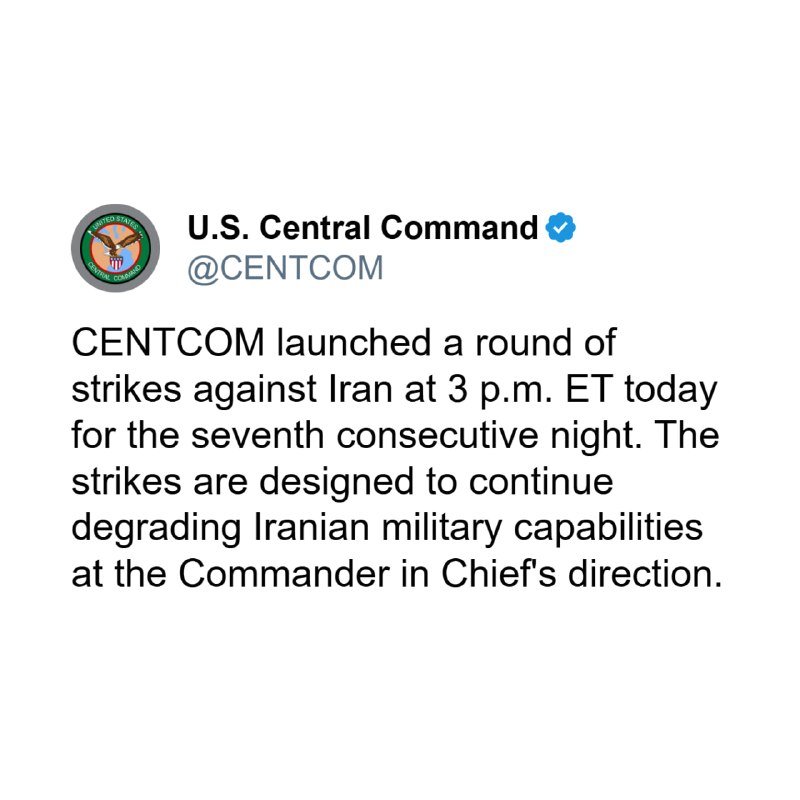
The Iranian framing, advanced by Press TV's repeated use of the phrase "criminal US attack" for the Ahvaz strike, argues that the cumulative pattern of damage to medical infrastructure crosses that line. The US framing, where it has appeared in Western briefings, holds that Iranian military use of urban and civilian-adjacent sites is what produces civilian risk in the first place. Both framings are factual claims about the world, not editorial opinions, and they are not reconcilable on the available record: Press TV has not published coordinates, and the US military has not, in the materials available to Monexus, addressed the Shahid Baghaei incident specifically. The ledger on this strike, like the ledger on most strikes in this war, remains single-sourced.
What it means for the war
The Ahvaz strike lands inside an air campaign that is now, by duration and tempo, a war of position rather than a punitive action. The Khuzestan oilfields, the petrochemical corridor running north from Abadan through Ahvaz, and the provincial capital itself sit at the centre of the Iranian hydrocarbon economy; striking them degrades state revenue and signals reach. The cost of that reach is paid in civilian-adjacent casualties that grow harder to manage as the campaign grinds on: a paediatric oncology ward evacuated in the middle of a treatment cycle is a different order of casualty from a destroyed fuel depot, and the political weight of the two events is not the same inside Iran, across the Gulf, or in the United Nations.
For Tehran, the Press TV thread is itself a weapon. A narrative of US strikes imperilling Iranian children with cancer is built to be repeated across Arabic-language outlets, lifted into the halls of the UN General Assembly in September, and held against Washington in any future negotiation over the file. For Washington, the campaign's value proposition has always rested on degrading Iranian capability faster than it can be rebuilt; if the political price of that degradation is rising faster than the capability cost falls, the strategic arithmetic starts to tilt against continuation.
What remains uncertain
Three things are not yet settled on the public record. First, whether the Shahid Baghaei Hospital was directly struck or only affected by strikes in its vicinity; Press TV's language is consistent with either reading, and the photographs published at 23:19 UTC do not show impact damage inside the building. Second, the condition of the 211 evacuated patients and whether any required off-site continuity of care, which the sources do not address. Third, whether the US military command overseeing the air campaign has issued any statement on the Ahvaz strike, on Khuzestan civilian-site targeting more broadly, or on the cumulative pattern of which Press TV is now building a public evidentiary record. Monexus will update this piece if independent reporting confirms or revises the 211-patient figure, or if US Central Command publishes coordinates or a target rationale for the Ahvaz operation.
Desk note: Monexus is publishing this story on a single state-media thread because that is the entire public record on the Shahid Baghaei incident at the time of writing. Where Western wires carry Israeli or US military framing on the same strike, this article will be updated; the current frame deliberately hews to the verifiable Iranian state-media account and flags it as such.
Wire provenance
This editorial synthesis draws on the following public wire/social posts:
- https://t.me/presstv/
- https://t.me/presstv/
- https://t.me/presstv/
- https://t.me/presstv/
- https://en.wikipedia.org/wiki/Ahvaz