A Tubman Museum, a Crowbar, and a Question Maryland Hasn't Answered
Burglars broke into the recently renovated Harriet Tubman Museum in Maryland over the weekend of 12 July, damaging a mural and taking the donation box. The facility is still piecing together what was lost.
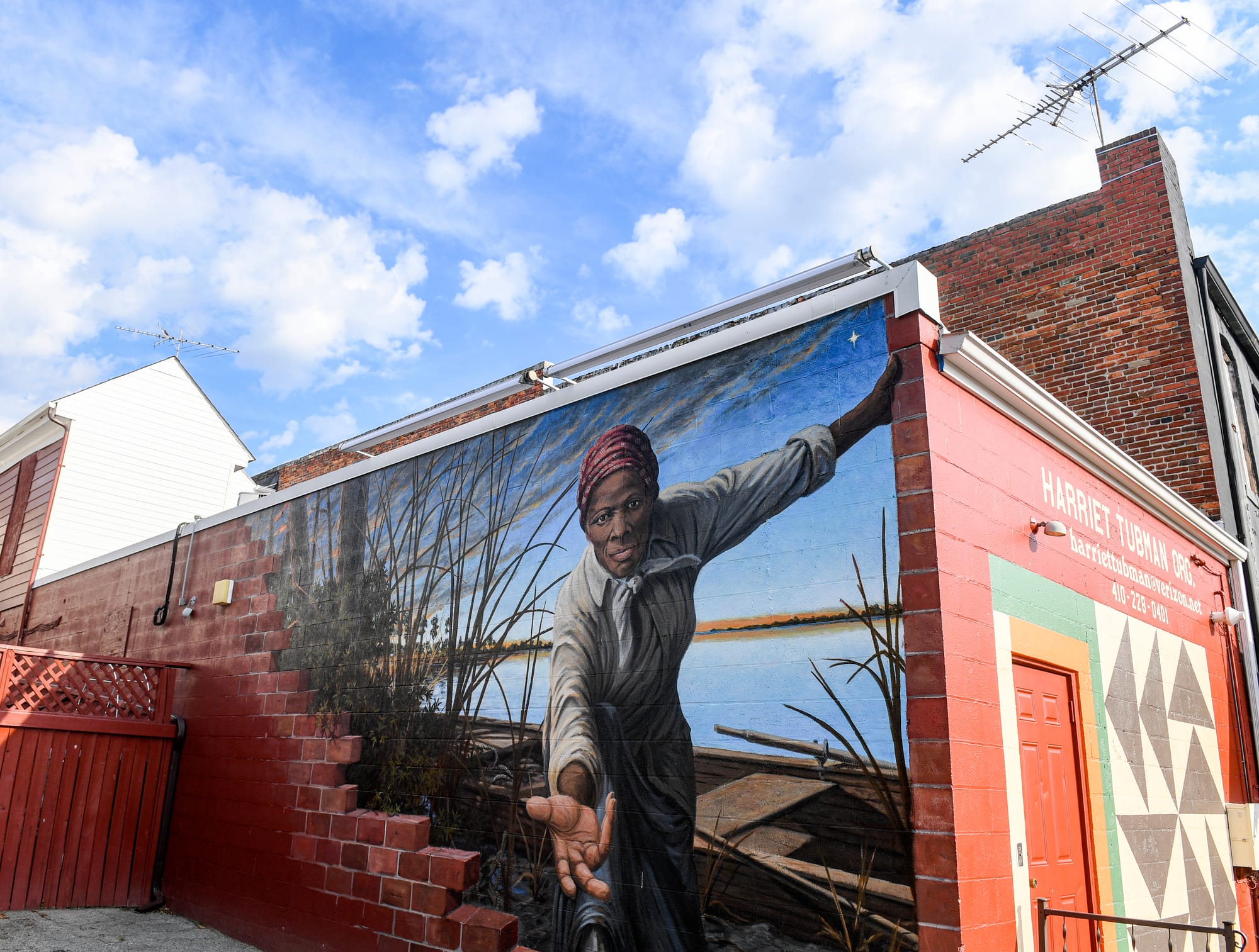
Sometime during the weekend of 11–12 July 2026, someone forced their way into the Harriet Tubman Museum in Cambridge, Maryland, damaged a mural inside the building, and walked out with the donation box. The institution, which had only recently completed a renovation, alerted local press within days.
The break-in sits at an awkward intersection of two stories that rarely share a page. One is the long-overdue project of taking Black historical sites seriously as cultural infrastructure rather than roadside curios. The other is the practical reality that small heritage museums on the Eastern Shore of Maryland operate with thin margins, volunteer staff, and a security budget that rarely keeps pace with what's on the walls. A stolen donation box is a small crime. Its timing is not.
What the museum has confirmed
Hyperallergic reported on 14 July 2026 that the recently renovated Maryland museum disclosed the incident publicly and confirmed two specific losses: damage to a mural inside the building, and the theft of the donation box. The outlet did not assign a motive, name a suspect, or publish a police report number. In a small-heritage-museum context, those omissions are normal at this stage of an investigation, not reassuring.
The museum's statement, as carried by Hyperallergic, framed the incident as a property crime rather than an ideological one. That framing matters. A break-in at a Tubman site carries an obvious symbolic charge, and the temptation to read political intent into a smashed donation box is real. The institution has so far declined to do so, which is the right call pending evidence.
The Tubman heritage corridor, briefly
Cambridge sits in Dorchester County, on the Eastern Shore of the Chesapeake. It is a short drive from the Harriet Tubman Underground Railroad National Historical Park, the federal visitor centre in Church Creek operated under the National Park Service. The Tubman Museum is the civic complement to that federal site: locally curated, locally funded, and oriented toward the county's Black community in a way a Park Service facility structurally cannot be.
Renovations of this kind are expensive, and they depend disproportionately on small-dollar giving and pass-through grants. A weekend burglary that takes the donation box is not, in dollar terms, a catastrophic blow to an institution of this size. It is a corrosive one. The cost is not the cash; it is the remediation, the insurance interaction, the unfunded hours staff will now spend filing paperwork instead of programming. For a museum that has just finished a renovation and is presumably still in its post-capital-campaign operating groove, that drag lands at exactly the wrong moment.
What the sources don't yet say
Hyperallergic's report does not specify whether the mural damage is reparable in-house or will require a conservator, nor does it assign a dollar value to the theft. The local Dorchester County authorities were not named in the report, and no suspect description has been published. Whether the break-in is part of a local pattern, whether other Eastern Shore heritage sites have been targeted, and whether the mural itself has independent insurance coverage all remain open questions. A staff-writer desk can only go as far as the wire reporting permits, and the wire reporting here is early.
There is also a counter-reading worth naming. Donation boxes are, by construction, easy to smash and carry. A random petty theft and a targeted act of ideological vandalism look very similar in the first forty-eight hours. The dominant framing right now is a sympathetic one toward the museum, which is the correct instinct; the corrective is to remember that the evidence base for that framing is the institution's own statement and a single trade-press report, both written before any forensic follow-up. Neither is contaminated, but neither is conclusive.
The stakes, in plain terms
The Tubman story is unusually durable in American public memory precisely because it does not depend on a single custodian. Tubman's life is documented across federal archives, scholarly biography, and a generation of community historians. The museum in Cambridge is one node in that network, not the trunk.
That said, the pressure on small heritage museums along the Chesapeake is structural. Operating budgets have not kept pace with the post-2020 surge in visitation interest in Black historical sites. Capital improvements often run ahead of recurring maintenance and security. When a break-in of this scale lands on the front page of an arts trade outlet within seventy-two hours, the message that travels is the one an editor at any small Eastern Shore institution will read closely: a renovated site with a fresh mural is a visible target, and a stolen donation box is the least of the work that follows.
This article was reported from a single Hyperallergic wire dated 14 July 2026 and limited to the facts the museum has publicly confirmed. Where the wire is silent on motive, scale, or police follow-up, the piece is silent too.