Trump’s Iran Whiplash: Deal Talk, Defeat Talk, and a Spy Nominee Who Says Press Subpoenas Are Counter-Intelligence
In a single afternoon on 15 July 2026 the President said Iran had begged to make a deal, predicted its defeat, and called affordability a fake word, while his nominee to lead the intelligence community argued that subpoenaing reporters is itself a security operation.
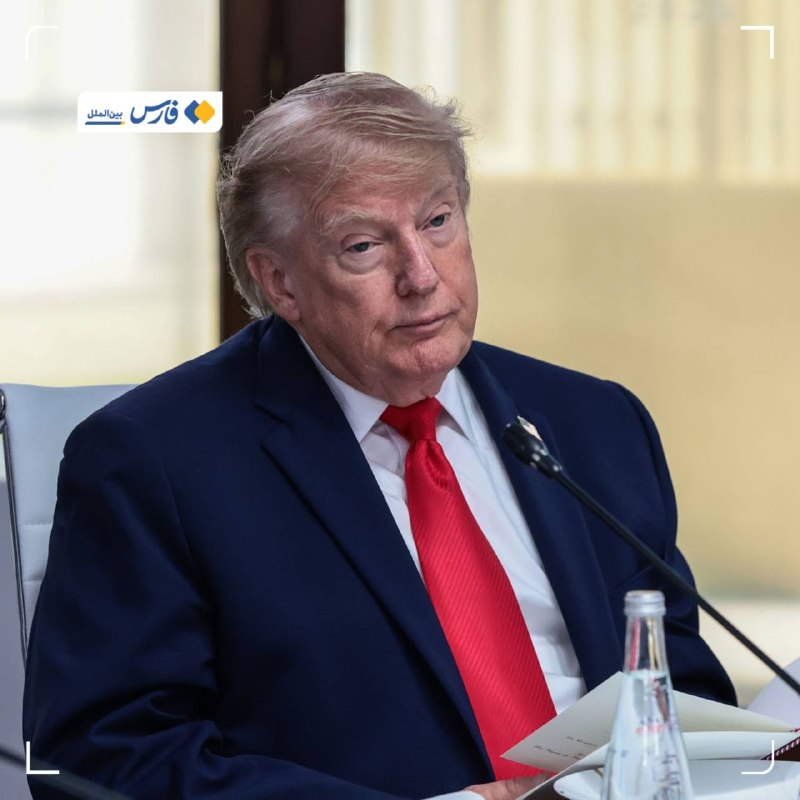
At 18:02 UTC on 15 July 2026, with no ceremony and no on-camera press conference, Donald Trump told a small pool of reporters that Iran had called him and expressed a desire to make a deal. Just over two hours later, at 20:07 UTC, a clip carried by Clash Report showed the same President declaring that Iran will be defeated very soon. The two statements, separated by minutes of the same afternoon, do not parse as a negotiation tactic. They are the operating system of an administration that talks to its adversaries and its voters in two different dialects at once, and that seems increasingly comfortable letting the contradiction stand.
The day’s other surprise arrived through a different channel. At 21:05 UTC, Reuters reported that Trump’s nominee to lead the intelligence community has argued that subpoenas issued to journalists are themselves part of a security operation. The framing matters less for its specific legal merits than for what it signals about how the executive branch intends to relate to the press at the precise moment it is also improvising a foreign policy on live television.
The pattern is familiar but tighter than usual. An American president invokes both war and peace with the same adversary inside a news cycle, treats the cost-of-living vocabulary of his opponents as illegitimate, and elevates an intelligence chief who views newsroom subpoenas as instruments of state security. The result is a foreign policy that reads as mood and a domestic politics that reads as siege, fused into a single performance.
Two dialects, same afternoon
The deal-versus-defeat sequence is best read against the polling market. Polymarket traders put the odds of US–Iran peace talks by month’s end at 17% at 14:39 UTC on 15 July, then nudged the line to 20% by 15:59 UTC. The market barely flinched. The traders who put real money on outcomes treated the President’s deal claim, even as it was being carried by aggregators and amplified by accounts that watch Washington in real time, as roughly one chance in five. The snapshot is small but suggestive: a market that has spent two decades pricing American war rhetoric against American negotiating behaviour has decided, for now, that this rhetoric does not yet clear the bar for talks.
The micro-sequence tells a sharper story. Trump’s deal claim moved first, in his own voice. The defeat line followed, again in his own voice, with no visible Iranian interlocutor on the public record. The reasonable read is not that Tehran has changed its position twice in an afternoon. It is that the messaging is engineered for two audiences, and that the audience targeted by the defeat line is not the Iranian foreign ministry. It is the American electorate that the Trump campaign, at 20:09 UTC the same day, was still trying to define in its own vocabulary: affordability, the President insisted in remarks carried by Clash Report, is a fake word that they use.
Affordability as enemy, data centres as saviour
That second frame travels further than it looks. Trump’s dismissal of affordability as a political vocabulary was not a passing aside. It is an attempt to delegitimise the central organising concept of the Democratic economic argument for 2026. To call a word fake is to argue that the condition the word names does not exist in a form the opposition is allowed to talk about. The structural claim underneath is that cost-of-living pressure is real but politically unusable by the other side, and that the legitimate frame for economic distress is one the President himself controls.
The proposed remedy is just as deliberate. At 16:47 UTC, in remarks flagged by Unusual Whales, Trump named one of the biggest driving forces in the future for jobs as data centres. This is industrial policy as campaign rhetoric, in miniature. The President is staging a future in which the high-energy infrastructure build-out around AI is the answer to the kitchen-table question he has just declared illegitimate to ask. Whether the substitution is honest is a separate question. The political geometry is plain. He wants the voter to stop asking about grocery bills and start asking about server farms.
The move is structurally familiar. The previous decade of Western populism, left and right, ran on a simple conversion: reframe a working-class question about wages and prices as a question about national strength, and offer a state-backed project (chips, batteries, rare earths, AI compute) as the answer. Trump’s data-centre pitch slots into that lineage. The unusual element is the open hostility to the underlying question itself.
A spy chief who sees subpoenas as tradecraft
The Reuters dispatch on the President’s intelligence nominee is the day’s quiet bomb. The argument reported is not a stray remark: it is the framing the nominee intends to bring to a confirmation process that will now have to absorb it. Reporter subpoenas, in this telling, are not a last-resort law-enforcement tool balanced against First Amendment obligations. They are themselves part of a security operation. The verb choice is doing real work. If a subpoena is an act of counter-intelligence rather than a judicial instrument, the journalist on the receiving end has been reclassified, in the nominee’s mental map, from a neutral intermediary into a node in an adversary network.
This is not the first time an American administration has reached for that frame. It is the first time in the modern era that the framing has been uttered, on the record, by someone whose confirmation would put them in charge of the country’s civilian spy agencies. The press freedom implications are obvious. The foreign-policy implications are less obvious and arguably more important. An intelligence chief who treats reporters as operational targets is an intelligence chief who will arrive at interagency meetings with a particular theory of how leaks happen and who should be authorised to stop them. That theory will not stay domestic.
What the markets are quietly saying
Read together, the day’s signals point to a specific kind of governing style. The Iran messaging is bipolar, not incoherent. The economic messaging is delegitimising rather than disputing. The intelligence messaging reframes a constitutional friction as a technical security problem. Each strand is internally consistent. They sit together because they share an instinct: when a fact is inconvenient, do not argue with it, redefine what kind of fact it is.
Polymarket’s muted reaction to the deal claim is the cleanest tell. Traders with skin in the game priced the President’s statement almost identically before and after it. They did not sell the deal probability up, and they did not collapse it. The inference is that the market has already priced this kind of statement, has seen it before, and has learned that the price of peace talks between Washington and Tehran is set by quieter channels than the afternoon press gaggle. The President’s rhetoric is volatility around the line, not movement of the line.
That has consequences. If the Iran file is run on a separate track from the public Iran file, then the public Iran file is not actually about Iran. It is about demonstrating that the President can talk to adversaries without paying a domestic political cost, and that he can announce their defeat without producing a war. Each statement is a small insurance policy against the other. The cost is the credibility of both.
The contestable read, and what would change the picture
The argument above assumes the contradiction is engineered. The alternative read is simpler: the President improvises, the policy team improvises around him, and the day’s two Iran statements reflect two different staff inputs landing within hours of each other. There is no public evidence to adjudicate. The market’s flat response to the deal claim is consistent with both readings. A confirmation hearing at which the intelligence nominee is forced to either defend or walk back the subpoena-as-security frame would clarify at least one of the strands. So would a confirmed Iranian readout of a call that the Iranian side has, as of 15 July 2026, not publicly acknowledged.
The sources do not specify whether Tehran has actually engaged, or whether the President’s call claim is the kind of contact (a back-channel message, a third-party intermediary, a symbolic gesture at a multilateral meeting) that presidents sometimes describe as a call. They do not specify which journalists have been subpoenaed, which agency issued the subpoenas, or whether the nominee’s framing is the nominee’s alone or reflects a written administration position. The evidentiary base thins quickly once the cameras stop. What is solid is the day itself: a deal line, a defeat line, an affordability line, a data-centre line, and a spy nominee who treats press subpoenas as tradecraft, all inside a single news cycle. That is enough to characterise the style. It is not yet enough to call the destination.
How Monexus framed this: where Western wires covered the Iran signals in isolation and the subpoena story on a separate beat, this piece treats them as one operating posture and reads the Polymarket line as the cleanest available external verdict.
Wire provenance
This editorial synthesis draws on the following public wire/social posts:
- http://reut.rs/4wOHc9S
- https://t.me/s/ClashReport
- https://t.me/s/ClashReport