A decade after 'Train to Busan', Korea's zombie film still leads a global genre
Well Go USA has rolled out a 10th-anniversary trailer for 'Train to Busan' as the 2016 Korean zombie film prepares a fresh theatrical swing. The re-release is less nostalgia than a reminder of how thoroughly the Korean wave rewired the international horror map.
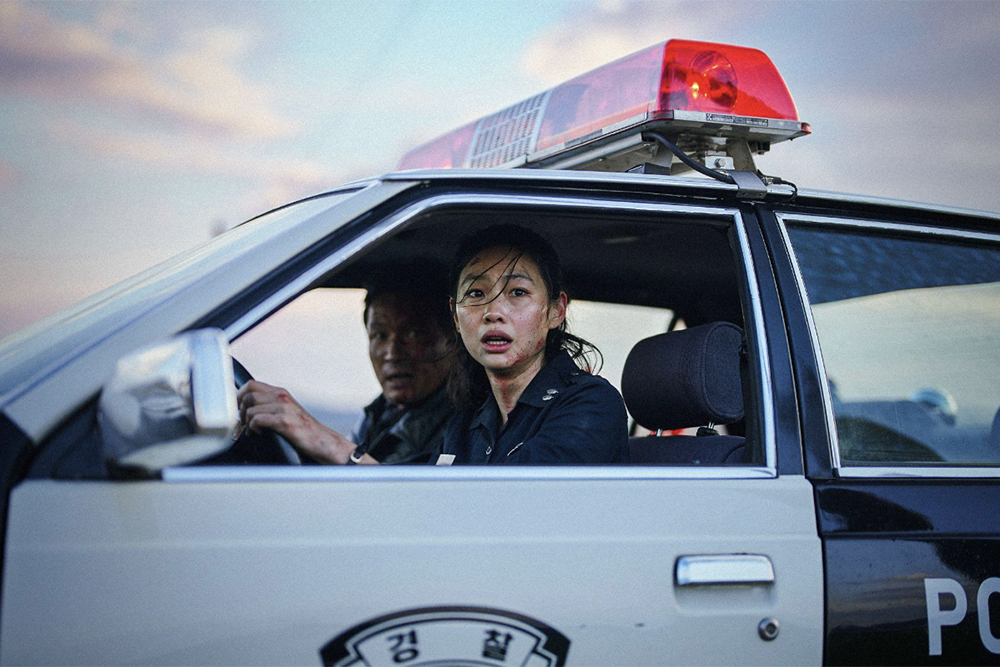
On 14 July 2026, Well Go USA pushed a fresh 10th-anniversary trailer for Yeon Sang-ho's Train to Busan, the 2016 South Korean zombie feature that turned a KTX express into the most stressful commute in modern genre cinema. The clip, flagged by film trade account First Showing on Telegram, comes ahead of a planned theatrical re-release aimed at North American screens. A decade on, the film that first carried a Korean genre hit into global multiplexes is being re-pitched not as a curio but as a tentpole.
The re-release is a small data point with a large implication. Train to Busan did not invent the Korean wave, but it was the moment Korean genre cinema stopped being a festival-circuit talking point and started being a multiplex business. The anniversary campaign is less a museum piece than a market signal: ten years on, Korean horror is still treated, in marketing copy and in distributor balance sheets, as the lead export in a much wider Asian-content pipeline.
A new trailer for an old train
Well Go USA, the Texas-based distributor that handled Train to Busan in North America, has built a significant chunk of its catalogue around Korean and East Asian genre titles. A 10th-anniversary push, with a new trailer and a fresh theatrical window, is a routine move for a film of this standing. What is less routine is the surrounding context. The Korean horror industry that produced Train to Busan has, in the intervening decade, spawned the series spin-off Peninsula, Netflix's All of Us Are Dead, HBO's The Last of Us (adapted from a Korean-set game), and a steady drumbeat of festival titles out of BIFAN in Bucheon. The genre has stopped being a national story.
The trailer lands as Korean content exports more broadly face a different kind of squeeze. Korean drama and film hit a soft patch through 2024 and 2025 in some overseas markets as streaming platforms thinned catalogue spend; the high-water mark of "Squid Game" virality has been harder to clear for newer titles. A re-release of a film with proven, multi-territory demand is one way distributors shore up the bottom line while waiting for the next breakout. The economics are not complicated: a known brand, a known ceiling, no development cost.
The counter-read: is the genre actually cooling?
The honest counterpoint is that the Train to Busan re-release says more about nostalgia economics than about current Korean horror health. Korean genre cinema is still prolific, but the gap between breakout hit and mid-tier title has widened. Train to Busan is being rerun because its ceiling is known; a fresh Train to Busan is not the same proposition. The 2020 follow-up Peninsula earned respectable but markedly lower worldwide grosses than the original. Subsequent Korean horror titles, including Exhuma in early 2024, performed strongly at home but had thinner international footprints outside the diaspora core.
There is also a platform question. A decade ago, Korean horror travelled through festivals and aggressive regional distributors like Well Go USA. Today, the same films increasingly travel through streaming first-release windows that compress theatrical upside and shorten the half-life of any single title. A re-release campaign is, in part, an attempt to claw back the theatrical discovery moment that the streaming era has eroded. If Well Go USA posts solid re-release numbers, it will be read as a vindication of the theatrical window for genre IP; if it does not, it will be filed alongside other recent anniversary re-releases that audiences sampled once at home and declined to revisit on a big screen.
Why this film still leads
What Train to Busan did, structurally, was rewire the emotional circuitry of the modern zombie film. The genre had spent the previous decade either in grim post-apocalypse (The Walking Dead, World War Z) or in self-parodic horror-comedy (Shaun of the Dead's descendants). Train to Busan returned the genre to a contained, real-time disaster structure, but built the disaster around a fractured parent-child relationship. The zombies are relentless; the social critique (class, selfishness, crowd panic) is layered; the emotional payload is the daughter on the other side of a glass door.
That synthesis is what has aged well. The film made the global industry treat Korean genre as a place where high-concept genre mechanics and mainstream melodrama could coexist without one cannibalising the other. The downstream effect is visible in everything from the financing of Korean horror at Cannes to the casting of Korean leads in English-language genre projects. Even where the originals do not travel, the production grammar does.
What the anniversary actually settles
The re-release does not prove Korean horror is ascendant again; the calendar is too short and the title too proven. What it does prove is that one of the most successful Korean films of the 2010s is still treated, by an established North American distributor, as a viable theatrical product in 2026. That is not nothing. In an attention economy that has written off most non-franchise theatrical re-releases, Well Go USA is putting real marketing weight behind a decade-old Korean-language zombie film that requires subtitles in its primary market.
The stakes for Korean cinema are modest but real. If the re-release clears, it strengthens the case for further anniversary programming and for theatrical-first windows on the next generation of Korean genre titles. If it underperforms, the read-through will be that the diaspora-and-festival core audience is the durable base and that the broader crossover ceiling has narrowed. The film itself will be fine either way; the question is what the distributor concludes about the next title on the slate.
Desk note: Monexus framed this against the genre's wider trajectory rather than as a single-trailer news beat, drawing the throughline from the original theatrical run to the current streaming-era economics that any re-release is now navigating.
Wire provenance
This editorial synthesis draws on the following public wire/social posts:
- https://t.me/s/FirstShowing/2203
- https://en.wikipedia.org/wiki/Train_to_Busan
- https://en.wikipedia.org/wiki/Well_Go_USA_Entertainment
- https://en.wikipedia.org/wiki/Peninsula_(film)