An Israeli lawmaker walked into a Jerusalem school. What he said there is now the story
Religious Zionism MK Tzvi Sukkot entered the Dar al-Aytam Islamic High School in the Old City on 15 July. The school's defenders say it was a provocation; Sukkot's office frames it as oversight. Both readings have weight.
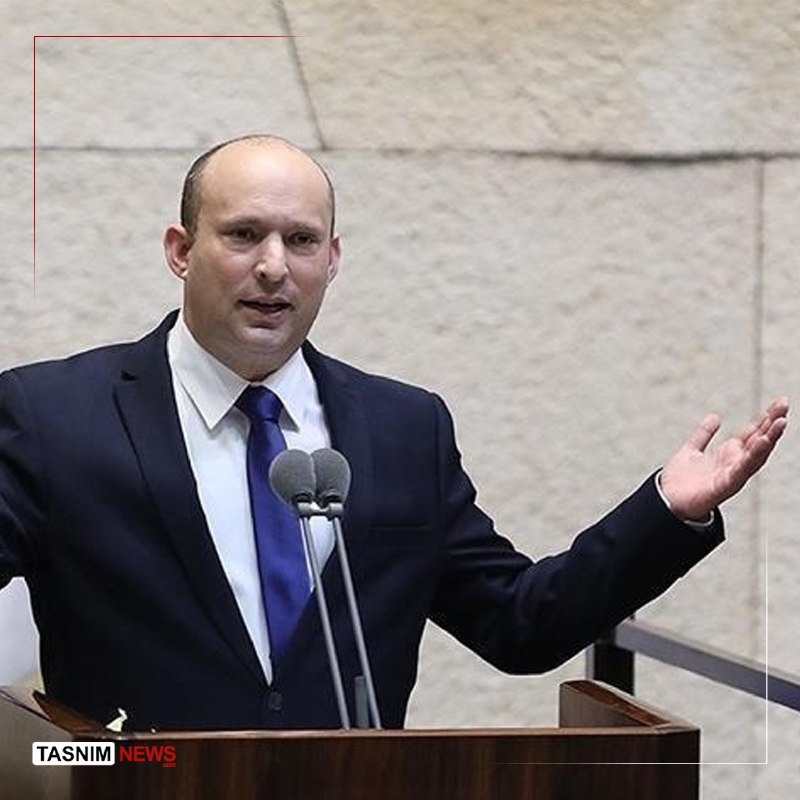
At roughly 06:45 UTC on 15 July 2026, Tzvi Sukkot, a Knesset member from the Religious Zionism party who chairs the chamber's Education Committee, walked into the Dar al-Aytam Islamic High School, an institution sitting inside Jerusalem's Old City. The incursion, captured on video and circulated by The Cradle Media on Telegram at 08:45 UTC the same day, was not a routine committee field visit. It was framed, by the lawmaker and by the Palestinian residents who confronted him, as an act of inspection. Each side read it differently within the first hour.
The episode is small in physical scale: one building, one elected official, a handful of staff and students, and a confrontation that lasted minutes rather than hours. It is large in what it indexes. A sitting MK using his committee chairmanship to enter a Palestinian-run school in occupied East Jerusalem, on Israeli sovereignty questions that the international community treats as unresolved, is the kind of incident that gets imported into a dozen other policy fights at once: the curriculum battles over Israeli history textbooks, the status of Palestinian institutions in the city, the long-running argument over whether Jordanian-era waqf properties can be designated as Israeli state property, and the daily friction between a far-right coalition partner and the Palestinian residents it governs but does not, formally, enfranchise.
The visit, in the words that came out
According to footage circulated by The Cradle Media, Sukkot told those inside the school that he had arrived to "inspect" the premises and accused the institution of operating in violation of Israeli regulations. The Cradle's framing of the clip presents the visit as a political provocation staged by an MK aligned with the settler movement, which is the consistent editorial posture the outlet takes toward Religious Zionism. The Cradle is a Beirut-based outlet that covers the region from a perspective openly sympathetic to the Iranian-led axis; its reporting on Israeli domestic actors should be read as adversarial, not neutral. But the existence of the video, and the identity of the man in it, are not in dispute. He is the same Tzvi Sukkot who sits on the Religious Zionism slate, holds the Education Committee gavel in the current Knesset, and has spent his parliamentary career openly agitating for Israeli sovereignty over areas of the West Bank and against Palestinian educational autonomy in East Jerusalem.
Israeli mainstream press has not, as of this writing, published a confirmation of the specific school visit. That asymmetry is itself part of the story. The Cradle is publishing the footage because it wants it published; Israeli outlets have not yet decided whether the visit is news, theatre, or a coalition-management problem for Prime Minister Benjamin Netanyahu's government, in which Religious Zionism holds the balance of power through ministers Bezalel Smotrich and Orit Strook. Whether the Israeli press treats the visit as a minor disturbance or a political incident will, in practice, determine whether it endures in the public record.
Why a school, and why this school
Dar al-Aytam is one of a small number of Palestinian secondary schools in the Old City that operate under the historic waqf education tradition, an inheritance from the Ottoman and Mandate-era system of Muslim religious endowments that funded schools, hospitals, and shrines across the city. Waqf-administered schools in Jerusalem sit in an unusual jurisdictional zone. They are physically in territory Israel captured in 1967 and later annexed, in a move not recognised internationally. They are funded, in significant part, by the Jordanian government through the Jerusalem Awqaf and Minbar Affairs Ministry, an arrangement that has held since the 1990s Oslo-era protocols and that Israeli governments have tolerated, contested, and occasionally tried to dismantle in piecemeal fashion.
That layered status, half-Ottoman endowment, half-Jordanian funder, sitting on land the Palestinians and the broader international community consider occupied while Israel considers unified with West Jerusalem, is what gives a committee chair's unannounced visit its charge. The MK enters not as a private citizen but as the head of a parliamentary committee that, on paper, supervises Israel's education system. The school he is entering is, on paper, partly outside that system. The collision of those two paper realities is the photograph.
The argument inside the Israeli coalition
Within Israeli politics the visit fits a familiar pattern. Smotrich's Religious Zionism party has, since joining the coalition in late 2022, used its ministerial and committee positions to push de facto annexation of West Bank territory, to expand settlement construction, and to challenge Palestinian institutions in Jerusalem and inside the Green Line. Smotrich himself holds a finance ministry portfolio that gives him effective authority over much of the civil administration in the occupied territories. The Education Committee, which Sukkot chairs, is a softer lever, useful for symbolic interventions rather than direct annexation orders. A committee chair visiting a Palestinian school, with cameras present, is a way to perform sovereignty without changing the legal status of the building.
That distinction matters for how a reader should weigh the incident. The school is not, as of 15 July, at risk of imminent closure on a committee chair's say-so. What is at risk, and what Sukkot's presence signals, is the slow normalisation of MK-led inspections of Palestinian institutions, a category of activity that Israel has long restricted to a narrow set of officials acting under specific protocols. If the visits become routine, they become a precedent. If they become a precedent, the next step, formal jurisdiction, follows the political gravity rather than the legal route.
What remains unresolved
Three things the sources do not yet establish. First, whether the school's administrators invited Sukkot or were surprised by him; the Cradle's framing implies the latter, but the school's own statement has not been cited in the materials available. Second, whether any Israeli ministry or Knesset legal adviser signed off on the visit in advance; the committee chair's office has not, to this publication's knowledge, published a clearance document. Third, whether any physical damage, staff suspensions, or curriculum seizures occurred during the incursion; the circulated video suggests a confrontation but not a confiscation.
Those are the load-bearing facts for any subsequent legal or diplomatic follow-up. They are also the facts most likely to harden or dissolve over the next 48 hours, depending on whether the Israeli press treats the visit as news and whether Palestinian and Jordanian officials in Jerusalem choose to escalate it diplomatically. The school's defenders will frame what happened as a provocation staged for cameras by a coalition partner with a known ideological project. Sukkot's office will frame it as the routine work of parliamentary oversight. Both readings have weight, and both readings, if either is allowed to become the only one in the public record, will tell the story wrong.
Monexus framed this as a low-grade sovereignty incident inside Jerusalem's layered jurisdictional zone, weighing the Lebanese-based outlet's editorial posture against the absence of an Israeli-press confirmation, rather than treating the Cradle video as either definitive proof or agitprop.
Wire provenance
This editorial synthesis draws on the following public wire/social posts:
- https://t.me/thecradlemedia
- https://t.me/s/thecradlemedia