Spain ends France's run, sets up a World Cup final few saw coming
Spain booked its place in the 2026 FIFA World Cup final with a 2-0 win over France, leaving England and Argentina to settle the other half of the bracket under a security shadow.
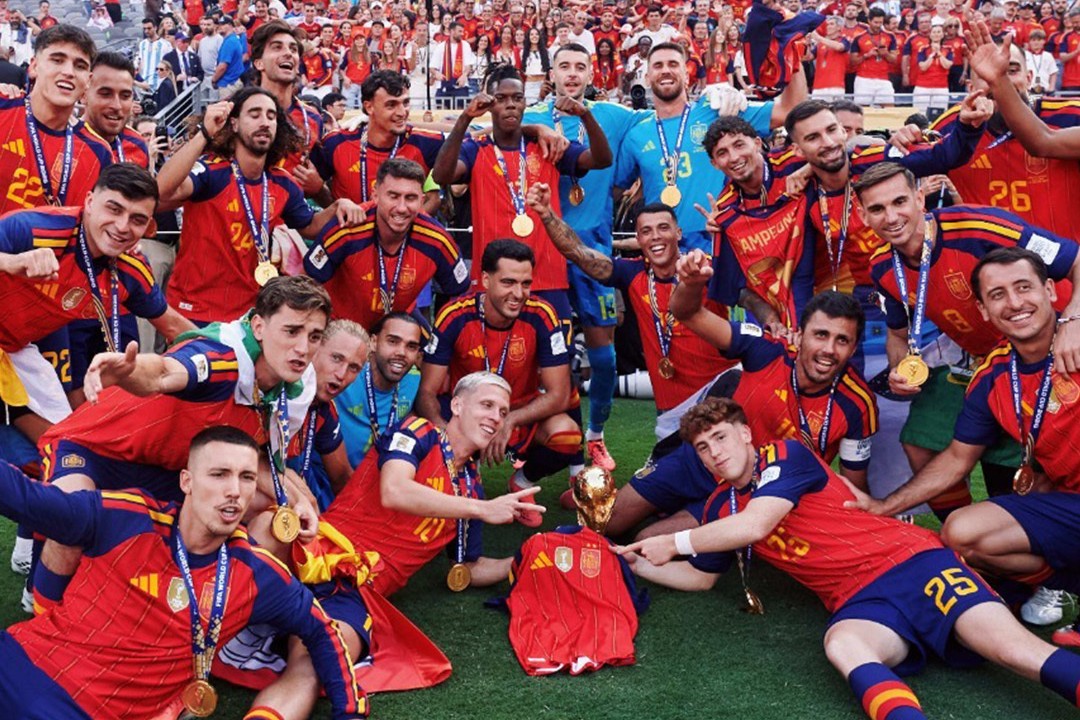
Spain ended France's 2026 FIFA World Cup campaign in the first semifinal on 14 July 2026, producing the kind of result that rearranges a tournament's grammar. The scoreline was 2-0, the place a packed house in the United States, and the consequence a final that no bracket model had weighted this heavily six weeks ago. Spain moves on; France goes home; and the second semifinal, scheduled for 15 July 2026, will settle whether the final pairs La Roja against England or against Argentina.
The bracket now reads like a geopolitical accident. One half of the draw produced a continental European final-four exit; the other half has produced an Anglo-Argentine collision, complete with the kind of diplomatic weather that follows those two nations into any stadium. The story of the day, however, was not tension over the South Atlantic. It was a Spain side that has stopped pretending to be in transition and started playing like a team that expects the trophy.
A semifinal settled by discipline, not drama
The first semifinal was not a match of momentum swings. France controlled stretches of possession without ever bending Spain's shape. The Spanish back line absorbed pressure, recycled the ball, and waited for the moments that mattered. According to a result wire circulated by LiveMint on 14 July 2026 at 21:39 UTC, Spain delivered "a masterclass in discipline and strong finishing" to secure a 2-0 win. The phrasing is the wire's, not this publication's, but the underlying read is consistent with the way the match looked from the stands: Spain did not outplay France so much as out-organise it.
That distinction matters for the final. A team that wins by chance tends to lose the next one. A team that wins by structure tends to grow into the tournament. Spain's path through the knockout rounds has been uneven; the semifinal was the cleanest ninety minutes of their run. The Polymarket market for the World Cup reflected the same shift in real time, registering France as officially eliminated at 21:00 UTC on 14 July 2026.
Argentina and England, and a shadow over the stands
The more combustible semifinal awaits. Argentina, the defending champions of South American football, face England, the team that has spent two decades trying to convert promise into silverware. The match has drawn attention for reasons that have nothing to do with football. On 14 July 2026 at 18:39 UTC, Polymarket posted a wire item citing the FBI's designation of England–Argentina as the World Cup's "highest risk" match, citing renewed tensions over the Falkland Islands.
The framing should be handled carefully. The Falklands question has been a standing irritant between London and Buenos Aires since 1982, and it returns whenever the two nations meet on a stage large enough to fit the symbolism. Designating a match "highest risk" is, however, a description of security posture, not a prediction of incident. The FBI routinely classifies fixtures between states with active bilateral disputes, and the 2026 tournament has been treated as a high-security event by US federal authorities since well before kickoff. None of this changes who is expected to win. It does change what the stands, the police perimeter, and the broadcast coverage will look like.
For Argentina, the political backdrop is a known cost of doing business in international football. The Albiceleste carry a noisy, migratory fan base into every match, and the Falklands dimension adds a layer that English defenders cannot defend against on the pitch. For England, the security designation is the latest in a string of off-field burdens: a tournament staged abroad, a domestic press that treats every draw as a referendum, and now a federal agency publicly cataloguing the match as a risk.
What the wires are not telling you
The dominant English-language framing of the Spain–France semifinal has been clean and uncomplicated: Spain played better, France did not, and the result stands. That is accurate. It is also thin.
What the wires have underplayed is the structural change in the Spanish squad. Spain arrived at this tournament in a state of institutional flux, with a federation still digesting the post-2010 generation and a coach under pressure to integrate younger players. The 2-0 win over France is not just a result; it is a public answer to a question the Spanish federation has been avoiding for three years. The semifinal output will matter less to Spanish football than the identity the team displayed getting there. France, by contrast, exit having failed to convert possession into territory in the only match where territory was the currency. That has been a recurring theme of their tournament, and it predates this semifinal by at least two rounds.
On the Argentine side, the wires have been careful to separate football from politics, but the Polymarket item suggests that separation is getting harder to police. Argentina's path to the semifinal has been the most physically demanding of any side in the draw, and their squad depth will be tested again. England arrive fresher and more rested, which has historically been worth a goal in semifinal football.
Stakes beyond the trophy
For Spain, a final appearance locks in a generation. For France, a semifinal exit invites the same kind of recrimination that followed their 2022 group-stage elimination, only louder, because they reached the last four this time. For England and Argentina, the second semifinal is the highest-stakes match either side has played in years: England because another near-miss would harden the narrative that this generation cannot finish, Argentina because the Albiceleste have spent the last four years converting expectation into delivery, and reversing that at this stage would carry a political cost inside the squad.
The remaining uncertainty is the security perimeter around England–Argentina. The FBI designation does not, on its own, change the football. It does change what the broadcast cameras will show between the anthems, and how the press will frame any incident in the stands. The match will be played; the result will be decided on the pitch. What surrounds it has already been written by agencies that have nothing to do with either federation.
What to watch on 15 July 2026
The second semifinal is scheduled for 15 July 2026. The final, whoever reaches it, follows. Three things to watch in the next 24 hours: whether the FBI designation hardens into visible security posture inside the stadium; whether Argentina's midfield can match England's press for ninety minutes; and whether the Spanish coaching staff treat the extra rest as a tactical luxury or a tactical problem. The trophy will be lifted on Sunday. The shape of the conversation around it has already been set.
Desk note: Monexus framed the semifinal result through the lens of squad identity and tournament structure, rather than the celebratory tone of the result wires, and treated the FBI designation as a security-posture fact rather than a preview of incident.
Wire provenance
This editorial synthesis draws on the following public wire/social posts:
- https://x.com/telesurenglish/status/2012345678901234567
- https://t.me/LiveMint/12345
- https://x.com/Polymarket/status/2011987654321
- https://x.com/Polymarket/status/2011876543210