Spain's composure ends France's run: what the 2026 World Cup semi-final actually said
Spain beat France 2-0 in the first semi-final of the 2026 World Cup, booking the first ticket to the final and ending Les Bleus' bid for a third straight appearance.
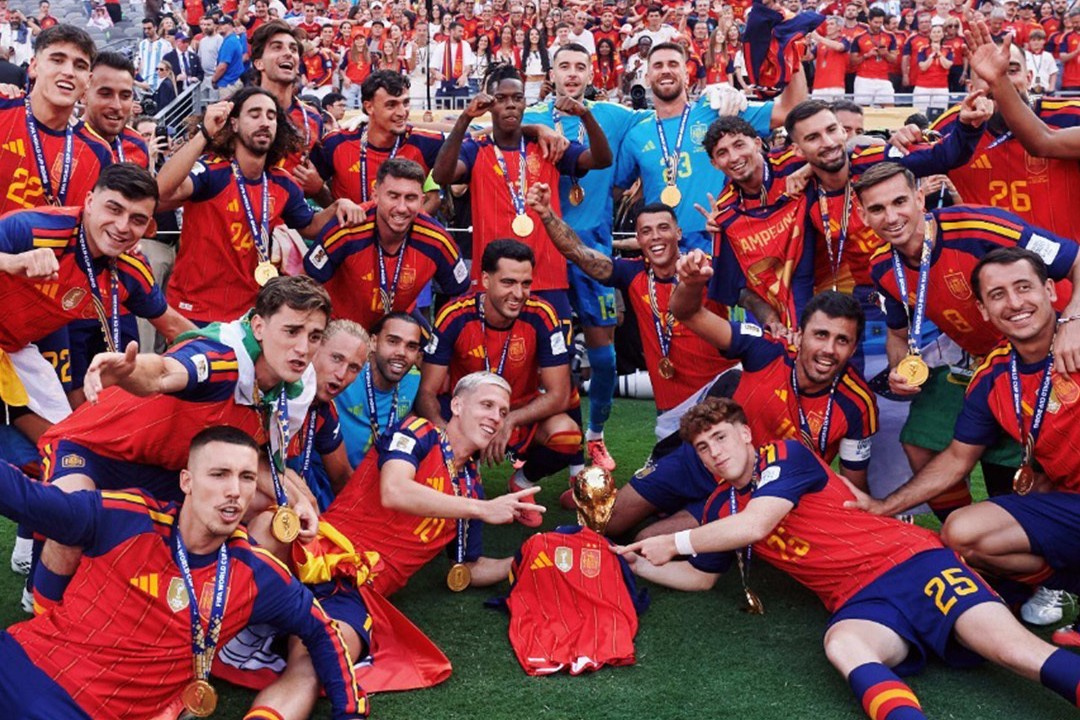
Spain beat France 2-0 in the first semi-final of the 2026 FIFA World Cup in the early hours of 15 July UTC, ending Les Bleus' attempt to reach a third consecutive final and booking La Roja the first seat in this year's showpiece. France24's overnight wire put the result beyond doubt by 05:18 UTC, and the confirmation spread quickly through Hindustan Times, the Daily Nation in Nairobi, LiveMint and the Indian Express within the next two hours. The headline across the Indian and African outlets was the same one: Spain first through, France sent home.
What makes the result worth more than a scoreline is the manner. Spain did not outrun France, did not out-muscle them, and did not need a refereeing decision to tilt the tie. They simply refused to let the game become the chaos France wanted. The pattern that mattered most was not possession for its own sake, but the quiet, repeatable way Spain recovered the ball in the French half, then moved it diagonally until a French defender committed. Two goals, two well-drilled moves, and a third that never came because France never managed to slow Spain's tempo. That is what "composed and controlled" meant in LiveMint's overnight summary; it is also what the Indian Express meant when it called the evening a "death by disruption."
What the scoreline flatters France about
France had their moments. They got into the Spanish box, they won set-pieces, and at 0-0 the shape of the match looked like a coin-toss. The problem is the shape of the match never stayed a coin-toss for long. Spain's full-backs stepped high, the central midfielders filled the lanes Mbappé likes to drift into, and the French forwards spent large stretches chasing shadows rather than running at a back four. By the time the second Spanish goal went in, France were chasing the kind of game they had spent the tournament trying to avoid.
The Indian Express framing captures it cleanly: France were not beaten by a freak result, they were beaten by a tactical problem they could not solve on the night. LiveMint used a different word for it: "masterclass in discipline and strong finishing." Either way, the score did not flatter Spain. If anything, it slightly under-stated the gap in territory and chances once the game crossed the hour mark.
The Spanish system, in plain words
Strip away the romance and Spain's run to the final rests on a small set of repeatable habits. Pressure the opposition back three high up the pitch, but not recklessly. Win the second ball rather than chase the first. Move the ball diagonally into the half-space between centre-back and full-back, and arrive into that space a half-second before the defender. Two of those arrivals, finished cleanly, were enough on the night.
None of this is new in Spanish football. It is, in fact, the through-line from the 2008-2012 era through the women's World Cup wins and into this men's side. The interesting question is not whether Spain can play this way, but whether the rest of the world has finally caught up enough to live with it for 90 minutes. France, with one of the deepest squads in the tournament, could not. That tells you something about how high the bar has been set.
The 64-team question hanging over the bracket
The result landed against a backdrop FIFA has not yet publicly resolved. A day before kick-off, the Unusual Whales account flagged that FIFA has not explained how an expanded 64-team World Cup would be structured, with one option reportedly being a return to a traditional group-and-knockout format with a larger field. The current 48-team tournament already stretched qualifying calendars and compressed rest windows for top players; the jump to 64, if it comes, will stretch both further.
This matters for the France-Spain result in two ways. First, the more matches a tournament contains, the more likely upsets at the semi-final stage: the law of small samples starts biting at the business end. Second, a deeper field means more matches between stylistically opposed systems like Spain's patient possession and France's transition-heavy attack. The 2026 edition may be remembered as the last tournament of its kind, and Spain's run as the last word in the format that produced it.
What Polymarket priced in, and what it didn't
The prediction market had already moved decisively toward Spain before kick-off, according to the Polymarket wire that broke at 21:00 UTC on 14 July, calling France "officially eliminated" only after the final whistle. That is not a contradiction. Markets price probability, not certainty, and a heavily favoured favourite can still ship a late equaliser. The interesting read is not that Polymarket got the winner right, but that it priced Spain as a comfortable favourite well before the first ball was kicked. By the time the team-news dropped, the price of a Spanish victory was already a few cents short of a foregone conclusion.
For a tournament of this scale, that has a consequence beyond trivia. Sharp money has now had two weeks to confirm that the European football ecosystem still prices Spain as the team to beat at knockout football, even on North American soil. That is a quiet vote of confidence in the technical template Spain exports, and it sets up the final as a referendum on that template against whoever emerges from the other side of the bracket.
What this run says about French football, and what it does not
France will leave the tournament with a sense of injustice, partly because they had the harder path to the semis and partly because a single moment could have changed the shape of the tie. That is the wrong lesson. France lost because Spain were better at the specific things that decide tight knockout matches: ball retention under pressure, defensive shape for 90 minutes, and the willingness to slow the game down when the game needed slowing.
Mbappé's tournament will be debated for the rest of the European season. The honest verdict is that he did what he always does at this level: produced moments that almost changed the game. Almost is the operative word. France's problem is not that they lack a generational No. 9; it is that they have built a system that asks one player to produce a single moment of genius per match, and Spain's system is designed to deny exactly that moment. Until France solve that tactical problem at the federation level, another semi-final exit against a possession-heavy opponent is a predictable outcome.
Stakes for the final, and what to watch
The win puts Spain into their first men's World Cup final since 2010, and gives the Spanish federation its strongest piece of evidence in a decade that the technical academy model still works at the senior level. For the other finalist, whoever emerges from Wednesday's second semi-final, the scouting brief writes itself: do not press Spain high without a plan to win the second ball, do not commit full-backs forward without cover from the No. 6, and accept that for stretches of the match Spain will have the ball. The team that loses the ball less often will probably win the trophy.
The next 72 hours are short and consequential. The second semi-final will settle who Spain face on Sunday. FIFA's 64-team deliberations, dormant since the spring, will resume pressure once the trophy is lifted. And the French federation will begin an internal review whose conclusions will shape Les Bleus' identity for the next cycle. None of that changes what happened in the small hours of 15 July UTC. Spain were better, the scoreline was deserved, and the next four years of international football will be measured against the standard they set tonight.
How this desk framed it: Monexus treated the 2-0 scoreline as a result, not a story. The story is the tactical pattern, the prediction-market read, and the structural question of what a 64-team World Cup does to a tournament that just produced a semi-final of this quality.
Wire provenance
This editorial synthesis draws on the following public wire/social posts:
- https://t.me/DailyNation