Unverified strike on Shiraz tests the fog-of-war information economy
Three Telegram channels reported a US airstrike on Shiraz at 09:57 UTC on 15 July 2026. Iranian state media attributed the blasts to mining at a cement factory. The gap between the two readings is now the story.
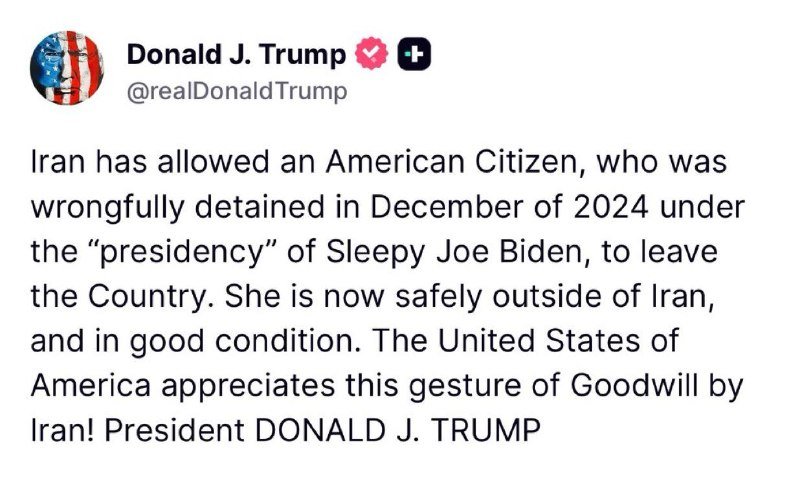
At 09:57 UTC on 15 July 2026, the Telegram channel @intelslava posted a six-word claim: "U.S. airstrike reported in Shiraz, Iran." Within two minutes, @wfwitness logged "Reports of explosions in Shiraz." By 09:59 UTC, @rnintel had escalated to "Reports of an air strike on Shiraz, southern Iran within the last 10 minutes." Twenty-three minutes later, the same channel walked the claim back: "Iranian media reports the explosions were apart of [sic] controlled mining operations at a cement factory."
That sequence, eight minutes of certainty followed by a quiet retreat, is the event. Three open-source intelligence channels with large followings broadcast an unverified US strike on a major Iranian city. Iranian state media, when it arrived, offered an industrial explanation. By mid-morning UTC the dominant Western-aligned OSINT frame was "strike," and the dominant Iranian-aligned frame was "mining." Neither had been independently confirmed when either version reached a global feed.
A claim with no body
The structural problem is not that the early reports were wrong. It is that no public evidence has been offered for either reading. @intelslava and @rnintel did not publish coordinates, geolocated footage, plume photography, flight-tracker data, or named sources. The Iranian counter-claim likewise arrived without on-the-record attribution beyond an unnamed "Iranian media" reference inside the same Telegram post that had just carried the strike claim. The cement-factory framing thus entered the global information ecosystem as a rebuttal, not as a documented fact.
This is the shape that fast-cycle conflict reporting now takes. Telegram channels optimised for virality post in the imperative mood ("U.S. airstrike reported"). Cables and wire services, slower and more cautious, lag them by hours. Readers, and downstream aggregators that scrape the channels, receive the strike version first and the official denial second, and the order conditions the takeaway.
The operating environment
The 14 July 2026 TechCrunch report on Iranian exploitation of mobile-network vulnerabilities supplies the only verified backdrop in the source set. According to that report, the Iranian government had used well-known flaws in cellphone networks to locate and strike US military personnel in the build-up and beginning of a war. The precise scope and current status of that campaign is not specified in the cited material. What it establishes is a documented Iranian capability, and a documented Iranian intent, to use network-level intelligence against US forces in the Middle East. That capability, if it remains active, is what a strike on Shiraz would plausibly be designed to degrade.
The read this implies is straightforward: if a US strike on a target in Shiraz did occur, it would sit inside an ongoing counter-network campaign against Iranian intelligence infrastructure, not stand alone as a one-off escalation. The counter-read is equally straightforward: if the blasts were a cement-factory detonation, the strike narrative would be the kind of premature attribution that becomes impossible to retract at scale once it has been relayed through thousands of accounts.
What we verified / what we could not
This publication can confirm the following from the source set: three Telegram channels, operating under handles @intelslava, @wfwitness, and @rnintel, published unsourced reports of an air strike or explosions in Shiraz between 09:49 UTC and 09:59 UTC on 15 July 2026. Iranian state media, as relayed by @rnintel at 10:22 UTC, attributed the same blasts to controlled mining at a cement factory. No geolocation, imagery, flight-tracker data, or named-source attribution was published alongside either claim at the time of writing.
This publication cannot confirm: that a US airstrike took place; that one did not; the precise location of the reported blasts within Shiraz; whether there were casualties, and of what number; whether the Iranian explanation has been corroborated outside state-media channels; whether any US or Iranian official has commented on the record; or whether any of the three OSINT channels carried footage that has since been removed, debunked, or authenticated.
The information economy of a contested minute
The economic logic of the channels in question is worth naming plainly. Telegram OSINT feeds compete on speed. The cost of publishing "U.S. airstrike reported" when the claim turns out to be a mining blast is reputational; the cost of being twelve minutes behind a real strike is audience. That asymmetry rewards the louder claim and penalises the careful one. The same dynamic applies, with reversed sign, to Iranian state media, whose institutional incentive is to absorb any dramatic event into a domestic-control frame, here "cement factory," as quickly as the original dramatic event can be amplified by foreign channels.
The result is a stand-off in which two incentive structures race each other into the same news window. Neither is neutral. The first frame that lands tends to be the frame that travels.
Stakes
The geopolitical stakes of an actual strike on Shiraz, a city of more than 1.5 million residents, would be significant. The stakes of a misreported strike are different but not smaller. If a confirmed strike occurs in the days ahead, the early Telegram posts will be cited retrospectively as foresight. If no strike occurred, the same posts will be cited retrospectively as a case study in viral misattribution. In either case, the underlying question for any reader of fast-cycle conflict coverage is unchanged: which source, and at what timestamp, is willing to attach its name to a specific claim.
The three channels cited here did not, on this occasion, do so. The Iranian state-media rebuttal also did not name a mine, a regulator, or an inspector. Both halves of the record remain at the level of assertion. Monexus will update this piece if either side publishes verifiable evidence.
This piece treats the 15 July 2026 Shiraz event as a study in the contemporary information economy around fast-moving conflict, not as a confirmed strike. The wire had not, at the time of writing, attached attribution to either claim; OSINT channels had not published geolocation; Iranian state media had not named a specific facility. Where Western wires and the channels cited above diverge, both readings have been recorded.
Sources
Wire provenance
This editorial synthesis draws on the following public wire/social posts:
- https://t.me/intelslava
- https://t.me/wfwitness
- https://t.me/rnintel
- https://t.me/intelslava
- https://t.me/wfwitness