Polymarket puts Hormuz fee bets in play as Trump's tariff threat recedes
Two prediction markets now price the odds of Hormuz tolls from Washington and Tehran, days after the White House stepped back from a 20% transit levy.
Two prediction markets opened on Monday with starkly different odds on a question that, until last week, was confined to shipping desks and Persian Gulf war-gaming rooms: who, if anyone, will start charging tolls for passage through the Strait of Hormuz. On Polymarket, traders put a 14% probability on the United States imposing transit fees on the waterway before 31 December 2026, and a 52% probability on Iran doing the same within roughly six weeks, according to market pages dated 14 July 2026.
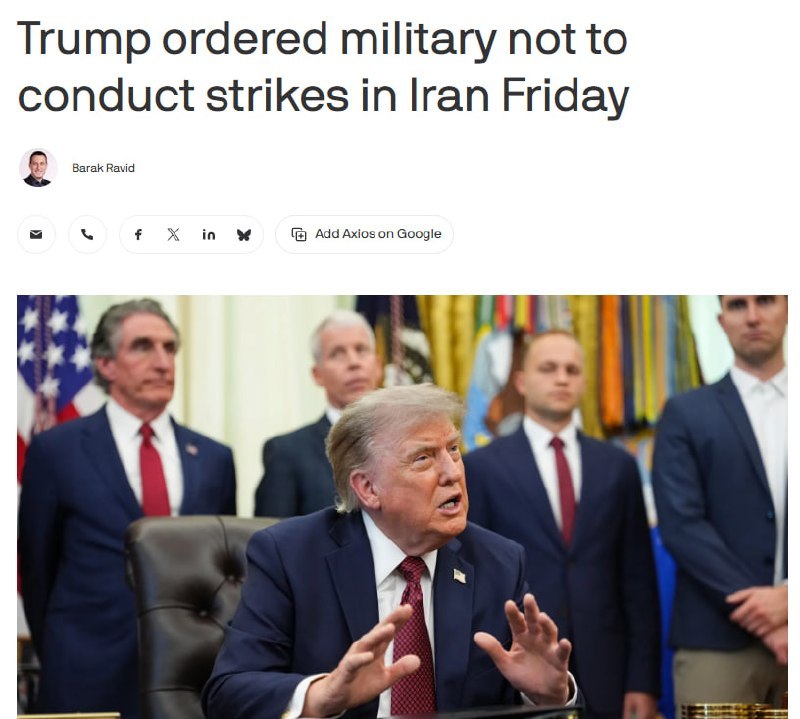
The numbers crystallise a standoff that has hardened in public over 72 hours. On 14 July, U.S. President Donald Trump, in remarks relayed by the Telegram channel Clash Report, said the strait "is open if people want to go through it" and "only closed for Iran, both in and out," adding that Washington was "coming up with great alternatives, including Texas and Alaska." The same evening, Sprinter Press reported that Trump had "backed down from his intention to impose a 20% tariff on goods for ensuring the safety of ships passing through the Strait of Hormuz." Iran's English-language state outlet PressTV, for its part, declared that "the Strait of Hormuz will not be reopened through US military pressure or aggression." The contract probabilities are, in effect, the market's price on whether either side's rhetoric becomes policy.
The tariff that wasn't
The 20% transit tariff was floated by Trump earlier this month as a way to recoup what the White House framed as the cost of U.S. naval escorts through the strait. By 14 July, that proposal had visibly cooled. Sprinter Press's reporting frames the retreat as a hard reversal; the Polymarket contract on a U.S. fee, at 14%, suggests traders see the political appetite for the tariff as thin, and the legal mechanics as harder still. A levy on goods transiting a foreign waterway, even one the U.S. Navy effectively patrols, runs into a thicket of UNCLOS provisions, free-passage customary law, and the practical reality that the buyers of the crude and LNG moving through Hormuz sit in Asia, not Washington.
That is the structural problem the Polymarket traders are pricing. A U.S. toll is collectable only from vessels willing to call at U.S. ports, or from cargoes ultimately bound there. Iran's exports, by contrast, are already under sanctions enforcement that intercepts them at the dock of destination rather than the choke point. The 14% U.S. contract therefore reflects not just political probability but the engineering feasibility of extracting revenue from a transit flow that, in most cases, never touches U.S. jurisdiction.
Iran's hand
The 52% Iran contract, by contrast, assumes a different logic. Tehran does not need UNCLOS-compliant tolls to disrupt or monetise Hormuz. Iran's Revolutionary Guard Corps Navy has, for decades, run an irregular interdiction regime that ranges from boarding seizures to coercion of tanker operators. A formalised fee, denominated in rials or in offshore yuan, would simply formalise a practice already embedded in the traffic. PressTV's framing on 14 July, that the strait "will not be reopened through US military pressure," tracks that posture: control of access, not free passage, is the position on offer.
The asymmetric probability split therefore says something the underlying headlines do not. The market sees an Iranian fee as roughly three-and-a-half times more likely than an American one in the near term. That gap is not a forecast of war; it is a forecast of administrative reach. Iran can collect from a captive customer base, by proximity and by force. The United States cannot collect from one without the cooperation of insurers, flag states, and the Asian buyers who set the actual freight terms.
What a fee would actually do
The economic stakes sit on two ledgers. The first is the price of crude. Even a credible threat of disruption has historically lifted front-month Brent by single-digit percentages within days; the 2019 episode, after attacks on Saudi Aramco's Abqaiq facility, briefly added more than $10 a barrel before fading. A Hormuz transit fee imposed by either side would, in effect, be a tax on roughly 20% of seaborne oil and a significant share of LNG. The second ledger is the route book. Trump's mention of "Texas and Alaska" alternatives is a sleight of hand: there is no overland pipeline from the Gulf to either state that bypasses the strait for Persian cargoes. The alternatives he can plausibly point to are U.S. export terminals, not substitutes for Gulf crude itself.
This is where the prediction-market odds earn their keep. The U.S. contract at 14% is essentially a wager that Washington will choose the legal and reputational cost of a unilateral toll over the operational cost of a wider naval posture. The Iran contract at 52% is a wager that Tehran will formalise what it already does intermittently, betting that the diplomatic price is lower than the revenue.
What remains uncertain
The sources do not specify the contract close dates for either Polymarket market beyond the implied horizons, nor do they report how either side's naval assets are currently deployed in the Gulf. The Trump statements relayed by Clash Report are paraphrased through a Telegram channel rather than read from a White House transcript, and the Sprinter Press account of the tariff retreat is a single-source claim that has not been independently confirmed by a wire service in the materials available to this publication. The PressTV line, meanwhile, is an Iranian state-media framing of a position Tehran has held consistently for years. The 52% number should be read as the market's price on whether that posture hardens into an active collection regime, not on whether Iran says it will. None of the source items address what happens to the world's tanker insurance premiums if the higher-probability outcome lands, which is the variable that would, in practice, decide the answer.
Desk note: the wire read of the past 72 hours has framed this episode primarily as a tariff story centred on Trump. Monexus is framing it as a pricing problem, whose jurisdiction actually reaches the ship, because the market odds on a Polymarket page make that gap visible in a way the press conference cycle does not.
Wire provenance
This editorial synthesis draws on the following public wire/social posts:
- https://t.me/PressTV
- https://t.me/ClashReport