Oil traders sound the alarm as Hormuz closure drains reserves
A fresh round of tensions around the Strait of Hormuz has traders warning that commercial oil stocks are thinning fast, with downstream economies facing the kind of squeeze that builds quietly before it bites.
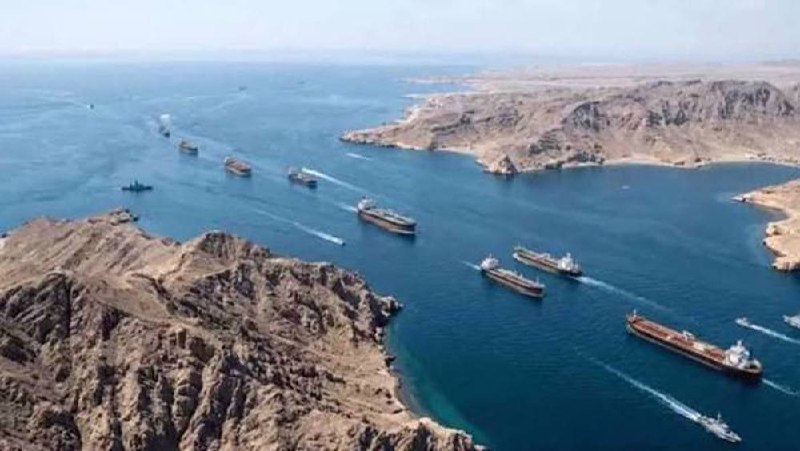
At 14:31 UTC on 15 July 2026, traders across the Gulf desk warned that the commercial oil complex has begun to run thin. The Financial Times report, carried shortly afterward in English by Iran's Tasnim and in Arabic by the Al-Alam channel, framed the squeeze in blunt terms: with renewed confrontation between Iran and the United States pushing the Strait of Hormuz back into the operational risk register, the cushion between supply and demand is shrinking faster than the swap trades that traditionally patch it. By 14:52 UTC, the urgency language had hardened: "the market is about to run out."
The subcontinent through which this signal travels matters. The Strait handles a documented share of global seaborne crude, and any disruption to traffic there reads in real time through refinery margins, shipping insurance, and the kind of forward curves that pension funds use to discount energy liabilities. The thesis on the desk: the story is not the volume of barrels physically blocked today, it is the willingness of intermediaries to keep their tanks and term-charters working when the next escalation could be a missile away.
What the traders are saying
The reporting carried by Tasnim and Al-Alam puts the warning in traders' own register. Stocks at the trading hubs are being drawn down rather than rebuilt; insurance war-risk premiums for tankers through Hormuz have, according to the same briefings, become the kind of line item charterers now price into every voyage. The practical consequence is a market running on a thinner margin of error. A maintenance outage in the Gulf, a delayed cargo out of the Americas, a single vessel detention, can no longer be absorbed the way it might have been twelve months ago.
This is a quantitative story dressed as a qualitative one. There are no printed headline numbers on physical barrels in the traders' warnings; the weight sits in the verbs. Running out, about to run out, on the verge, these are the words of people watching a buffer approach zero, not the language of analysts describing a cyclical tightness. The distinction matters because reserve depletion, once it becomes a market consensus, changes behaviour in advance: refineries bid up, governments draw down strategic stocks, importers accelerate the kind of spot tenders that feed inflation indices within weeks.
Why this round is different
The earlier Hormuz scares of the past decade sat inside a relatively well-supplied market. Global spare capacity, particularly across the Gulf producers, provided the floor. The 2026 file is structurally different. Capacity has been drawn down over several quarters of steady demand, and the diplomatic floor under Gulf shipping is thinner than it once was. When Iranian and US forces have traded blows before, the response was a coordinated de-escalation backstopped by both regional and outside powers. The current round appears to test whether that backstop still holds in a regional environment where several adjacent fronts are already warm.
A second difference is the price formation. Oil benchmarks incorporate geopolitical risk through a slow-moving premium that compounds until an event forces a discrete repricing. That premium is now being rebuilt out of small print revisions rather than one headline shock. The traders quoted in the FT warning describe a market that has already absorbed several increments; what is left is the residual margin, and the residual margin is precisely what subsequent moves eat first.
The counter-read worth holding in mind
The threshold language of a market "about to run out" deserves a sober second look. Traders benefit from a tighter tape; louder warnings tend to coincide with moments when the bid is weakest in the futures book, and the FT warning lands inside a news cycle in which several producers have a tactical interest in seeing headline prices firm. The structural read is that markets are thinner than they were, and Hormuz is more contested than at any point in recent years. The narrower question, whether a specific week in July is the moment the cushion goes to zero, is genuinely harder to call from the open sources available. The honest answer is that the warning is a leading indicator of how exposed the system has become, not a precise clock.
What to watch next
Three signals will tell whether the FT warning has held up against the next forty-eight hours of tape. First, the war-risk insurance quotes on tankers through Hormuz: if premia continue to creep rather than spike, the market is pricing in a baseline of risk. Second, the visible drawdown in trading-hub inventories reported through customs and independent trackers; the rate of decline, not just the level, is what compounds into price. Third, the language out of the relevant ministries in Tehran and Washington, both have previously used Hormuz risk language as a negotiating instrument, and a sharp de-escalation in rhetoric would do as much work as any tanker movement.
For importing economies the operational reality is straightforward: thin markets punish delay. Buyers that have not already covered forward are about to discover how unforgiving the current curve can be. For shipping and insurance counterparties, the question is less whether a Hormuz disruption happens than whether the next one is priced or sudden. And for the larger architecture of energy politics, this episode is a reminder of a recurring pattern: the corridor itself rarely moves, but the willingness of states to underwrite the corridor's safety can shift quickly, and markets begin to price that shift long before the public framing catches up.
Desk note: The wire line on this story arrived from the Financial Times through two Iranian-aligned Telegram channels (JahanTasnim, tasnimnews_en) and Al-Alam in Arabic. We treated those channels as wire relays rather than primary framings and quoted the FT warning in their language, preserving the urgency register the traders used. No party to the conflict has named specific barrel figures in the open sources available; the article reflects that limit.
Wire provenance
This editorial synthesis draws on the following public wire/social posts:
- https://t.me/JahanTasnim
- https://t.me/tasnimnews_en
- https://t.me/alalamarabic