Locarno puts its 2026 jury in the hands of a Belgian genre-bender
The 79th Locarno Film Festival has tapped Belgian filmmaker Fabrice du Welz to preside over its international competition jury, a programming bet on a director whose career has lived in the uneasy space between genre cinema and art house.
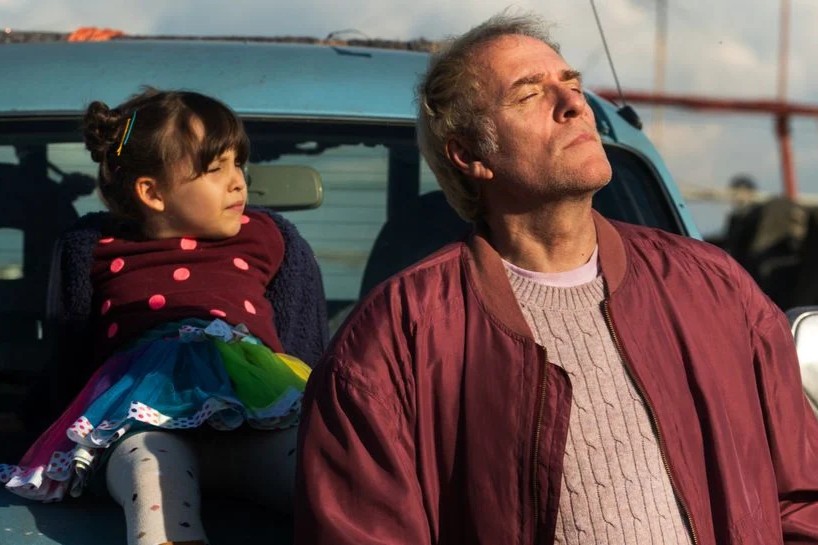
On 15 July 2026, the Locarno Film Festival announced that Belgian director Fabrice du Welz will preside over the international competition jury at its 79th edition, handing the most consequential single appointment in Swiss cinema to a filmmaker who has spent two decades working the fault line between genre and art house.
The choice is a statement. Locarno, run out of the lakeside Piazza Grande in the Italian-speaking canton of Ticino, has built its late-slate reputation on programming that prizes formal risk and political nerve over red-carpet gloss. Putting du Welz, a director whose films have been categorised variously as horror, thriller, noir, and social realism, at the head of the competition jury is a way of telling the international press corps what kind of competition Locarno intends to run in 2026.
A jury president built for the Piazza Grande
Du Welz's selection follows the long Locarno tradition of appointing jury presidents whose own work complicates the categories in which the festival trades. His breakthrough "Calvaire" (2004) and the follow-up "Vinyan" (2008) established him as a filmmaker drawn to isolation, dread, and bodies under pressure. Later work pushed further into genre territory without surrendering the social reading that gave the early films their edge. The festival's announcement, reported by Variety on 15 July 2026, frames him as a director who treats the genre label as a starting point rather than a destination.
That matters for Locarno. The international competition is the section where the festival calibrates its curatorial identity for the year: it is the slate the industry watches, the slate the critics argue over, and the slate the Leopard for Best Film goes home with. A jury president who reads a folk-horror set piece the way a sociologist would is more likely to reward films that do something uncomfortable with form, and less likely to default to consensus choices. Locarno's programmers have signalled, in effect, that they want their competition read in 2026 the way du Welz reads a script.
The festival's wider jury slate
The du Welz appointment lands alongside a fuller slate of jury announcements Locarno has rolled out in the run-up to its August dates. The 79th edition runs from 5 to 15 August 2026 across Locarno's theatres and the open-air Piazza Grande screen, a slot in the calendar that makes it the last major European festival before Venice and Toronto. Programming director Lili Hinstin and her team have used the weeks before the festival to drip-feed jury composition, building a press narrative around the curatorial line the 2026 edition intends to draw.
That line matters because Locarno occupies a specific structural position in the European festival ecosystem. Cannes sets the spring market. Venice sets the autumn prestige race. Berlin, in February, sets the winter tone. Locarno is the late-summer pivot: a festival that can still break a film before the autumn machinery locks in. A jury led by a director with du Welz's sensibilities tilts that pivot toward work that might otherwise be filed under genre and forgotten by the awards conversation.
What the selection says about Locarno in 2026
Locarno's curatorial bet is also a programming bet about where cinema is heading. European genre production has thickened in the last five years, with French, Belgian, Spanish, and Scandinavian filmmakers treating genre as a vehicle for political and historical argument rather than as a marketing handle. Du Welz sits inside that trend without being reducible to it. Putting him on the jury is a way of telling the industry that Locarno is paying attention to that body of work and intends to take it seriously in competition.
The wider reading is that Locarno in 2026 wants to compete on curatorial nerve, not on volume. The Piazza Grande will still run its outdoor premieres to a Swiss-Italian audience of several thousand; the retrospectives and sidebar sections will still do the archival and discovery work the festival is known for. But the international competition is where the festival's annual reputation gets made, and the choice of jury president is the cheapest, cleanest signal of intent the festival controls.
What remains uncertain
The competition slate itself has not been announced in the same wave, which means the du Welz jury will be reacting to a programme whose shape is not yet public. How a director with his instincts reads a competition that mixes established European names with younger filmmakers from the global majority is one of the more interesting unanswered questions of the August calendar. Locarno's habit of placing debut features in competition alongside major returns makes the jury's job harder, and more consequential, than at festivals where the slate is more uniform.
What is clear is the signal. Locarno has named its jury president for 2026, and it has named a filmmaker who treats form as an argument rather than a costume.
This piece was reported from a single Variety dispatch on the Locarno jury announcement. Subsequent Locarno programming announcements ahead of the August festival will be tracked separately on the culture desk.