Kuwait and Bahrain report sirens and explosions as Iran-linked strikes hit Gulf targets
Sirens sounded across Kuwait and Bahrain late on 15 July 2026, with Telegram channels aligned to Iran and to anti-Iran monitors reporting explosions hours before any US or Gulf-state confirmation.
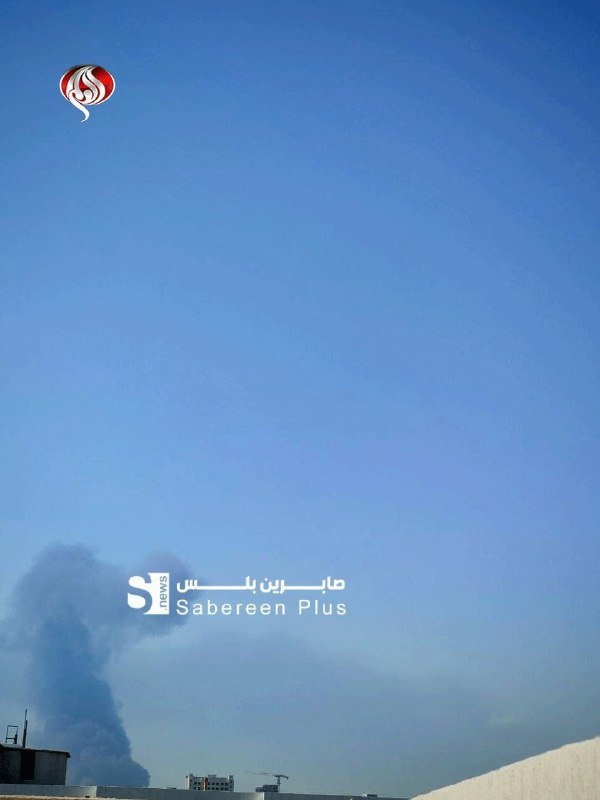
Late on the evening of 15 July 2026, civil-defence sirens activated across Kuwait and Bahrain within roughly fifteen minutes of one another, according to Telegram channels aligned to both sides of the Iran file. GeoPolitical Watch, an account that tracks Iranian regional posture, posted that sirens sounded in Bahrain at 23:12 UTC, with a second post ninety seconds earlier reporting sirens and an explosion in Kuwait. The Arabic-language channel Al-Alam posted the Kuwait alert at 22:59 UTC, and the anti-Iran monitor Intel_Slava carried the same Kuwait report six minutes later, attributing the soundings to Iran.
The cluster of alerts, all timestamped inside a seventeen-minute window between 22:55 and 23:12 UTC on 15 July 2026, is the most concrete public indicator so far that Iran's retaliation calculus has moved from threats against Israel to direct action against Gulf Cooperation Council hosts of US military infrastructure. Manama and Kuwait City had not, at the time of those posts, issued official statements. Reuters, the Associated Press, Al Jazeera English and The National had not yet carried confirmation. The reporting therefore rests on a stack of Telegram traffic whose sympathies span the spectrum, which is the framing problem this article sets out to do honestly.
What the Telegram stack actually shows
The four source items break cleanly into two camps. GeoPolitical Watch, which publishes in English and tags Iranian strikes with the Iranian flag crossed against the target country's flag, posted twice: first that sirens sounded in Kuwait with an explosion, then that sirens and explosions were sounding in Bahrain. Intel_Slava and Al-Alam, the latter a Hezbollah-aligned Arabic outlet, posted the Kuwait reports with similar urgency. None of the four posts cite an official Kuwaiti or Bahraini source. All four are timestamped inside the same quarter-hour.
That matters because the reporting is asymmetric. A Kuwaiti interior ministry statement, a Bahraini news agency bulletin, or a US Central Command release would convert these posts into confirmed strikes; their absence leaves the incident at the level of claimed sirens and claimed blasts. The geographical specificity matters too: Bahrain hosts the US Navy's Fifth Fleet headquarters at Mina Salman, and Kuwait hosts US Army Central's forward headquarters at Camp Arifjan and the Ali Al Salem Air Base that has been on heightened alert during previous Iran-Israel exchanges. The targets implied by the sirens are therefore the highest-value US logistics nodes in the Gulf outside Qatar's Al Udeid.
Why this round reads differently from April and October
Iran's previous escalations, including the 13 April 2024 missile-and-drone barrage and the 1 October 2024 salvo, targeted Israel directly. US and UK bases in Iraq, Jordan and Bahrain were hit only by Iraqi militia spillover, and Bahraini and Kuwaiti territory stayed largely outside the crossfire. If the 15 July 2026 reporting hardens into confirmed strikes, the strategic change is that Iranian retaliation has migrated from the Israeli border to the Gulf monarchies themselves, the very states that have spent two decades positioning themselves as indispensable hosts of US power projection.
The political cost is asymmetric in both directions. Iran's calculus favours surprise against hardened, expensive-to-replace foreign bases, but it also puts at risk the maritime transit lanes through the Strait of Hormuz that Iranian naval posture can close or partially close at will. Around a fifth of seaborne oil passes through the strait. The first victim of an Iran-on-Bahrain strike is not Bahraini sovereignty in the abstract; it is the insurance and freight cost of every tanker that would have to weigh whether to transit Hormuz the next morning.
What the wire is missing, and what readers need to watch
Three pieces of evidence would convert this from a Telegram stack into a confirmed event: an official statement from Kuwait's ministry of interior or Bahrain's ministry of interior; a US Central Command (CENTCOM) incident report; or imagery of impact sites corroborated against the location of sirens. Mainstream wires in London, Dubai and Washington had not crossed any of those thresholds at the time of the source items, which is itself a signal that the event, if it is one, is still breaking in the small hours of 16 July UTC.
What the sources do not yet show is the weapon mix. The 2024 rounds combined ballistic missiles, one-way attack drones and cruise missiles, with Iran's proxies layering in rockets from Lebanon, Yemen and Iraq. Telegram posts cannot distinguish between a cruise missile impact and a Patriot intercept at altitude, and the sound of an explosion is consistent with either. The structural read is therefore narrower than the headline: Bahrain and Kuwait reported sirens and explosions; neither capital has yet taken ownership of the story; the Iranian-aligned and anti-Iran Telegram stacks agree on the fact pattern even though they disagree on the perpetrator framing, which is a softer form of corroboration than official confirmation but harder to dismiss than a single channel's post.
The Gulf's long game, restated
For two decades the GCC's defence doctrine has rested on a bargain in which the United States provides the regional security umbrella and the GCC provides basing, overflight rights, capital purchases and diplomatic cover in Washington. A strike on Bahraini or Kuwaiti soil, whether by Iran or by an Iranian proxy, is a strike on the hardware of that bargain. The Bahraini and Kuwaiti governments have publicly insisted that their territories are not parties to the Iran-Israel confrontation. The 15 July 2026 alerts, if confirmed, would make that insistence harder to sustain on the diplomatic circuit in Doha, Riyadh and Abu Dhabi, where GCC foreign ministers were already meeting on air defence coordination in the days before the sirens sounded.
The honest counter-read is also simple: Telegram channels can run hot during ceasefire violations, false alerts, intercepts at altitude and routine drill activity in the Gulf. The sirens could reflect an actual Iranian strike, an intercept, an accidental activation, or a forward-deployed alert posture. Until Manama or Kuwait City releases a confirmed statement, the prudent posture is to hold the headline loosely and watch for two confirming signals: a Gulf-state interior ministry statement, and a CENTCOM incident update. Both tend to lag Telegram alerts by thirty minutes to several hours.
This article reads four Telegram posts as raw event signals rather than as confirmed reporting. Where mainstream wire confirmation materialises overnight, the picture will likely harden in one direction; until then, the sirens in Kuwait and Bahrain are best treated as a leading indicator in an escalation sequence whose next steps are visible only in the Gulf itself.
Wire provenance
This editorial synthesis draws on the following public wire/social posts:
- https://t.me/intelslava
- https://t.me/alalamarabic
- https://t.me/GeoPWatch
- https://t.me/GeoPWatch
- https://en.wikipedia.org/wiki/Strait_of_Hormuz