Kerman blasts, Chabahar footage, and the geometry of an unverified war
A handful of Telegram channels carried reports of explosions in Kerman and footage claimed to show a US strike on Chabahar. No major wire has confirmed either, and that silence is itself the story.
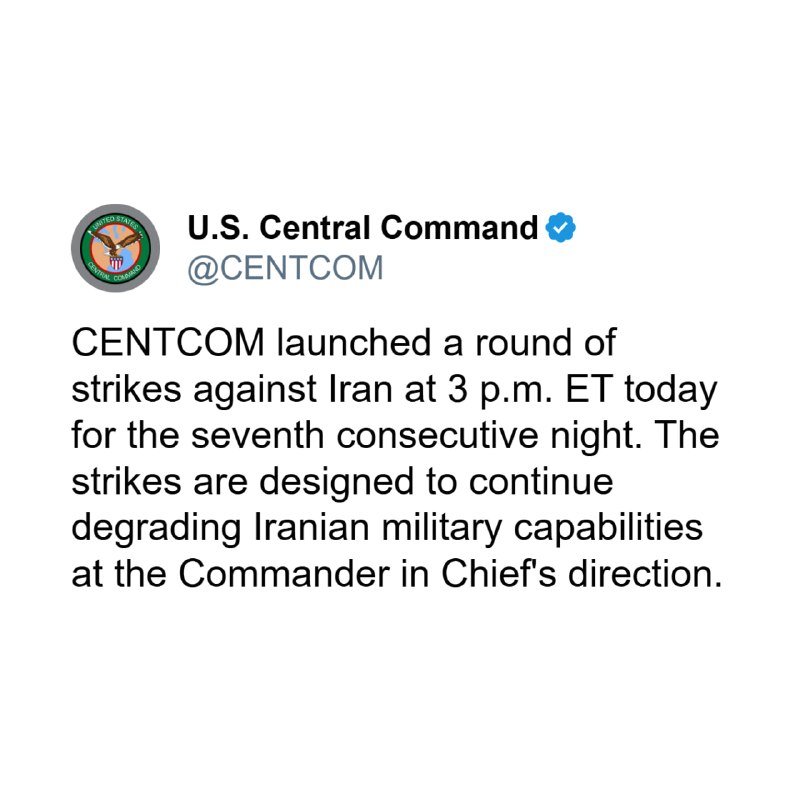
At 20:04 UTC on 15 July 2026, the channel @GeoPWatch posted a five-line bulletin: explosions in Kerman, Iran. Nine minutes later, at 20:13 UTC, @wfwitness carried a near-identical report. By 20:21 UTC the same channel had attached footage it described as the aftermath of a US strike on Chabahar, more than 1,300 kilometres southeast of the city that allegedly shook minutes earlier. The three messages spanned seventeen minutes. They were the entire public record.
This is what an unverified war looks like before it becomes a war. Two Telegram channels, no wire confirmation, no Iranian state-media statement, no Pentagon read-out, and a piece of footage already migrating across timelines. Anyone building policy on what those accounts are selling is building on sand. Anyone dismissing it is also guessing. The job, for now, is to keep the record straight about how thin it is.
What the sources actually say
Read carefully. @GeoPWatch claims "five explosions in Kerman" without offering a count of casualties, a specific neighbourhood, or a likely cause. @wfwitness echoes the location, then escalates by attaching footage it says shows a strike on Chabahar, a major Iranian port on the Gulf of Oman. There is no corroboration from Reuters, the Associated Press, the BBC, Al Jazeera, or any of the wire services that would normally clear a strike report within an hour. Iranian state outlets, which usually seize on any incident inside their borders within minutes, are absent from the thread. The footage itself has not been geolocated, time-stamped, or matched to known imagery of either city. The most defensible statement this publication can make is the one Telegram itself has made: reports of explosions, in Kerman, with footage claimed to show a strike elsewhere.
Why the Chabahar claim strains
Chabahar is not a quiet target. It is the centrepiece of Iran's southern trade corridor, a deep-water port India has invested in precisely to bypass Pakistani routes, and a node US planners have openly discussed in sanctions-evasion workarounds. A strike there, if real, would be the most consequential single action of the current cycle and would have produced immediate global-market and diplomatic shockwaves. None of that has happened. Crude is not off the boards. Regional airline desks have not rerouted. Foreign ministries have not summoned ambassadors. The absence of these signals is the strongest single piece of evidence the footage is not what @wfwitness says it is.
That does not make the Kerman reports false. Kerman is a large provincial capital; "explosions" in a city of more than 800,000 people can mean anything from a depot detonation to a power-station fault to a drill at a military site. The first reports are not a finding.
The geometry of the gap
What is interesting, analytically, is the distance between Kerman and Chabahar itself. The two cities sit on roughly opposite axes of the country. If a single coordinated action produced both events, the operational footprint would be vast and visible; if the events are unrelated, the conflation in a single Telegram thread is itself a piece of tradecraft, the kind of stitching that turns a local incident into a geopolitical narrative inside the time it takes a phone to refresh. This is how escalation is laundered online in 2026: a real blast somewhere, a piece of unattributed footage somewhere else, and a channel willing to fuse them. The wiring is small. The story it builds is large.
There is also the question of incentive. A confirmed US strike on Iranian soil would be a market-moving, election-shaking, coalition-testing event. The actors who would most want that story out are also the actors with the least credibility when they say it has happened. That is not a verdict. It is a reminder that the provenance of a claim matters as much as the claim itself, especially when the claim is war.
What to watch before anyone writes the next paragraph
Three signals, in order of how quickly they tend to arrive. First, geolocation of the footage: identifiable street furniture, signage, or terrain matched against open-source imagery of Chabahar or Kerman. Second, a statement from Iran's official channels, either via IRNA or a Foreign Ministry briefing; silence past the first hour is itself informative. Third, any movement in regional air traffic or shipping through the Strait of Hormuz, which would indicate that commercial actors believe the situation has materially changed. None of those signals has arrived. Until one does, "explosions in Kerman" and "footage claimed to show a US strike on Chabahar" remain two separate sentences, from two separate channels, at two separate points on a map.
The risk of treating either claim as fact is not abstract. False flag rumours move markets within minutes; false denials cost lives within hours. The thread's own architecture, three posts across seventeen minutes, is a warning about the speed at which a fragment can harden into a headline. Reporters who cannot verify should resist the gravitational pull of the next post. Readers who cannot verify should hold off on the certainty the timeline is asking them to feel.
This article will be updated when geolocated imagery or a primary-source statement becomes available. Until then, this publication treats the Kerman reports as unverified and the Chabahar footage claim as unverified.
Wire provenance
This editorial synthesis draws on the following public wire/social posts:
- https://t.me/GeoPWatch
- https://t.me/wfwitness
- https://t.me/wfwitness