Iran warns of infrastructure strikes as rhetoric over US Persian Gulf posture sharpens
Tehran-aligned outlets escalated warnings about energy and infrastructure targets across the Gulf on Tuesday, even as the same messaging recycled a longstanding argument that US regional deployments protect no one.
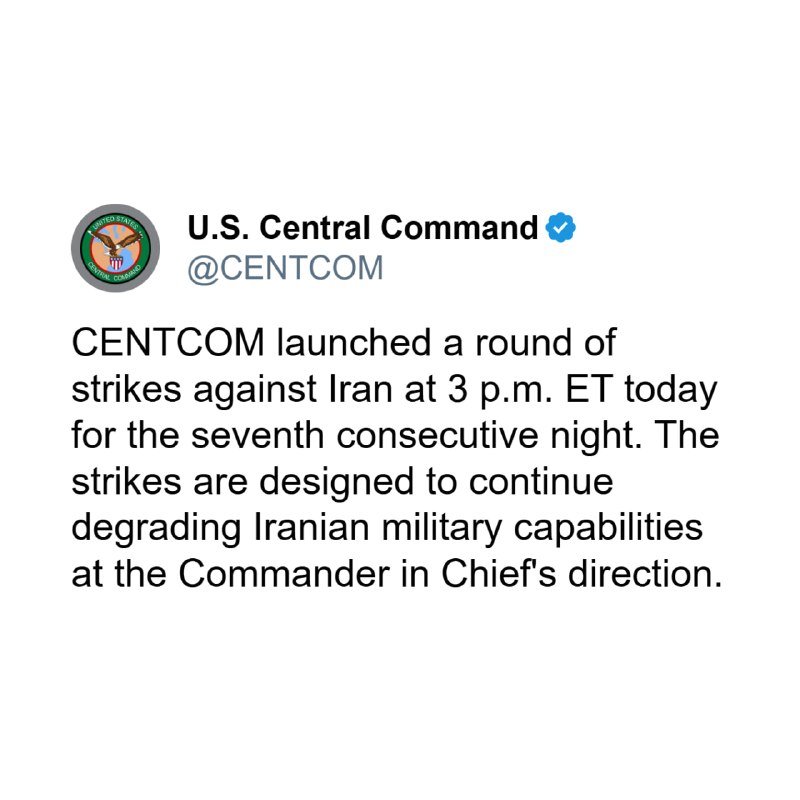
Three near-simultaneous posts from Iranian state-aligned Telegram channels on 2026-07-15 revived a familiar argument and sharpened a less familiar one. Tasnim News, at 18:33 UTC, asked in plain English whether the United States was "going for infrastructure attacks" after summarising the previous 24 hours of Iran-US friction. Two channels under Iran's military and Supreme Office banners picked up the same framing within an hour, framing the United States as a long-standing occupier of the Persian Gulf whose guarantees have never added up.
The pattern matters less for the rhetoric itself and more for what it signals about escalation doctrine. Tehran is no longer confining its public warnings to Israeli and Lebanese theatres; it is gesturing at the energy arteries the Gulf itself depends on. That is a categorically different threat from the conventional missile tests and proxy skirmishes of the past.
What Tasnim said, and what it left out
The Tasnim summary, circulated in English on Telegram at 18:33 UTC, ran through a 24-hour catalogue of incidents and ended on the infrastructure question. The English-language Telegram presence of a state-aligned wire is itself worth noting: it is calibrated for non-Iranian audiences and for search-engine discoverability. The post did not name specific facilities, did not claim any actual strike had taken place, and did not attribute the alleged targeting plans to a US official. The framing was speculative-adjacent in tone, structured as a question rather than an accusation.
What the post did not contain is equally diagnostic. There is no dollar figure, no operational timeline, no reference to a specific US Central Command order, and no quoted Iranian commander. The infrastructure framing rests, on the evidence available in the thread, on a single Telegram wire headline and its reposts. A reader who only sees this material could easily over-read the threat; a reader who only sees Western wire silence on the same day could just as easily under-read it. Neither posture is honest reporting.
The argument beneath the argument
Two companion posts, both titled "What would the Persian Gulf look like without America?" and circulated on the IRIran_Military and Khamenei_en channels at 18:02 UTC and 17:59 UTC respectively, make the second move. Their core claim is structural: that the United States has presented itself as the security guarantor of the Gulf for decades, and that the substance of that guarantee is, in the words of these channels, a long-running failure. The text is older framing repackaged for a moment when US force posture in the region is visibly thinning and when Gulf states are signing separate defence pacts with partners beyond Washington.
This is the more durable of the two messages. Infrastructure threats come and go with the news cycle; a sustained case that the American security umbrella in the Gulf has run out of legitimacy is the kind of argument that quietly repositions how neutrals in Riyadh, Abu Dhabi, and Doha price their hedging. Monexus flagged this same dynamic earlier in 2026 in coverage of the gradual widening of the Gulf's defence partnerships.
The non-aligned reader in the Gulf states has heard this case from Tehran before, but rarely at this volume and rarely in English. The resonance depends less on whether Iranian commanders believe their own warnings than on whether the warning finds local audiences primed by other grievances: shipping disruptions through the Bab el-Mandeb, escalations in Lebanon, and a perception that Washington's attention is increasingly drawn to other theatres.
Why this escalation posture is different
The infrastructure framing is the operational tell. Iran's published deterrence doctrine, to the extent it is articulated publicly at all, has historically emphasised two things: retaliation against an aggressor on its own territory, and a credible second-strike threat against staging bases that host operations against Iran. Energy infrastructure, particularly the desalinisation capacity and export terminals that Gulf monarchies rely on, sits outside both of those categories. Threatening it would, on the Iranian argument, demonstrate that the cost of any action against Tehran extends to the entire regional economic system.
That is a doctrine of mutually entangled destruction, not the more conventional deterrence-by-retaliation Iran has gestured at in the past. The Telegram framing treats it as an existing fact rather than a future threat. Even if the messaging is intended as deterrence rather than as a forecast, it changes the calculations of every energy ministry and shipping insurer watching the Strait of Hormuz. Insurance markets, which price Gulf transit risk daily, will be reading the same thread.
Counterpoint and what the framing misses
The reading above is the dominant Western wire framing: Tehran escalates, the Gulf shudders, and Washington recalibrates. There is a credible counter-read. Three observations cut against the dominant frame.
First, the messages are coming from Iranian state media and from channels described in the thread as military and Khamenei-affiliated. State-aligned media sometimes publish warnings they expect to soften rather than deliver. The English-language framing in particular, with its "would look like" conditional, reads more as political marketing than operational signalling.
Second, the US infrastructure targeting question (the Tasnim post) is single-sourced. Without an independent Western wire confirmation, Reuters, AP, BBC, or Bloomberg reporting of any US intention to strike Iranian infrastructure, the claim remains a question attributed to Tehran, not a verified policy. The sources do not specify casualty figures, dollar amounts, or operational specifics.
Third, the long-running argument that US Gulf presence has failed is contested, not self-evident. The same Gulf monarchies now hedging toward Beijing and Moscow spent four decades relying on the US Fifth Fleet and CENTCOM for sea-lane security. That record is mixed, but the claim of pure failure is a framing, not a finding.
Stakes over the next 90 days
Three calendar items will turn the present rhetoric into something measurable. First, any indication from US Central Command of force-posture changes in Bahrain or Al Udeid. Second, any movement on the Iran nuclear-file talks, which would either give Tehran a reason to lower the temperature or strip the rationale for restraint. Third, shipping-insurance pricing through the Strait of Hormuz, which is the cleanest real-time signal of whether the market believes the rhetoric.
If the trajectory continues, two distinct groups lose. Gulf energy exporters absorb the worst of any infrastructure-shock pricing; their hedging partners in Beijing and Moscow benefit politically without bearing the operational risk. Iran, by the logic of its own messaging, signals strength but invites the very escalation it claims to deter. The honest reading is that none of this is settled. The Telegram traffic on 2026-07-15 is one data point, and the structural argument beneath it is older than the news cycle that carried it.
Desk note: Monexus treated the Iranian state-aligned infrastructure warnings as primary, single-sourced material rather than corroborated reporting, and paired them with the parallel "without America" framing to expose the longer argument underneath. Where Western wires have not run corroboration, the body marks the claim as a question rather than a finding.
Wire provenance
This editorial synthesis draws on the following public wire/social posts:
- https://t.me/tasnimnews_en
- https://t.me/IRIran_Military
- https://t.me/Khamenei_en