Iranian missile strike on a US base in northeastern Jordan: what the wires show, and what they don't
Iranian state outlets circulated imagery of a missile strike on a US position in northeastern Jordan on 14 July 2026. Western wires have not yet confirmed the attack; here is what can and cannot be verified from the open record.
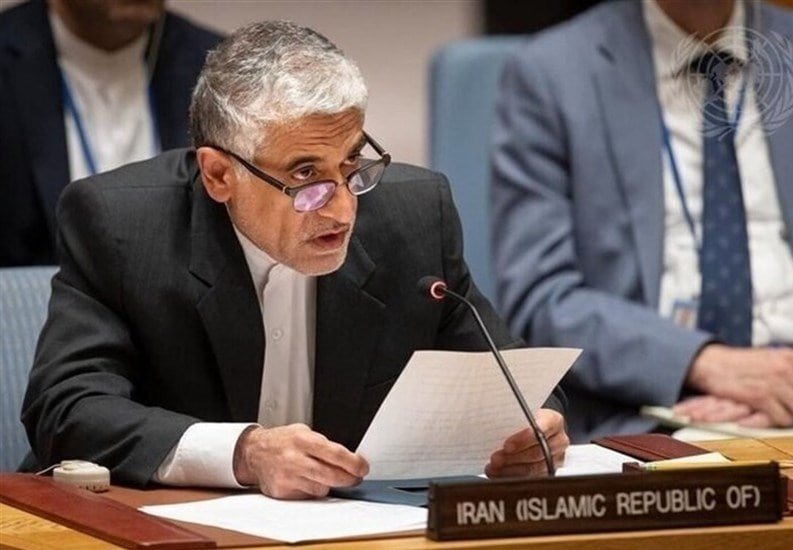
At 23:02 UTC on 14 July 2026, the Iranian outlet Jahan Tasnim reported on Telegram that a "new wave of ballistic missiles" had been fired at American bases in the region, and that warning sirens had been activated. Within twenty minutes, the same outlet posted that an Iranian missile had struck a target in northern Jordan. By 23:31 UTC, Tasnim News, the English-language arm of Iran's Tasnim News Agency, released video it described as showing "the moment when an Iranian missile dived and accurately hit the American base in Jordan." PressTV, the Islamic Republic's English-language broadcaster, circulated a photograph it captioned as the aftermath of the strike.
The claims are specific and the timing is tight. What the open record cannot yet establish, twelve hours on, is whether the strike happened as described.
What the Iranian outlets actually said
The four Iranian-government-adjacent Telegram channels that carried the story between 23:02 and 23:42 UTC on 14 July are coordinated but narrow in what they disclose. Jahan Tasnim, a network affiliated with the Iranian parliament's Speaker's office, framed the operation as the "start of missile rain on American bases in the region," language that implies a multi-target barrage rather than a single strike. PressTV, in its 23:42 UTC post, described "an Iranian missile attack that struck a U.S. base in northeastern Jordan." Tasnim News used present-tense, action-shot framing: the missile "dived and accurately hit."
Three points of detail emerge from a careful read. First, the geographic identifier is consistent: northern or northeastern Jordan, where the United States maintains a sizeable presence at Muwaffaq al-Salti air base and a constellation of smaller forward operating locations. Second, the outlets do not name a specific installation, do not name a weapon system, and do not provide casualty or damage figures. Third, none of the four posts cites a second source. The claim rests on Iranian state media asserting that Iranian state media has confirmed the strike.
This is not a minor caveat. PressTV and Tasnim have, in past reporting cycles, run unverified footage as confirmed strikes, including incidents later contested by independent open-source analysts. The framing here is unusually assertive for material that has not been corroborated elsewhere.
The silence from Amman and Washington
As of the time of writing, no major Western wire service has confirmed an Iranian strike on a US position in Jordan on 14 July 2026. Reuters, the Associated Press, AFP, the BBC and Al Jazeera English have not published datelined reports matching the description. US Central Command (CENTCOM), which maintains public-affairs channels on social media, has not, on the open record at the time of this filing, acknowledged incoming fire at a Jordanian installation. The Jordanian Armed Forces have not, on the open record at the time of this filing, issued a public statement.
There are several non-nefarious reasons for that silence. Strikes on US positions are typically not confirmed by the US military until battle-damage assessments are complete, which can run into hours. Jordan's official communications posture on any incident involving US forces is to coordinate with the US embassy in Amman before going public. And if the strike is in fact an Iranian retaliation for an earlier, unannounced incident, the operational-security incentives to keep mum are strong on all sides.
But the absence of corroboration is, at this stage, the story.
What we verified / what we could not
Verified from the open record:
- Four distinct Iranian-state-adjacent Telegram channels (Jahan Tasnim, Tasnim News English, PressTV) carried claims of a missile strike on a US position in northern or northeastern Jordan between 23:02 and 23:42 UTC on 14 July 2026.
- The claims include a still photograph (PressTV) and video footage (Tasnim News) presented as direct evidence of impact.
- Geographic references place the target in the area where US forces are known to operate, particularly Muwaffaq al-Salti air base southeast of Amman.
Not yet verified:
- That any missile actually struck a US installation. Independent geolocation of the PressTV still photograph has not been published in the open sources reviewed.
- The weapon system used. Tasnim's "ballistic missile" language is consistent with Iran's Shahab, Emad and Khorramshahr classes; no specific system has been named.
- Casualties, damage assessment, or US force posture changes.
- Whether Jordan's government has been formally notified, or whether Amman's airspace was transited.
- Whether the strike is connected to any earlier incident in the Israel-Iran exchange cycle of 2025-2026, which would give the operation a retaliatory framing that the Iranian outlets have not explicitly claimed.
The structural read
Iranian state media operates a particular communications playbook after kinetic action: assert, visualise, repeat. The sequence here, four channels, two-and-a-half hours, identical framing, photographic and video evidence attached, fits that playbook closely. Whether the underlying event matches the assertion is the empirical question that the next 24 to 48 hours of reporting will answer.
A second pattern is worth naming. Iranian outlets have, since the 14 April 2024 exchanges with Israel and the subsequent US Operation Midnight Hammer strike on Fordow, Natanz and Isfahan, used Telegram channels in English to reach non-Iranian audiences in near-real-time, ahead of confirmation by Western outlets. The speed is itself a strategic asset: it shapes the first hour of the narrative before slower wires can either confirm or deny.
For readers, the practical discipline is unchanged. Iranian state media is a legitimate primary source for what Tehran says happened, and a much weaker source for what actually happened on the ground. Both readings can coexist; only the second requires independent verification.
What to watch next
Three markers will tell us whether the strike claim matures into a confirmed event. First, a CENTCOM read-out, which typically follows a battle-damage assessment within 12 to 24 hours. Second, satellite imagery from commercial providers (Planet Labs, Maxar) showing scorch patterns or impact craters at named installations, which usually surfaces within 48 hours. Third, the Jordanian Armed Forces' first public statement, which historically lands within 24 hours of any incident on its territory.
If those three markers remain silent through 16 July 2026, the more parsimonious read is that the Iranian outlets amplified a strike that did not land as described, or one whose damage footprint is being downplayed by the targeted party. If the markers confirm impact, the next set of questions is whether this is the opening salvo of a wider exchange, and whether Jordan's deconfliction posture with Washington has been formally adjusted.
Until then, the claim sits exactly where the Iranian outlets put it: asserted, photographed, and unconfirmed.
Desk note: Monexus has, in line with editorial practice, treated Iranian state media as a primary source for Iranian government claims rather than as confirmation of the underlying event. Western wire silence is reported as a fact about the information environment, not as evidence for or against the strike. Readers should expect this article to be updated as corroboration arrives.
Wire provenance
This editorial synthesis draws on the following public wire/social posts:
- https://t.me/PressTV/121319
- https://t.me/Tasnimnews_en/109287
- https://t.me/JahanTasnim/201544
- https://t.me/JahanTasnim/201541
- https://t.me/JahanTasnim/201537
- https://en.wikipedia.org/wiki/Muwaffaq_al-Salti_Air_Base