Oil markets, missile intercepts, and an escalation that won't sit still
Another US strike wave on Iran and a court-martialed Israeli soldier collide with a domestic British fuel bill. The pattern underneath matters more than any one headline.
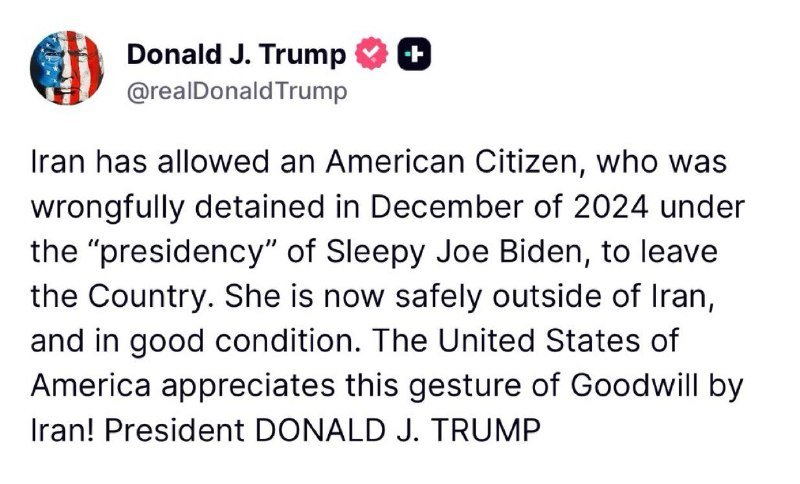
On 15 July 2026, at 10:23 UTC, Israeli military correspondent Amit Segal reported a fresh wave of US strikes inside Iran. Two minutes earlier, the aggregator InsiderPaper had flagged a separate story from the Israel Defense Forces: a soldier sentenced to prison for forwarding missile-intercept footage to an Iranian handler. By mid-morning, the picture on the wire was the picture it has been for weeks: a grinding air campaign on one side, brittle internal discipline on the other, and a market pricing the consequence.
The throughline is not new. It is, however, getting harder to ignore. A war launched jointly by the United States and Israel against the Iranian state has now produced enough supply-side damage, enough insurance premia, and enough sovereign-risk repricing that the bill is arriving at ordinary household doors. The BBC reported on 14 July that heating-oil customers in the UK will receive compensation after a price spike driven by the conflict forced crude higher. The headline on the British doorstep and the headline from a bunker in Tehran are the same headline.
What the wire is actually showing
The two Israeli-source reports that surfaced inside a fifteen-minute window on 15 July describe a war with two distinct textures. On one front, a sustained US air campaign hitting Iranian infrastructure, Segal's 10:23 UTC item describes another wave of attacks, the latest in a rolling series. On the other front, an Israeli military courtroom handing down a custodial sentence to a soldier who leaked intercept footage of incoming Iranian missile fire to an Iranian agent, per the IDF statement circulated by InsiderPaper at 10:18 UTC. The latter is small in body count and enormous in signal: it tells you the Iranian intelligence service has human assets inside the IDF's information perimeter, and that Israel is treating the leak as a live operational problem rather than a passing embarrassment.
Iran's English-language military channel, IRIran_Military, posted earlier the same morning that any strike on Iranian infrastructure would carry consequences, the framing characteristic of regime-aligned messaging in a hot war. It is not a stand-alone factual basis. It is, however, the texture of how Tehran is talking to its domestic audience while US ordnance lands.
The crude is not abstract
The economic translation landed first where it always does: at the refinery gate. The BBC's 14 July report ties the UK heating-oil price spike directly to the US-Israel war with Iran, with the regulator now ordering compensation to consumers. Heating oil is a residual fuel tied to dated refining contracts and colder-climate housing stock; it is also one of the cleanest transmissions of a geopolitical crude shock into a domestic political complaint. When a government has to write a cheque back to voters for fuel it had no role in pricing, the war is no longer a foreign-policy abstraction.
The structural point is straightforward. A hegemonic reserve currency and a Western-led security architecture have, over decades, made the cost of distant wars easy to amortise into the global price of energy. That amortisation is breaking down in real time. When crude moves on Iranian strikes, the move is no longer absorbed by sovereign producers willing to ride out a quarter of pain; it is passed through, fast, to the kind of consumer who pays a winter heating bill in cash. The UK compensation decision is a small, technical admission that the transmission belt now runs all the way to the doorstep.
The case the official framing is missing
Western wire coverage of the air campaign has, broadly, run on two tracks: tactical reporting on strike packages and a parallel track on Iran's regional posture, missile programme, and proxy network. The reporting on the Israeli soldier's court-martial fits a familiar pattern: a single defection or compromise treated as an exception, with the surrounding intelligence picture flattened into background. The mainstream framing is not wrong, exactly. It is incomplete.
Two plausible counter-reads deserve airtime. First, that a war now in its grinding middle phase is producing the kind of internal-security strain any sustained campaign produces, and that the Israeli court's sentence is best read as the surface of a deeper adaptation by Iranian intelligence to Israeli operational security. Second, and more uncomfortable, that the war's economic spillover is being absorbed asymmetrically. The strikes are launched by one set of capitals; the heating-oil bills are being paid by households in third countries, with at least one government now writing compensation cheques. The official framing rarely follows that money back to the war that produced it.
What to watch next
The escalation cycle visible in the morning's reporting has three near-term variables worth tracking: the cadence of US strike waves and whether Iranian infrastructure targets move from military to energy-export sites; the trajectory of European heating and diesel prices into the autumn; and any further IDF prosecutions that hint at the scale, rather than the existence, of Iranian human-intelligence penetration. None of these is speculative; each is implied by the day's wire and by the BBC's pricing story.
What remains genuinely uncertain is whether the war's economic blowback begins to bite inside the constituencies that have so far supported the campaign. The UK compensation decision is one early data point. It will not be the last.
Desk note: this piece traces a single morning's wire into the structural link between a US-Israeli air campaign on Iran and a British heating-oil refund. Wire sources do not specify casualty counts or the precise infrastructure targeted in the 15 July wave; where the sources thin, the analysis says so.
Wire provenance
This editorial synthesis draws on the following public wire/social posts:
- https://t.me/amitsegal
- https://t.me/insiderpaper
- https://t.me/IRIran_Military